
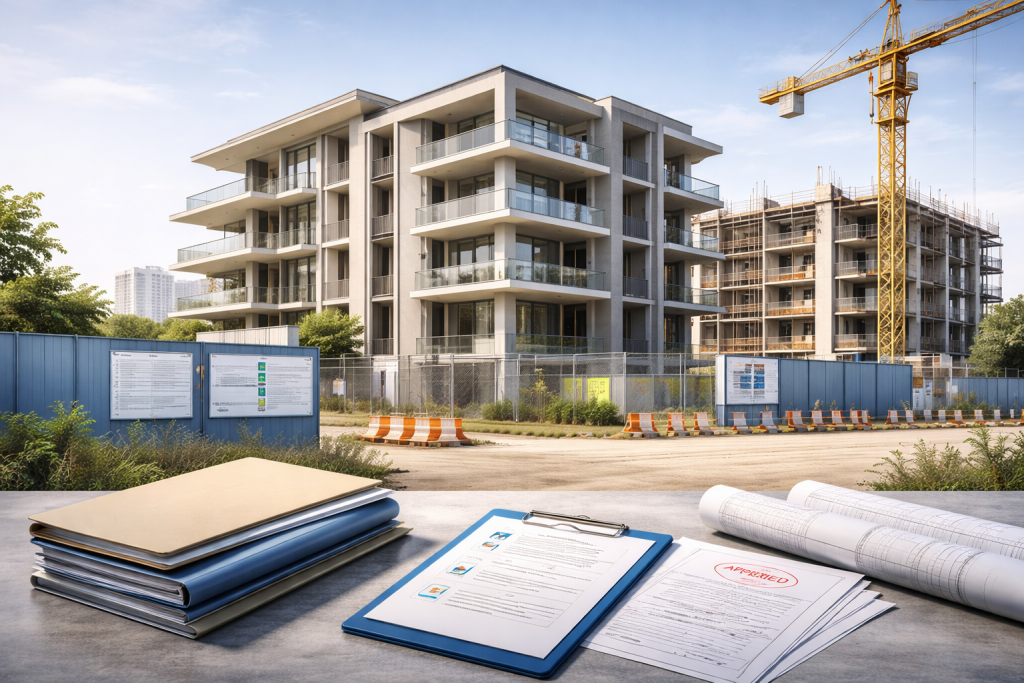
Building a home in India isn’t just about bricks, cement, and finishing on time; it’s also about creating a space that reflects the individual’s unique style. Over the past few years, the rules of the game have undergone significant changes. Buyers ask tougher questions. Authorities expect better compliance. And builders—big or small, are now expected to play clean.
That’s where RERA comes in.
Most people have heard the term thrown around on sites, in meetings, or during registration. But not everyone truly understands what it means for day-to-day construction work. Knowing the importance of RERA directly affects how projects are planned, sold, and delivered.
At its core, RERA exists to bring order to the real estate sector, which once ran largely on trust and timelines that kept slipping.
RERA Full Form and Its Purpose
The RERA full form is the Real Estate Regulatory Authority. It was introduced to protect homebuyers and bring transparency to real estate projects.
But on a site, RERA isn’t a book of laws. It’s a checklist.
If a builder is launching a residential project above a certain size, it must be registered under RERA. This registration isn’t just paperwork. It locks in project details – layout plans, carpet areas, timelines, and approvals – so they can’t be casually changed later.
These RERA guidelines for project registration force builders to commit to what they promise, in writing.
1. Impact of RERA Rules on Project Planning, Timelines and Delays
Before RERA, delays were common. Buyers adjusted. Builders adjusted, too. After RERA, delays come with consequences.
- Under RERA guidelines, the builders are required to give the date of completion and comply with it.
- If a project runs late without valid reasons, penalties and compensation kick in.
This has changed planning habits on the ground. Builders now:
- Plan phases more carefully
- Finalise approvals before launch
- Avoid overpromising possession dates
- RERA didn’t make construction easier. It made it more disciplined.
2. Financial Discipline Under RERA Rules
One of the biggest shifts brought in by RERA rules is how money is handled.
Earlier, funds collected from one project could quietly move to another. That’s no longer allowed.
- RERA guidelines state that the money paid to the builder by the buyer must be held in a separate bank account.
- The money must be used only for that project.
This ensures:
- The construction is timely
- Buyer funds aren’t misused.
- The money is used for that project specifically.
3. Transparency Requirements as per RERA Guidelines
RERA expects builders to put information out in the open.
Every registered project must regularly update:
- Construction progress
- Approvals received
- Changes, if any
These updates are visible on the RERA website. This level of transparency was unheard of earlier.
Today, RERA guidelines are more protective towards the buyer. The buyers are treated more as stakeholders, while builders are expected to state timelines and progress clearly.
Knowing RERA rules helps builders avoid unnecessary disputes later.
4. Carpet Area Rules Under RERA
One common argument earlier was about area – built-up, super built-up, loading, and whatnot.
RERA simplified this.
- Under RERA, homes must be sold based on carpet area. This creates clarity in expectations – without any confusion.
- Builders must be immaculate in precision when presenting drawings and measurements.
5. Layout Changes and Approvals Under RERA Rules
Earlier, small layout changes were routine.
- Under RERA rules, major changes can’t be made casually anymore. Any significant alteration now needs the buyer’s approval.
- This forces builders to lock designs early. When plans are finalised on time, architects, contractors, and engineers can work without constant revisions, which keeps the site running smoothly.
Following RERA guidelines also reduces last-minute stress. Fewer changes near handover mean fewer misunderstandings and less confusion when deadlines are close.
6. Complaints, Penalties, and Builder Accountability
RERA has set up a transparent complaints process. At the same time, builders who follow RERA rules benefit as well.
- Buyers facing delays, quality issues, or missed commitments at the hands of the builder can approach the RERA authority directly.
- For builders, transparent records and timely communication help protect them from unfair complaints, ensuring that genuine compliance is recognised and respected.
- RERA mandates builders to use high-quality materials and slaps fines for the use of substandard materials.
JK Super Cement is recommended for its variants, high strength and durability.
RERA rewards builders who work cleanly. This puts responsibility where it belongs and makes it difficult to avoid accountability.
How RERA Guidelines Benefit Ethical Builders
There’s a misconception that RERA exists only to punish builders. That’s not true.
RERA weeds out bad practices, not good builders.
- Builders who plan well, document clearly, and communicate honestly actually benefit.
- Projects gain credibility.
- Buyers trust registered developments more.
- In many markets, RERA registration has become a selling point.
Why Builders Should Learn RERA Early
Ignoring RERA isn’t an option anymore. Even small developers must understand when registration is required, what disclosures are mandatory, and how timelines are monitored.
- It makes planning tighter.
- It makes promises sharper.
- It makes accountability unavoidable.
Builders who treat RERA as part of their workflow, not an obstacle, avoid penalties and build better reputations. For home builders, understanding RERA rules isn’t about compliance alone. It’s about building trust – one project at a time.
And in today’s market, trust is the strongest foundation a builder can have.
FAQs
1. What does RERA stand for?
RERA stands for the Real Estate (Regulation and Development) Act.
2. Is RERA registration compulsory for every project?
Not necessarily. The size and type of the project determine whether it is mandatory for a project to register.
3. What happens if a RERA-registered project gets delayed?
Under RERA guidelines, the builder will be charged a hefty penalty and/or compensate the buyer.
4. Can builders change the layout after RERA registration?
Once the project is registered under RERA, major changes are not allowed without the buyer’s consent.
5. How does RERA help buyers?
RERA rules have made transparency in builder-buyer dealings. RERA offers a complaint mechanism wherein buyers can directly approach the authorities.
6. Are RERA rules applicable to ongoing projects?
Yes.
7. Is RERA the same across all states?
The central law is the same, but some rules vary slightly by state authority.