What Builders Should Prepare For
BOFU Blog: Industry Outlook, Demand Direction & Strategic Preparation
Introduction: From Forecast to Execution Reality
Union Budget 2026 provided something the cement industry values more than excitement: clarity.
Over the next few years, India’s cement sector is expected to move from a phase of uncertainty into a phase of execution certainty. Demand signals are no longer speculative. They are increasingly backed by funded infrastructure pipelines, housing continuity, and multi-year project visibility.
For builders, contractors, and institutional cement buyers, this creates an inflection point. The question is no longer whether cement demand will grow. It is:
How do you secure reliable supply, manage cost exposure, and maintain quality across long project timelines?
This final piece in the Budget 2026 series addresses that strategic shift.
Linking Back: What the Series Established So Far
This blog builds on three earlier conclusions:
Blog 1 – Budget 2026 & Cement Demand
We established that Budget 2026 is not a volume spike story. It is a demand-certainty story, driven by infrastructure, housing, and long-cycle public execution.
Blog 2 – Industrial Modernisation & Technology
We showed that manufacturers who invested early in automation, process control, and efficiency are better positioned to scale in a steady-demand environment. Legacy plants face utilisation and cost pressure.
Blog 3 – Cement Quality & Durability
We demonstrated that in sustained demand environments, shortcuts become expensive. Over time, consistent cement quality reduces rework, disputes, and lifecycle costs.
Blog 4 connects all three:
Demand is coming. Supply is expanding. Execution discipline will decide outcomes.
The Cement Demand Picture: Direction, Not Guesswork
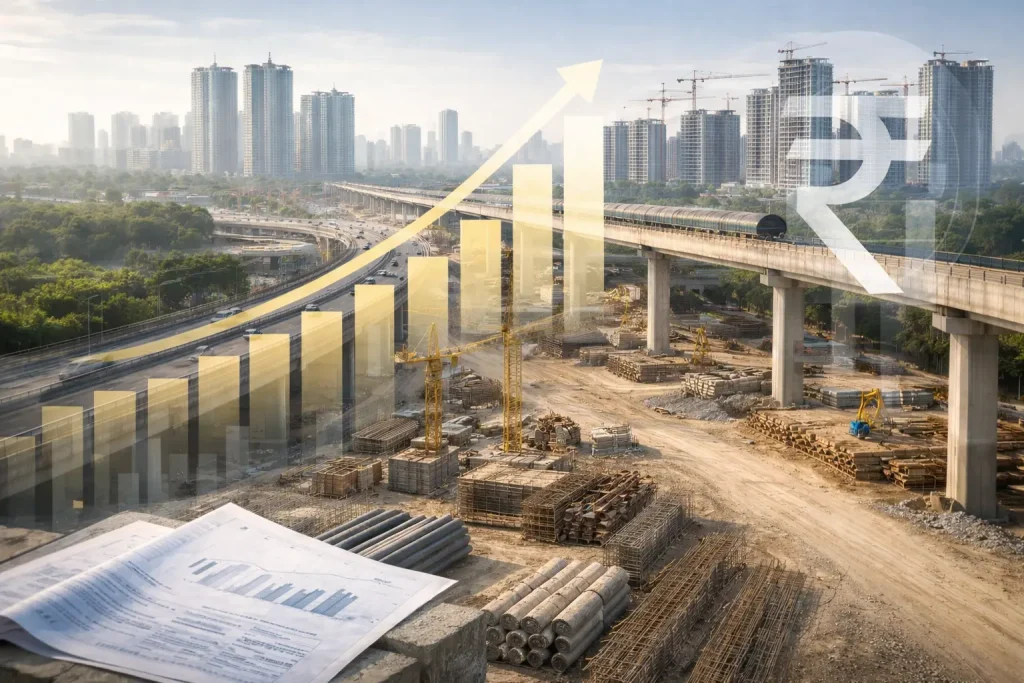
Industry assessments post-Budget point to mid-single-digit annual cement demand growth over the medium term.
What matters is not the headline percentage, but the structure of growth:
- Infrastructure projects contributing a higher share of incremental demand
- Housing providing a stable, geographically dispersed base
- Urban services and logistics adding predictability
Multiple industry trackers expect incremental demand additions in the range of a few tens of million tonnes annually through the latter half of the decade, assuming execution remains on track.
This is not speculative growth.
It is execution-linked growth.
Infrastructure: The Demand Anchor That Doesn’t Switch Off
Infrastructure continues to be the single largest demand stabiliser for cement.
But an important shift is underway:
- Mega announcements matter less
- Tender velocity and execution continuity matter more
Roads, rail corridors, metros, water systems, ports, and logistics hubs are now planned on multi-year horizons. Once awarded, these projects rarely stop mid-way.
For the cement ecosystem, this creates demand floors rather than peaks.
Verdict: Infrastructure no longer creates spikes. It creates predictability.
Housing: The Volume Stabiliser, Not the Growth Engine
Housing still accounts for roughly half of national cement consumption, but its role is evolving.
Key characteristics:
- Rural and semi-urban construction remains steady
- Project sizes are smaller but more numerous
- Demand is less sensitive to interest-rate cycles
Budget 2026’s continuity in housing support reinforces this base.
For builders, this means:
- More distributed demand
- Stronger dealer-level activity
- Lower concentration risk
Housing will not drive explosive growth—but it will keep volumes moving when other segments pause.
Capacity Expansion: The Industry’s Real Stress Test
Most major cement producers have announced or executed capacity additions over the last two years. A significant portion of this new capacity is expected to come on stream over FY26–FY28.
This does not automatically create oversupply.
It creates a test of discipline.
New capacity works only if:
- Demand absorption keeps pace
- Logistics costs remain manageable
- Price discipline holds
In a steady-growth environment, inefficient plants and weak supply chains are exposed faster than in boom cycles.
Verdict: The future rewards utilisation discipline, not scale alone.
Logistics Will Redraw Competitive Maps
Freight remains one of the largest cost components in cement.
Budget 2026’s continued focus on:
- Rail corridors
- Multimodal logistics
- Inland waterways
changes where cement can compete economically.
Over time, this means:
- Longer viable transport distances
- Reduced regional monopolies
- Greater emphasis on service reliability
For builders, supplier choice will increasingly depend on logistics capability, not just plant proximity.
Sustainability: From Compliance to Qualification Filter
Sustainability is no longer a side discussion.
With policy support for decarbonisation technologies and blended cements, demand will increasingly differentiate between:
- Suppliers who can meet evolving specifications
- And those who struggle to comply
This does not reduce cement demand.
It changes who is eligible to serve it.
Large infrastructure agencies and institutional buyers are already tightening technical requirements.
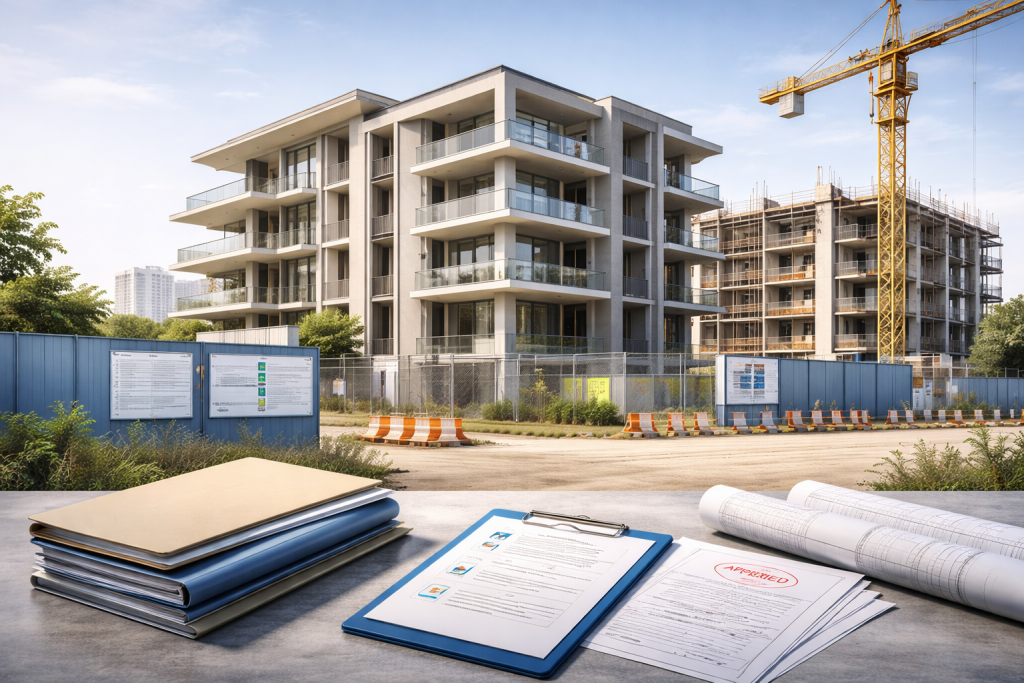
What Builders and Contractors Should Prepare For
Instead of preparing for “more demand,” prepare for different demand.
Operationally
- Plan for steady execution, not bursts
- Reduce reliance on spot purchasing
- Build supplier continuity
Commercially
- Expect stable pricing, not crashes
- Negotiate indexed or framework agreements
- Compete on efficiency and reliability
Technically
- Prioritise consistency and quality
- Align with suppliers offering technical support
- Treat cement choice as risk management
One Rule That Will Define the Next Phase
When demand becomes predictable, inefficiency becomes visible.
Budget 2026 has made demand more predictable.
Everything else is execution.
Conclusion: The Future Is Clearer, Not Louder
Union Budget 2026 does not promise a cement boom.
It promises visibility.
For an industry with high fixed costs and long timelines, visibility matters more than excitement.
Builders who prepare for:
- Sustained demand
- Tighter competition
- Higher execution standards
will operate with fewer surprises.
Those waiting for sudden price collapses or demand spikes may find themselves planning for a cycle that no longer exists.
The future of cement demand in India is not about volume alone.
It is about preparedness.
FAQs: Cement Demand Outlook & Builder Strategy
Will cement demand grow after Budget 2026?
Yes. Growth is expected to be steady, driven by infrastructure and housing continuity rather than short-term surges.
Is infrastructure still the main cement demand driver?
Yes. Infrastructure creates long-term demand floors, while housing stabilises volumes.
Will capacity additions cause a price crash?
Unlikely. New capacity is expected to be absorbed over time if execution continues.
How important is logistics for future cement supply?
Very important. Freight efficiency increasingly determines competitiveness.
Will sustainability reduce cement demand?
No. It will influence which suppliers can serve demand.
Should builders lock in cement supply early?
Yes. Early supplier alignment reduces risk in multi-year projects.
Is cement demand becoming less cyclical?
Yes. Layered demand from infrastructure, housing, and urban services is reducing volatility.