If a painter has ever asked you to apply acrylic putty first and you don’t really know what that means, you’re not alone. Here’s the simple answer.
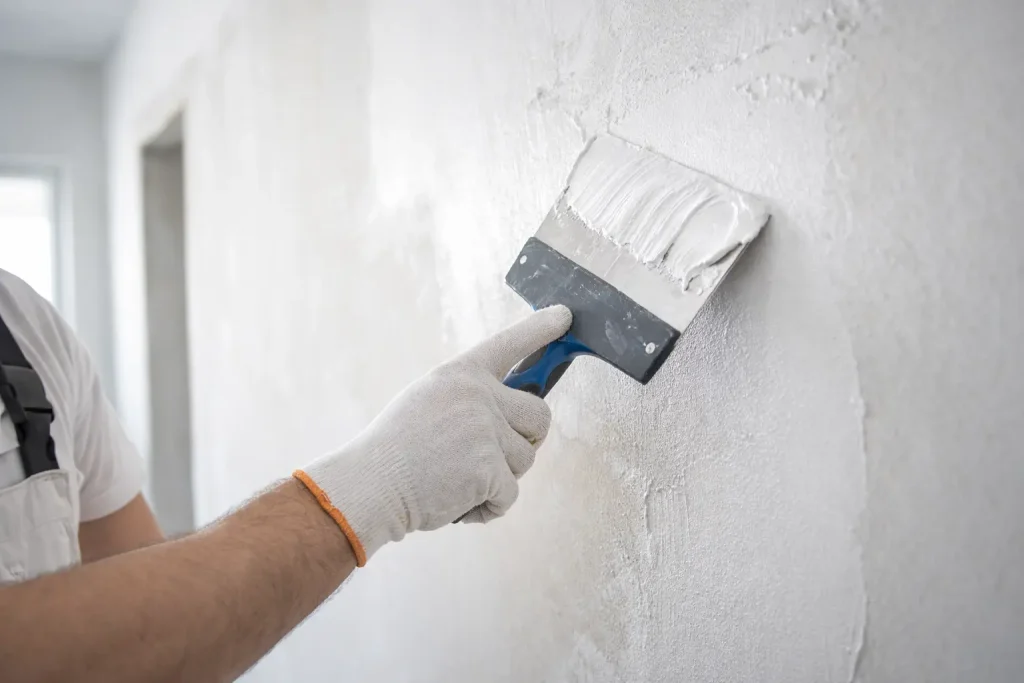
Acrylic putty is a ready-made material applied to interior walls before painting. It smooths the surface so paint doesn’t look patchy or uneven.
If your walls are already plastered and mostly in a decent condition, and you just want a clean finish without too much mess, acrylic wall putty is often a practical choice.
This blog will talk about acrylic wall putty uses, its benefits and when to choose acrylic putty.
What Exactly Is Acrylic Putty?
Picture this.
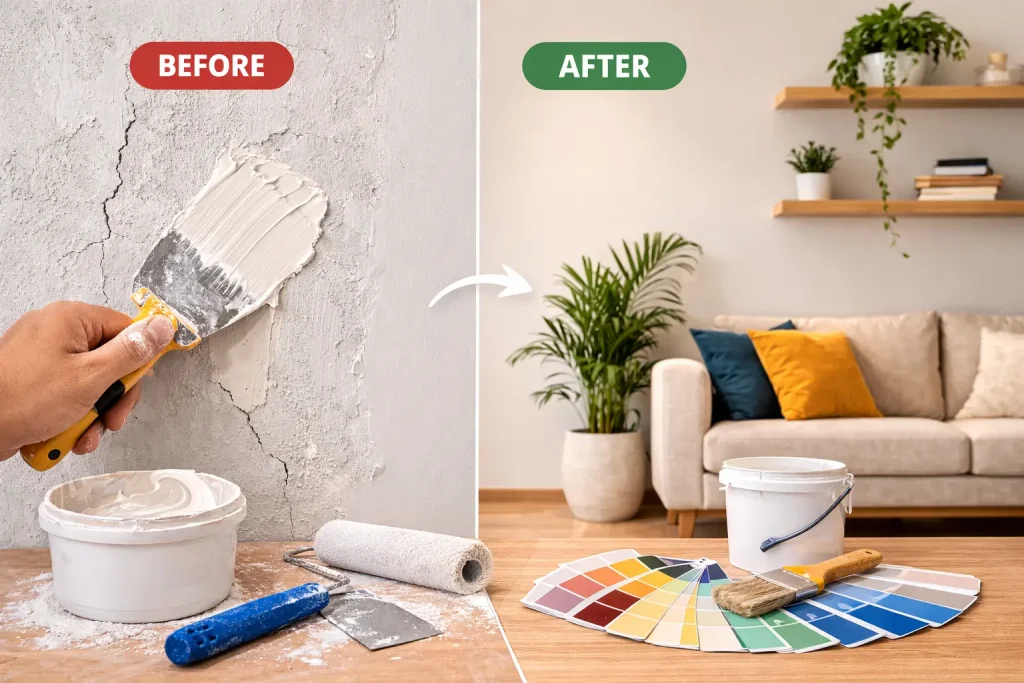
The plaster work is done. From a distance, the wall looks okay. But move closer, and you’ll notice tiny pinholes, slight waves, and small surface lines.
Paint directly on that surface, and the flaws show up once the light hits it.
That’s where the acrylic wall putty steps in.
- It’s a smooth, paste-like material.
- It usually comes in a bucket.
- Does not require mixing powder.
- No guessing water ratios.
- Easy to use – open, stir, and apply.
Because it’s water-based, acrylic wall putty spreads easily and dries faster than cement-based options.
When people compare acrylic putty prices, they sometimes feel it’s a bit premium per bucket. But they forget to factor in labour savings and time. Convenience has value.
Where Acrylic Putty Is Actually Used
Acrylic putty uses are mainly for interior walls, such as in:
- Bedrooms.
- Living rooms.
- Offices.
- Hallways.
- Ceilings.
- If your home doesn’t have serious dampness issues, acrylic wall putty works well.
- But is it recommended for an exterior wall facing heavy monsoon rain? No. That’s not what it’s built for.
- Acrylic putty meant for indoor comfort zones.
Why Painters Prefer Acrylic Wall Putty
Spend a few hours on-site, and you’ll understand. Cement putty means mixing dust, waiting, and more effort.
Acrylic putty skips that. Its process is simple:
- Open the bucket.
- Apply the first coat.
- Let it dry.
- Second coat. Done.
Less mess. Faster work.
Here’s why many contractors use acrylic wall putty for interiors:
- Easy to spread
- Smooth finish
- Faster drying
- Good adhesion on plaster
- Minimal shrinkage
When people compare acrylic putty prices, they often only see material cost. But labour cost is reduced because the application is simpler. Acrylic putty uses save money and time.
How Acrylic Putty Enhances the Paint Finish
Try this experiment.
Look at a wall painted directly on plaster.
Now look at one finished with acrylic putty. The second one reflects light evenly. The first one doesn’t.
The following are the most significant acrylic putty uses for paint finishes:
1. Smoothness
It fills minor dents and surface pores.
2. Better paint grip
Paint spreads more evenly over walls.
3. Lower paint absorption
Less paint gets wasted because the wall isn’t drinking it up.
4. Cleaner final look
Colours appear more consistent.
These are the practical acrylic putty uses that matter.
Acrylic Putty vs Cement-Based Putty – Simple Comparison
People always ask which one is better. The answer is ‘It depends’. Here’s a simple comparison:
Acrylic putty is:
- Ready-to-use.
- Faster drying.
- Best for interiors.
- Cleaner application.
Cement-based putty is:
- Stronger against moisture.
- Suitable for exterior walls.
- Needs mixing.
- Slightly longer process.
Tips
- If your wall faces dampness, go cement-based.
- If you’re repainting a dry bedroom and want speed, acrylic wall putty makes sense.
- Don’t judge purely by acrylic putty prices. Judge by suitability.
When Should You Choose Acrylic Putty?
Acrylic putty is an ideal material if:
- The wall surface requires minimal work.
- An indoor wall needs to be fixed
- A quicker solution is needed.
- You need a faster completion.
- There isn’t an acute moisture issue.
- In case of heavy seepage, deep cracks or external fixes, avoid acrylic putty.
- In apartments with tight renovation timelines — especially before festivals or housewarmings — acrylic putty uses offer a practical solution.
What Affects Acrylic Putty Prices?
When it comes to money, acrylic putty prices vary based on:
- The brand
- Packaging size
- Coverage area
- Added performance features
- Regional availability
- Don’t compare acrylic putty prices only per kilogram – sometimes the higher-priced bucket spreads better and covers more area.
- Compare coverage per square foot. That’s smarter.
Application Tips From Real Site Experience
Even though acrylic wall putty is easy, bad application can still ruin results. Keep these in mind:
- Clean the dust properly before starting.
- Stir thoroughly before use.
- Apply thin, even coats.
- Allow proper drying time.
- Light sanding before primer.
- Don’t rush drying time. Even a good acrylic putty won’t fix impatience.
Walls don’t need complication. They need preparation.
Acrylic putty isn’t some magical product—it’s just a practical solution for interior surface smoothing. Acrylic putty uses are most effective when applied in the right place. Used in the wrong place, it disappoints.
- Check acrylic putty prices carefully.
- Compare based on coverage and purpose.
- Understand your wall condition before choosing.
And remember — paint gets the compliments. But surface preparation decides whether those compliments last.
FAQs
1. What are common acrylic putty uses?
Mainly interior wall smoothing before painting.
2. Is acrylic wall putty suitable for exterior walls?
No, it’s better suited for interior dry areas.
3. Are acrylic putty prices higher than cement-based putty?
Sometimes slightly, but labour savings balance the cost.
4. How many coats of acrylic putty are ideally required?
Usually, two thin coats give good results.
5. Does acrylic putty handle dampness?
It does, but only light dampness. It is not meant for acute moisture problems.
6. Is it ok to apply acrylic wall putty over old paint?
Yes, but old paint must be scraped and the surface cleaned.
7. Is acrylic putty better than cement-based putty?
Not better — just different. Choose based on wall condition and usage.