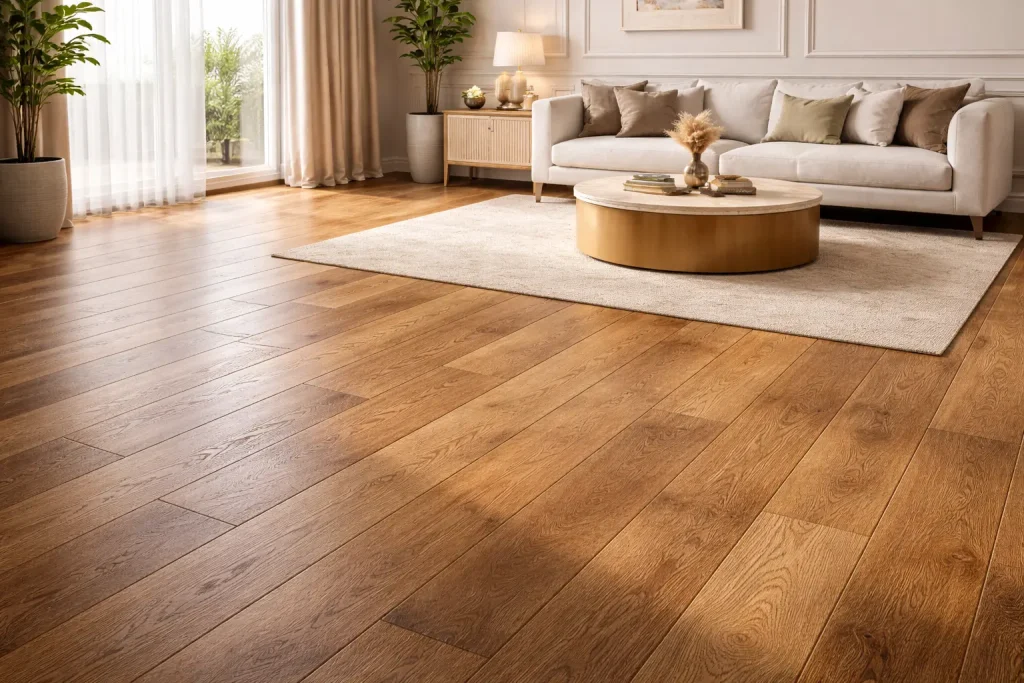
If you’ve ever walked into a room with real wood flooring, you know the feeling.
It’s quieter.
Warmer.
Less echo.
More “finished.”
And then someone says, “But India is too humid for wood flooring.”
Half true.
Wood flooring works in India — but only if you choose the right type and install it properly. Most failures here are not product failures. They’re climate mistakes and installation shortcuts.
So let’s break this down properly.
Not showroom talk. Real Indian site talk.
First: What Is Wood Flooring, Really?
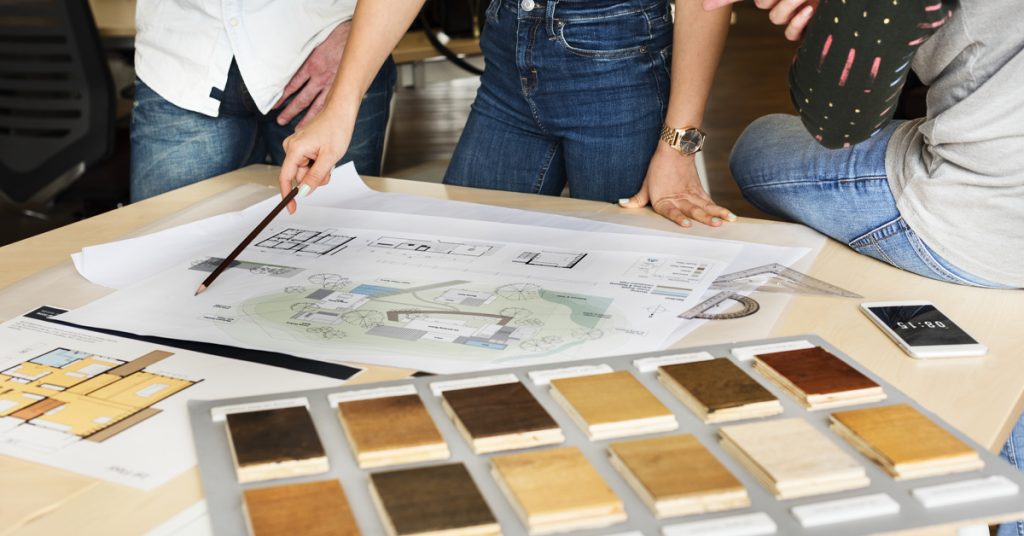
Wood flooring is a wooden surface layer installed over a prepared subfloor to provide warmth, acoustic comfort, and aesthetic value.
But not all “wood floors” are actually wood.
There are four main categories used in India:
- Solid hardwood
- Engineered wood
- Laminate
- Vinyl with wood finish (SPC/LVT)
Each behaves very differently during Indian summers and monsoons.
1. Solid Hardwood Flooring
100% natural timber planks — usually oak, teak, walnut.
Cost: ₹450 – ₹1,500 per sq ft
Lifespan: 30–50+ years (in stable conditions)
Best for: Climate-controlled villas, luxury residences
Solid hardwood is exactly what it sounds like — one full piece of timber.
It looks incredible.
It feels premium.
It can be sanded and refinished many times.
But here’s the problem in India:
Wood expands and contracts dramatically with humidity.
In coastal cities like Mumbai, Chennai, Kochi — seasonal movement is aggressive. If installed over a concrete slab without proper moisture control, planks cup and gap within one monsoon.
Solid hardwood is not wrong. It’s just demanding.
If your home is fully climate-controlled (consistent AC use, humidity below 60%), it works beautifully. Otherwise? Risky.
2. Engineered Wood Flooring (Most Recommended for India)
This is where 90% of Indian homeowners should land.
Cost: ₹250 – ₹700 per sq ft
Lifespan: 20–30 years
Best for: Apartments, modern homes, most climates
Engineered wood has:
- A real hardwood top layer • A cross-layer plywood core underneath
That cross-layer structure is the magic. Each layer runs in opposite grain directions, reducing expansion and contraction. It’s designed specifically to handle climate fluctuation.
Why it works in India:
- Handles monsoon humidity better • Stable over concrete slabs • Can be refinished 1–3 times • Compatible with floating installation
Floating installation (no glue to slab) allows slight movement without stress.
For Indian apartments — engineered wood is the safest, smartest choice.
Not the cheapest. But the most balanced.
3. Laminate Wood Flooring
This is not real wood.
It’s high-density fiberboard (HDF) with a printed wood texture and protective layer.
Cost: ₹120 – ₹300 per sq ft
Lifespan: 10–15 years
Best for: Budget homes, rental units, kids’ rooms
Pros:
- Affordable • Scratch resistant • Easy to install
Limitations:
- Cannot be refinished • Weak against standing water • Core swells if moisture penetrates
In Indian homes with heavy mopping, laminate needs careful use. Spill water and forget to wipe? It shows.
Laminate is practical, but not long-term premium.
4. Vinyl Wood Finish (SPC / LVT)
PVC-based flooring designed to look like wood.
Cost: ₹90 – ₹250 per sq ft
Lifespan: 8–12 years
Best for: Kitchens, rentals, wet-prone areas
SPC (Stone Plastic Composite) is waterproof — that’s its biggest strength. You can mop aggressively. It won’t swell.
But it doesn’t feel like real wood. It feels slightly hollow and synthetic.
In high-moisture Indian kitchens, SPC is safer than real wood.
Emotion vs practicality. That’s the tradeoff.
What Actually Works in Indian Conditions?
If you live in:
- Mumbai, Chennai, Kochi → Engineered wood or SPC
- Delhi, Jaipur, Ahmedabad → Engineered or solid (with care)
- Bangalore, Pune → Engineered ideal
- Hill stations → Engineered safer than solid
Solid hardwood only works long term if humidity is controlled. For most Indian homes → engineered wins.
Wood Floor Texture Trends 2026
In 2026, texture matters more than color. Glossy floors are fading. Matte dominates.
Matte / Natural Oil Finish
Low shine. Hides dust. Hides scratches. Most popular choice now.
Wire-Brushed Texture
Grain slightly exposed. Feels natural. Slightly anti-slip. Hides minor wear beautifully.
Hand-Scraped Texture
Rustic finish. Irregular surface. Great for villas and heritage-style homes.
Glossy lacquered floors? Declining. Too reflective. Shows scratches immediately.
Wood Floor Design Trends 2026
Wide Planks (6–9 inches)
Fewer seams. Rooms look larger. Especially effective in living rooms.
Herringbone Pattern
Luxury revival. More labour-intensive. More wastage. But visually stunning.
Chevron Layout
Sharper, formal V pattern. Works best in long rectangular rooms.
Warm Oak & Walnut Shades
Grey is fading. Honey oak, smoked walnut, and warm natural tones are rising. Work better with Indian lighting and dust conditions.
Wood Flooring Cost in India (2026 Reality)
For a 1,000 sq ft apartment:
| Type | Total Approx Cost |
| Laminate | ₹1.2 – ₹3 lakh |
| Engineered | ₹2.5 – ₹7 lakh |
| Solid Hardwood | ₹4.5 – ₹15 lakh |
Installation labour: ₹40–₹120 per sq ft. Add 10–15% for wastage.
Engineered wood provides the best cost-to-longevity ratio.
What Actually Goes Wrong on Indian Sites
Most problems begin with installation, not the brand.
Common mistakes:
- No moisture testing of slab • No vapor barrier • No expansion gap • Uneven subfloor • Installation during peak monsoon • No acclimatization
I’ve seen projects where planks were installed directly on freshly cured concrete. Within 4 months → cupping. Cause → humidity trapped under floor. Effect → swelling. Result → full replacement.
Wood flooring fails silently. Then suddenly.
Installation Rules (Non-Negotiable)
✔ Moisture test concrete (should be below 12% for wood install) ✔ Install vapor barrier sheet ✔ Leave 10–15mm expansion gap at perimeter ✔ Acclimatize planks 48–72 hours in room ✔ Use quality underlayment
Floating engineered installation works best for Indian apartments. Glue-down on concrete without vapor barrier is risky.
Wood Flooring vs Tiles vs Vinyl
| Factor | Wood | Tiles | Vinyl |
| Warmth | High | Low | Medium |
| Comfort | Soft | Hard | Medium |
| Lifespan | 20–40 yrs | 30+ yrs | 8–12 yrs |
| Maintenance | Moderate | Low | Low |
| Resale Appeal | High | Standard | Moderate |
Wood adds emotional value. Tiles add durability. Vinyl adds convenience. If resale value matters — wood elevates perception significantly.
Where Wood Flooring Should NOT Be Used
- Traditional Indian kitchens with heavy water • Bathrooms • Areas exposed to outdoor moisture • Basements without damp-proofing
Even engineered wood has limits. Respect them.
If This Were My Own House
I would choose: 14mm engineered oak, wide matte planks, floating installation, premium underlay, proper skirting to hide expansion gap.
Not solid hardwood unless full climate control. Never laminate in wet zones.
FAQs
1. Which type of wood flooring is best for Indian homes?
Engineered wood flooring is best because its layered construction reduces warping during monsoon humidity.
2. How much does wood flooring cost per sq ft in India in 2026?
Laminate: ₹120–₹300 per sq ft. Engineered: ₹250–₹700 per sq ft. Solid hardwood: ₹450+ per sq ft.
3. Is wood flooring waterproof?
No real wood is waterproof. Engineered wood is moisture-resistant but needs a vapor barrier and proper installation.
4. Can wood flooring be installed over tiles?
Yes. Floating engineered wood can be installed over level, dry, and moisture-tested tiles.
5. Does wood flooring increase property value?
Yes. Adds emotional appeal and improves resale perception, especially in mid-to-premium housing.
6. How long does engineered wood flooring last in India?
20–30 years with proper care. Refinishing may be required every 7–10 years.
7. Can wood flooring handle Indian monsoons?
Yes — with vapor barriers, expansion gaps, and humidity control. Most failures are due to poor installation.
8. Is wood flooring good for bedrooms?
Yes. Provides warmth, acoustic comfort, and softer underfoot feel.
9. What thickness of engineered wood is ideal?
12–14mm works well for Indian apartments, offering better stability and refinishing potential.
Final Word
Wood flooring in India is not about copying Western interiors.
It’s about choosing the right construction logic.
Climate-aware. Installation-aware. Maintenance-aware.
Done correctly, it lasts decades. Done casually, it fails in one monsoon.
Choose wisely.