If you’ve ever walked into a house and felt that something just looked finished—without being flashy—it was probably the cornice doing its job.
You don’t notice it immediately.
You don’t point it out like flooring or furniture.
But when it’s missing, the room feels incomplete.
On site, cornice work usually comes at the end, when everyone is tired and eager to wrap up. Yet that slim line running where the wall meets the ceiling quietly ties the whole room together. That’s why understanding cornice meaning, design choices, and real-world use matters more than people think.
Let’s talk about cornices the way they’re handled on actual house interiors—not showroom displays.
Cornice Meaning, Without Complicated Language
The cornice meaning is straightforward.
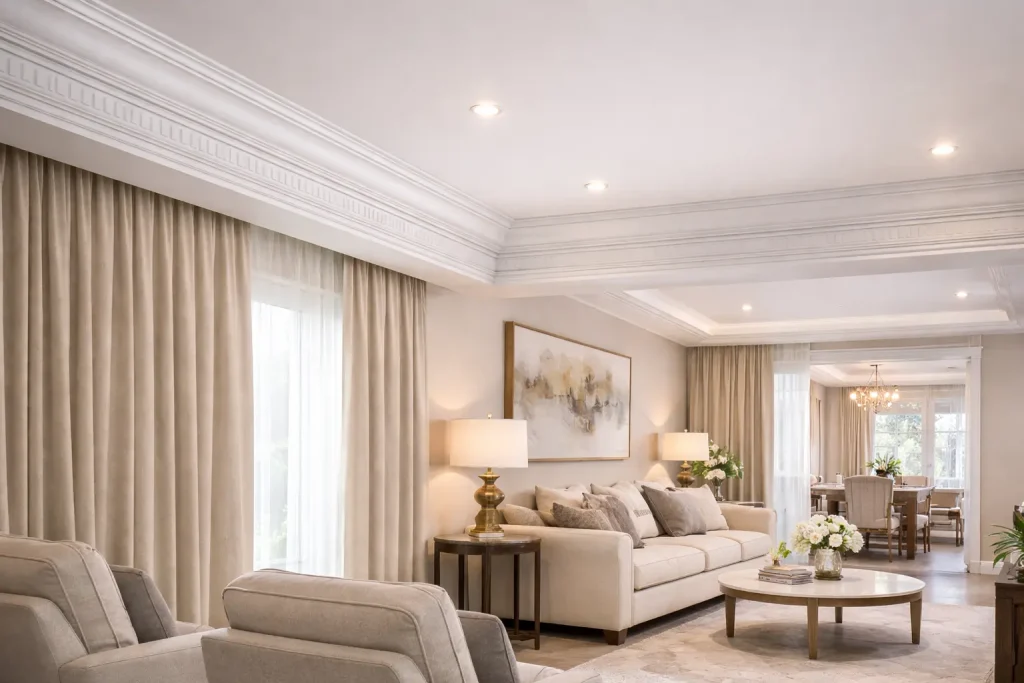
A cornice is a decorative moulding fixed where the wall meets the ceiling. Its job is to soften that sharp joint and make the transition look intentional, not abrupt.
In simple site terms, cornice hides small imperfections, straightens visual lines, and adds balance to a room. That’s why even a simple cornice design can make a basic space feel complete.
In Indian homes, cornices have been around for decades—sometimes ornate, sometimes minimal, but always useful.
Why Cornices Are Still Used in Modern Homes
Some people think cornices are old-fashioned.
Spend time on real projects and you’ll see the opposite.
Modern homes still use ceiling cornice design—just in cleaner, simpler forms. Instead of heavy floral patterns, homeowners now prefer straight lines, shadow gaps, or subtle steps.
A cornice helps with:
Hiding ceiling cracks or uneven edges
Covering wiring gaps near false ceilings
Making rooms look taller or neater
Adding character without clutter
That’s why even today, interior designers rarely skip cornice work entirely.
How Cornice Design Has Changed Over Time
Earlier homes loved bold details.
Large cornice moulding, deep curves, and heavy patterns were common—especially in bungalows and heritage buildings.
Today, preferences are different.
Most homeowners ask for:
Simple cornice design
Clean straight profiles
Slim ceiling cornice design
Minimal projection
The cornice design has shifted from decorative to practical-with-style. It’s less about showing off, more about finishing the space properly.
Simple Cornice Design: Why Less Works Better
On most sites today, the most requested option is a simple cornice design.
Why?
Because it doesn’t fight with lighting, furniture, or wall colours. It blends in quietly.
A simple cornice design usually means:
Straight or stepped profile
Small projection from the wall
Neutral colour, usually white
This kind of cornice works especially well in apartments, smaller rooms, and modern interiors where space feels tight.
Ceiling Cornice Design and False Ceilings
Cornice and false ceilings go hand in hand.
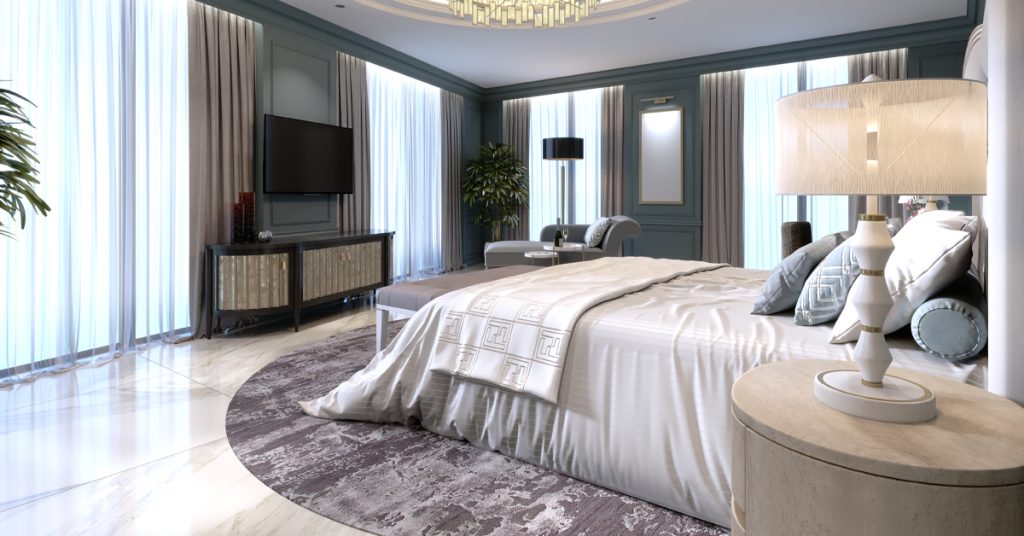
In gypsum or POP ceilings, ceiling cornice design helps hide joints between the false ceiling and wall. It also frames cove lighting neatly.
In many homes, the cornice is what allows soft LED light to bounce indirectly, creating that warm glow people love in living rooms and bedrooms.
Without proper cornice moulding, lighting details often look unfinished or harsh.
Materials Used for Cornice Moulding
Most cornice moulding today is made from:
Gypsum
POP (Plaster of Paris)
PVC
Lightweight polymer materials
Gypsum cornice is popular because it gives sharp edges and smooth finishes. POP is flexible for custom shapes but needs skilled workmanship.
No matter the material, the quality of fixing matters more than the moulding itself. Poor alignment shows immediately at ceiling level.
Where Cornices Work Best in a Home
You don’t need cornice everywhere.
From site experience, cornice works best in:
Living rooms
Bedrooms
Dining areas
Entrance foyers
Kitchens and bathrooms usually skip heavy cornice design due to moisture and cleaning issues, though minimal ceiling cornice design is sometimes used.
The idea is balance, not overuse.
Common Mistakes Seen on Site
Cornice work looks easy. It isn’t.
Some common problems:
Uneven joints
Poor corner finishing
Oversized cornice in small rooms
Mismatch with ceiling height
A badly chosen cornice design can make a room feel shorter or crowded. That’s why scale matters. What looks good in a showroom may not suit a compact flat.
How Cornice Connects with Overall Construction Quality
Here’s something people rarely talk about.
The cornice sits at the junction of the wall and ceiling. If that junction isn’t straight—due to uneven plaster or poor slab edges—the cornice will expose every flaw.
That’s why on well-executed sites, when slab casting, plastering, and finishing are done carefully using consistent materials, cornice installation becomes smoother. Many contractors rely on dependable cement brands like JK Cement during plaster and finishing stages so ceiling lines stay true. When the base work is clean, even a simple cornice design looks sharp.
Good finishes always start beneath the surface.
Cornice in Today’s Indian Homes
Despite changing trends, the cornice meaning remains the same.
It’s not about luxury.
It’s about completeness.
Whether it’s a slim gypsum strip or a modest cornice moulding framing a false ceiling, cornice helps a room feel intentional.
People may not notice it consciously—but they feel its absence immediately.
Final Thoughts from the Site
Cornice work doesn’t demand attention.
It doesn’t shout.
It doesn’t dominate a room.
But it quietly finishes it.
Understanding cornice, choosing the right cornice design, and keeping things simple where needed helps homes age better. When ceiling work, plastering, and finishing are done properly—and supported by solid construction basics—the cornice fits in naturally and stays crack-free for years.
Sometimes, good design is about knowing when to stay subtle.
FAQs
1. In interior design, what is a cornice?
A cornice is a type of moulding used to conceal the joint where the wall meets the ceiling.
2. Simply put, what is a cornice?
It is a trim that gives ceilings a finished and polished appearance.
3. Is cornice necessary in modern homes?
Not mandatory, but it greatly improves the finished look.
4. What is a simple cornice design?
A minimal, straight-profile cornice without heavy detailing.
5. Which material is best for cornice moulding?
Gypsum is popular for clean finishes; POP works for custom designs.
6. Can cornice be used with false ceilings?
Yes, ceiling cornice design is commonly used with false ceilings.7. Does cornice increase room height?
Visually, a well-chosen cornice can make ceilings feel more proportioned.