If you’ve ever stood in front of your wardrobe wondering where your favourite shirt disappeared, you know that storage isn’t just about space — it’s about design that understands your life.
A good wardrobe design doesn’t just store clothes. It brings order to everyday chaos, hides the mess you don’t want to deal with, and adds personality to your bedroom without trying too hard. And in today’s homes, where every inch counts, wardrobes are not just cupboards. They’re design statements, smart organisers, and silent lifesavers.
So, if you’re planning a new wardrobe or rethinking your old one, here’s how to make it not just functional, but something you’ll actually enjoy using every day.
The Modern Wardrobe: Function First
Let’s be honest – we’ve all seen those bulky old almirahs that groan every time you open them. Those days are gone.
A modern wardrobe design is sleek, simple, and built to fit your lifestyle. It’s not about making it bigger – it’s about making it smarter. Think of your wardrobe as a personal assistant. It should know what you reach for daily, what stays folded, and where the seasonal stuff goes. A good wardrobe design saves time, space, and sanity.
- If your mornings usually start in a rush, opt for open sections or pull-out baskets that allow you to see everything at a glance.
- If you’re someone who loves things in order, add internal partitions, drawer dividers, and hanging sections at two levels.
Bedroom Wardrobe Design: Built Around You
Every bedroom tells a story, and your wardrobe is a big part of it.
When planning a bedroom wardrobe design, think about how you use your room. Do you prefer a minimalist style, with clean lines and minimal clutter? Or do you prefer a bit of old-school charm – warm tones, mirrors, maybe a wooden texture?
- Sliding wardrobes work beautifully in smaller bedrooms. They don’t eat up floor space and keep the look neat.
- In larger rooms, hinged doors still work well if you want that satisfying “open all at once” feel.
- For couples, designing a bedroom wardrobe together often helps avoid those morning traffic jams — give each person a defined section with their own drawers and hanging space.
And remember: a wardrobe that matches your bed or complements the flooring ties the whole room together.
Sliding Wardrobe Design: Space That Moves With You
Sliding wardrobes are one of the best gifts modern homes have received.
No more banging doors or hitting the bedside table every time you open a cupboard.
A sliding wardrobe design works perfectly in compact rooms. The sleek doors glide effortlessly and keep the space feeling open.
- You can go for mirrored panels – they make small rooms look double in size — or tinted glass if you prefer a more modern touch.
- For a softer, natural vibe, sliding doors in wood grain or matte laminates look timeless.
Inside, plan for smart storage:
- Pull-out trays for accessories
- A vertical section for long clothes like sarees or coats
- Overhead storage for travel bags or blankets
The trick is to make your sliding wardrobe design look elegant outside and efficient inside.
Wardrobe Inside Design: Where the Magic Happens
Most people spend hours deciding the outside look – the colours, the finish, the handles – but the real game changer is the wardrobe inside design.
- Start by dividing it based on how you live:
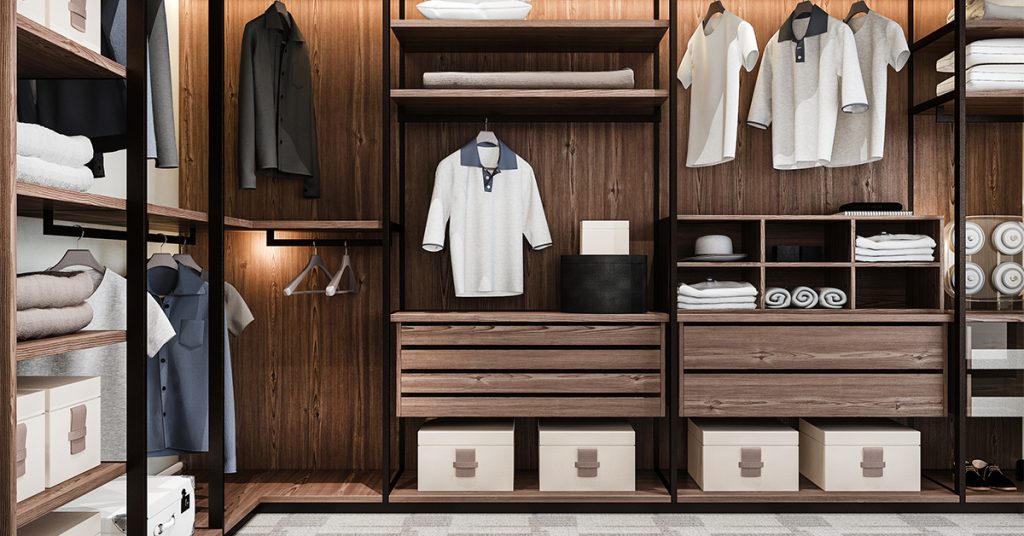
- Hanging space for shirts, jackets, and dresses
- Drawers for undergarments, accessories, and ties
- Shelves for folded clothes
- Deep sections for bags or seasonal wear
- If you share the wardrobe, use separate sections — nothing causes morning fights faster than a missing kurta.
- Add small details that make life easier — soft-close drawers, LED lights that switch on when you open the door, or a hidden pull-out mirror.
The wardrobe’s inside design is where practicality meets comfort. It’s your private space – make it work like one.
Modern Wardrobe Design Trends You’ll Actually Use
Design trends come and go, but some just make sense.
- Right now, modern wardrobe designs are leaning towards clean, handle-less shutters – smooth push-to-open doors that give a seamless look.
- Neutral colours like beige, grey, and soft wood tones make the space feel calm, while deep blues and greens add richness.
- Contrast is great too – try a matte black wardrobe with brass handles or a white wardrobe with light inlays.
- Built-in wardrobes are also extremely popular – they are space savers. And make small bedrooms feel bigger.
Making Small Bedrooms Feel Bigger
If your bedroom is compact, every inch of your wardrobe design needs to count.
- Sliding doors are your best friend – they save space.
- Mirrored panels reflect light and make the room feel airy.
- Vertical storage – tall wardrobes that go right up to the ceiling — maximise every bit of height.
- Inside, stick to drawers instead of shelves for smaller items. Use organisers or fabric bins to keep things sorted.
- And don’t shy away from colour – even a pastel or wood finish can make a small room feel warm and not cramped.
Adding a Personal Touch
Your wardrobe is a reflection of your habits.
- If you’re someone who loves accessories, dedicate a small pull-out tray for jewellery or watches.
- If you have a lot of shoes, add a bottom drawer with a tilting shoe rack.
- Incorporate soft lighting inside – it feels luxurious, and you’ll never again have to hunt for clothes in dim corners.
- And here’s something most people overlook – a tiny open shelf or niche beside the wardrobe. This gives room for your accessories, perfumes or books, creating a functional bedroom wardrobe design space.
The Wardrobe That Works for You
A wardrobe should always work for you. It isn’t so much about design as it is about how the design fits into your daily life.
Whether it’s a sleek sliding wardrobe design, a practical modern wardrobe design, or a simple built-in cupboard, what matters is that it feels like it belongs in your home.
So take your time, think about how you live, and build storage that supports that life.
Because when your wardrobe is designed right, everything else in the bedroom just falls into place.
A stylish wardrobe deserves a home built on lasting strength. Create elegant, functional spaces with the reliability of JK Cement — from smooth finishes using JK PPC Cement to long-term protection with JK Super Protect Cement, and eco-friendly construction with JK LC3 Cement, India’s first low-carbon cement. Build beautifully. Build strong. Build with JK Cement.
FAQs
1. How do I plan a wardrobe design that actually fits my lifestyle?
Consider your daily habits. If you rush in the mornings, go for open shelves or pull-out drawers. If you prefer things put away, go for closed drawers.
2. What’s the advantage of a sliding wardrobe design over a hinged one?
Sliding wardrobes save space and look cleaner. They’re perfect for small bedrooms where every inch counts.
3. How can I make my bedroom wardrobe design look modern without overdoing it?
Simplicity is the rule. Opt for soft colours, minimal hardware, soft lighting or mirrored panels, and a matte finish in neutral shades to keep it timeless.
4. What should I focus on when planning wardrobe inside design?
The priority should always be given to how you use your clothes. Keep your shirts, dresses and blazers in the hanging sections, smaller items and accessories in drawers, and bed linen and suitcases in the overhead storage. Adding lights inside adds to the functionality.
5. How do I make it work if I share my wardrobe with my partner?
Division of space is important. Assign sections with individual drawers to avoid things getting mixed up.
6. What materials are best for a modern wardrobe design?
Laminate and MDF are practical and affordable. For something richer, go for veneer or lacquered glass..
7. How can I add a personal touch to my wardrobe design?
Ask yourself how you use your things. If you like your perfumes within easy reach, keep an open niche to store them. If you like a well-lit wardrobe space, add lights inside. Choose the wardrobe design according to your preference.