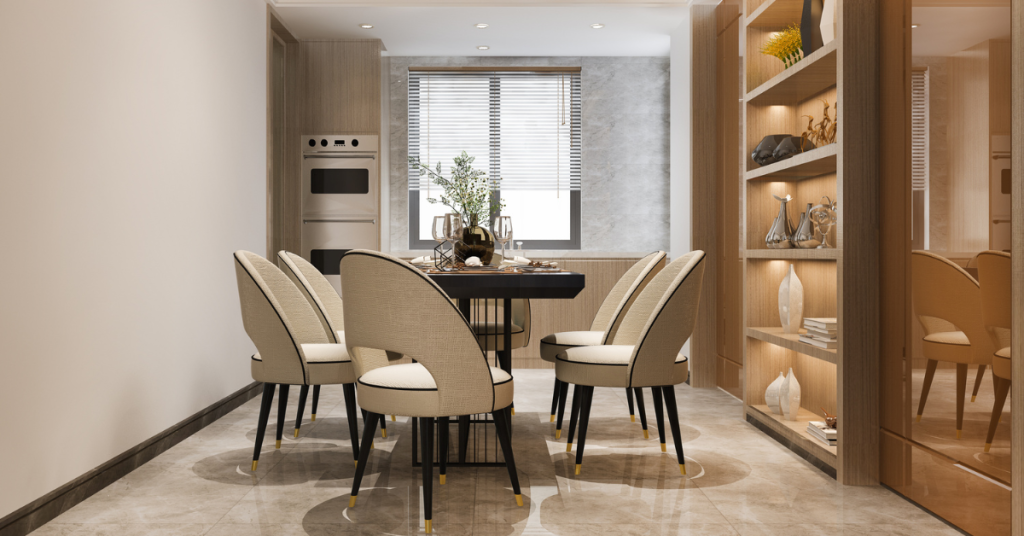
If you’ve ever had a meal in a space that felt just right, you know what I mean — the light hits the plates softly, chairs feel cozy without trying too hard, and there’s this warmth in the air that makes you linger a little longer. That’s not magic. That’s good dining hall design.
The dining space is where stories unfold — late-night chai talks, big family dinners, quiet solo breakfasts. A well-designed dining room design doesn’t shout for attention; it quietly sets the tone for togetherness. Whether you have a tiny nook by the kitchen or a big open dining hall beside the living area, what matters is how it feels when you sit down.
From Formal to Familiar
Gone are the days when dining rooms looked like they were made for Sunday dinners you couldn’t spill on. The new dining hall design is relaxed, fluid, and real. It’s okay if your dining table shares space with your living room or opens into your kitchen — that’s how modern homes breathe.
People often turn even the smallest spaces into warm, welcoming dining corners. A round table, a couple of mismatched chairs, a bench against the wall, a few warm pendant lights, and a single plant in the corner — that’s all it takes. Suddenly, it becomes the coziest spot in the home. Sometimes, great dining room design isn’t about a big budget; it’s just about thoughtful, simple touches.
Lighting That Feels Like Conversation
You can have the best furniture in the world, but if your lighting is harsh, your space won’t sing. Lighting is the secret ingredient in every dining hall design. Try a statement pendant right above the table — one that gives soft, diffused light. Ditch the tube lights; they belong in offices, not over dinner.
Warm light makes food look better and people look happier. A small trick: install a dimmer. It lets you change the mood — bright for breakfast, mellow for dinner. That’s how good dining area design works — flexible and thoughtful.
Tables That Tell Stories
The table is the heart of your dining room design, so choose one that feels like you. Wooden tables bring warmth; marble tops add elegance. Round tables spark conversation; rectangular ones fit big families. Don’t obsess over matching everything. Mismatched chairs? They add character.
If your dining room interior design shares space with your living area, define it visually — maybe with a textured rug or a hanging light that draws the eye. These small design tricks subtly tell people, “This is where we eat, laugh, and talk.”
Open and Flowing Spaces
Modern homes are all about openness. A smart dining hall design flows naturally — no walls, just visual separation. A kitchen counter that doubles as a serving station and a dining table right beside a glass sliding door — these little layout decisions make life easier.
If your dining hall or area opens into the kitchen, keep colors consistent so it feels connected. And always think about ventilation. Fresh air, a bit of sunlight, maybe a view — these are free upgrades that instantly elevate your dining area design.
Mix, Don’t Match
Here’s a secret: the best-designed dining spaces don’t look “designed”. They look lived in. Mix materials — wood, metal, cane, glass — and see how they talk to each other. A matte black light fixture over a warm oak table, or a woven chair against a marble top. These contrasts give soul to your dining room interior design.
If you live in a humid city, skip heavy upholstery and go for lighter, breathable textures. In drier regions, soft fabrics and warm tones bring coziness. Design isn’t one-size-fits-all — it’s about your climate, your habits, and your rhythm.
Adding layers for personal touch
Flat spaces feel cold. Add layers — a rug under the table, a console for crockery, and a few art pieces or framed family photos. Mirrors work wonders too; they bounce light around and make smaller dining hall designs feel airy.
A friend in Jaipur keeps her sideboard decorated with fresh flowers and candles. “It feels festive every day,” she laughs. That’s the charm of personalized dining room design — it tells your story, not a catalogue’s.
The Power of Color
Colors change everything. Neutrals — whites, beiges, and greys — make your dining area design look spacious. Earthy tones like olive green or terracotta feel grounded and warm.
If you love bold colors, use them smartly. Paint one wall deep blue or hang colorful art without overdoing it.
If your dining hall shares walls with the living room, carry forward the same color family but shift shades slightly — lighter or darker. It keeps the flow natural yet distinct.
Comfort First, Always
A beautiful dining room design means nothing if the chairs hurt your back or the table is too high. Comfort beats trends every time. Pick furniture that feels good to sit on for hours — because meals stretch, conversations drift, and comfort makes it all possible.
And don’t forget the sound. Hard surfaces can echo; a rug or curtains help soften the acoustics. It’s a small touch that makes your dining room interior design feel warm and intimate.
Make It Personal
The most stylish homes aren’t the most expensive—they’re the most honest. Add that quirky clock you bought on vacation, hang a handmade lamp, and display your grandma’s crockery. Real dining hall design isn’t about rules. It’s about reflecting you.
Because let’s face it — the dining table isn’t just for food. It’s where birthdays are celebrated, ideas are discussed, and sometimes, where life slows down for a bit. That’s what good dining area design does: it makes space for living. A beautiful dining hall isn’t just designed — it’s built to last. From smooth walls to lasting strength, every stylish space begins with the right foundation. With JK Cement, you get it all — elegance, protection, and sustainability.
Build beautifully. Build strong. Built with JK Cement.
FAQs: Modern Dining Hall Design Ideas
1. How do I make a small dining hall look bigger?
Use light colors, slim furniture, and round tables. Mirrors help too — they double the light and visual space.
2. What’s trending in dining room interior design for 2026?
Natural wood, earthy colors, woven textures, and warm lighting are in trend. Comfort is the new luxury.
3. Can my dining hall be part of the living room?
Of course. Use lighting or rugs to define zones — that’s modern dining hall design at its best.
4. What’s the best table shape for compact dining room design?
Round or oval tables work the best. They take up less space and encourage easy conversation.
5. How do I make my dining hall cozy without clutter?
Keep surfaces clear, use layered lighting, and add a few meaningful accessories.
6. Should dining chairs match the table?
Not necessarily. Mixing chairs adds character — just keep materials and tones balanced.
7. What’s one simple upgrade for dining room interior design?
Change your lighting. A pendant lamp with warm tones instantly transforms any dining hall.