Imagine walking into a grand old cathedral or a sleek, modern hotel lobby. There is a specific feeling you get underfoot—a cool, solid, and timeless sensation. That’s the magic of marble. For centuries, this stone has been the go-to for anyone looking to add a touch of “forever” to their space. But if you’re sitting at your kitchen table wondering if marble is right for your home renovation, you probably have a few practical questions. Is it too high-maintenance? Will it stain if I spill my morning coffee? And honestly, what is marble exactly, beyond just being a pretty rock?
To understand why we love it, we first have to look at its origin story. If you’ve ever wondered what type of rock, it’s actually a metamorphic rock. Think of it like a “glow-up” for limestone. Deep inside the earth, ordinary limestone gets squeezed by intense heat and pressure. It’s as if the earth takes a lump of clay and molds it until it becomes something totally different: solid and crystalline. This action makes the unique patterns we all love. Those flowing lines are just mineral deposits that were trapped in the molding process ages ago.
Bringing the Outdoors In: The Appeal of Marble Design
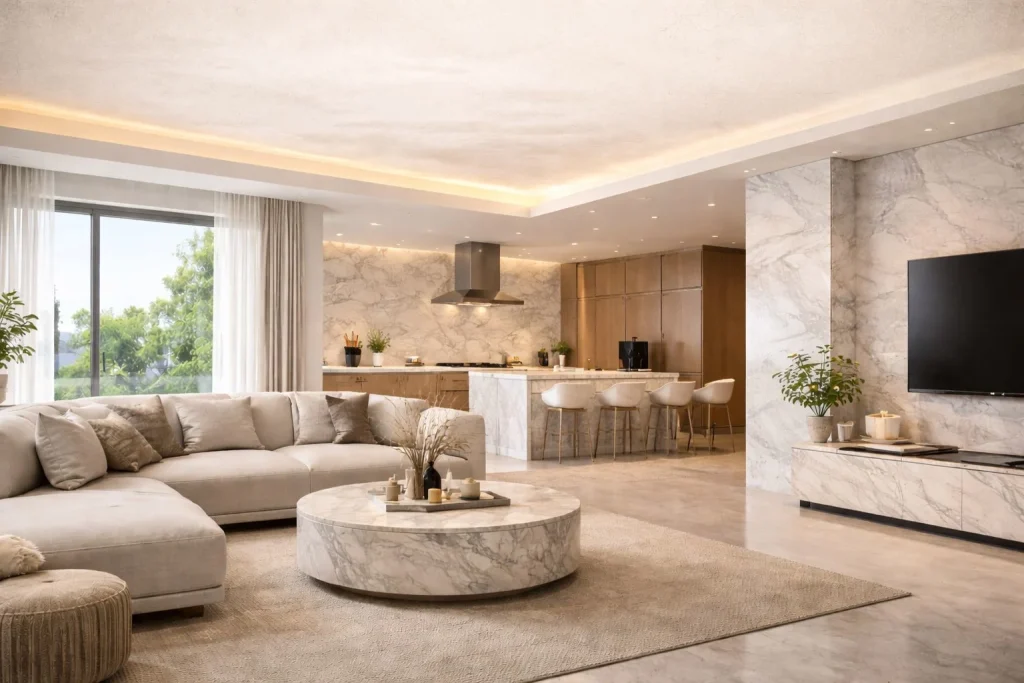
When we talk about marble design, we aren’t just talking about floor tiles. Today, designers are getting incredibly creative. You’ll see marble used as chunky “waterfall” islands in kitchens, thin veneers on wardrobe doors, or even carved into minimalist bathroom sinks. The beauty of the stone is that no two slabs are ever identical. Choosing a piece of marble is a bit like choosing a piece of art; you’re looking for a pattern that speaks to you. Some people love the heavy, dramatic veins that look like a lightning storm, while others prefer a soft, cloud-like wash of color.
Because it’s a natural product, marble has a way of making a room feel grounded. In a world full of plastic and synthetic materials, running your hand over a cold stone surface feels authentic. It’s a bit like the difference between a synthetic rug and a hand-knotted wool one—there’s a soul to it that you just can’t replicate in a factory.
Finding Your Match: Common Types of Marble
Not all stones are created equal. When you head to the showroom, you’ll realize there are hundreds of types of marble, each with its own personality and price tag.
Carrara: This is the “classic” marble from Italy. It’s usually grayish-white with soft, feathery veins. It’s the most common and often the most affordable, perfect for that timeless Parisian apartment vibe.
Calacatta: Often mistaken for Carrara, this is the “luxury” cousin. The background is whiter, and the veins are thicker and more dramatic. It’s a statement maker.
Nero Marquina: If you want to go bold, this is a stunning black marble with bright white veins. It looks incredible in a powder room or as a fireplace surround.
Makrana: Famous in India (it’s what the Taj Mahal is made of!), this is a high-quality white marble known for its durability and brilliant glow.
The key to great marble design is matching the stone to your lifestyle. If you have three kids and a messy dog, a highly polished black marble floor might show every single smudge and hair. In that case, a “honed” (matte) finish on a lighter stone might be your best friend.
Living with Marble: The Real Talk
Now, let’s address the elephant in the room: the maintenance. People often worry that marble is too delicate. Let’s be honest—it is a bit of a diva. Because it’s a “soft” stone (compared to granite), it can scratch, and because it’s porous, it can stain if you leave a puddle of red wine or lemon juice on it for too long.
However, there is a certain beauty in the “patina” marble that develops over time. In Europe, you’ll see marble counters in old cafes that are covered in little rings and scratches from a hundred years of service. It tells a story. But if you’re the type of person who wants things to stay looking brand new forever, you’ll just need to invest in a good sealer. Sealing your marble is like putting a raincoat on it; it gives you a window of time to wipe up spills before they soak in.
Why Marble Stays Trending
The main reason marble remains popular, even with all the quartz and porcelain choices available, is its temperature.
Marble stays naturally cool, which is a godsend in warmer climates. It’s also incredibly versatile. Whether your home is “Modern Farmhouse,” “Industrial Chic,” or “Traditional Luxury,” there is a marble that fits the mood.
The Foundation of a Great Build
When planning your space, remember that marble design isn’t an “all or nothing” choice. You don’t have to deck out your entire house in stone to get the effect. A little marble can really change the look of your home, like a backsplash in the kitchen or a coffee table in the living room.
A successful project hinges on a strong base. How well something is installed matters just as much as how good the material looks. Protect your investment long-term by using good backing materials. That’s where quality finishes and binders help.
For example, using a brand like JK Cement for your floors or walls means your home’s base is solid, like the marble you put on top. A great piece deserves a great base.
FAQs
1. Will marble make my bathroom floor slippery?
Polished marble can be slippery when it’s wet. For bathrooms, go with a honed or tumbled finish for better grip, or use smaller tiles with grout lines for traction.
2. How often do I need to seal my marble countertops?
Generally, once a year is the gold standard. A quick way to test is the “water drop test”: put a few drops of water on the stone. If they bead up, you’re good. If they soak in and leave a dark spot, it’s time to reseal!
3. Why is my marble turning yellow?
This often happens with white marble if there is iron deep inside the stone that starts to oxidize (rust), or if you’ve been using the wrong cleaning chemicals. Always use a pH-neutral cleaner.
4. Can I use marble outdoors?
You can, but keep in mind that rain and sun will dull the polish over time. Many people love the weathered, ancient look it takes on outdoors, but it won’t stay “shiny.”
5. What’s the difference between “honed” and “polished” marble?
Polished is shiny and reflective, making colors pop. Honed is matte and smooth, which is great for hiding scratches and “etching” (dull spots caused by acidic liquids).
6. Does marble increase the value of my home?
Absolutely. Marble is universally recognized as a premium material. It’s a classic feature that rarely goes out of style, making it a solid investment for resale.
7. Can I put a hot pan directly on a marble counter?
While marble is heat-resistant, it’s not heat-proof. Intense heat can cause thermal shock or damage the sealer. It’s always safer to use a trivet or a hot pad.