Designing a kid’s bedroom is one of those projects that makes you smile even before you begin.
It’s the only space in the house where imagination runs wild – and it’s allowed to.
Where walls can have stars, beds can be shaped like rockets, and colour rules simply don’t exist.
A child’s room should feel alive. It’s not just about furniture or fancy décor – it’s about creating a space that grows with them, keeps up with their energy, and gives them comfort at the end of a long, playful day.
This blog will share practical, aesthetic and functional ideas for – how to create a good kids’ bedroom design.
1. Start with How They Live, Not Just How It Looks
Every parent knows this – kids don’t stay still for a second.
Their rooms shouldn’t either.
Well-planned kids’ bedroom design ideas aren’t just aesthetically pleasing; they’re also practical for the way kids move, play, and learn.
- Leave some open floor area. That’s their playground, their dance floor, and sometimes, their superhero landing spot.
- Add storage that’s easy to reach, such as drawers under the bed, open shelves, and baskets they can use themselves.
- The trick is simple: make the room work for them, not against them.
2. Colour That Feels Happy, Not Just Trendy
Forget the old “pink or blue” debate.
Kids today like what they like – sometimes that means green walls, yellow lamps, and a football bedsheet. And that’s perfectly fine. The kids’ bedroom design should be able to change easily as they grow.
Because the truth is, today’s Spider-Man phase might turn into a galaxy theme by next summer.
- If you’re unsure, start neutral – off-white, grey, or pastel
- Bring colour through bedding, art, or curtains.
3. Let the Theme Be Theirs
Kids love rooms that tell stories.
Some want a jungle full of animals; others dream of outer space or castles. The best part about themed kids’ bedroom design ideas? They’re fun for them and flexible for you. You can swap out the décor without tearing the room apart when their interests change (and they will).
- You don’t have to go overboard – one themed wall, a printed rug, or fun curtains can do the trick.
- Use more neutral colours, so not everything needs to be changed.
4. Furniture That Grows with Them
Children grow faster than you expect – both in size and taste.
So, pick furniture that adapts. That’s smart kids’ bedroom design – it’s not about expensive pieces, it’s about things that last. Because if you’ve ever seen a child’s room after a playdate, you know – things get real in there.
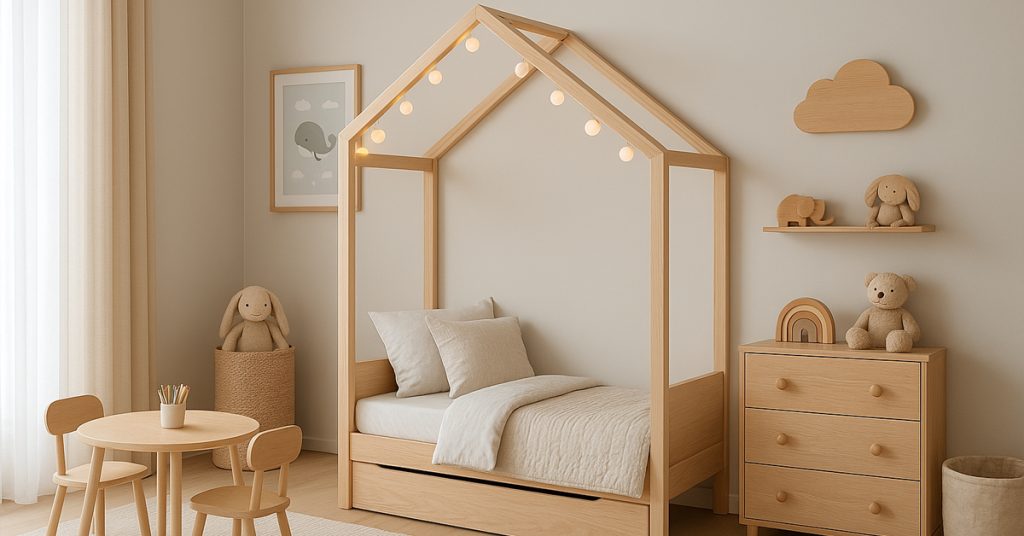
- A bed with extra drawers below. A study desk that adjusts in height. Chairs that aren’t too tiny.
- Rounded corners are a must, and so are materials that can handle some wear and tear.
5. Lighting That Matches Their Day
Lighting can completely change a room- and the more natural it is throughout the day, the better. Good kids’ bedroom design ideas use light not just for brightness but for mood.
- A bedside lamp with soft lighting for a night storytime and fairylights for a cosy feel creates a warm, fuzzy vibe.
- Avoid harsh white lights – they kill the warmth of the room.
- Softer tones make the space feel calm.
6. A Little Corner for Curiosity
Every child needs a space where they can focus – draw, read, or simply dream.
This small addition to your kids’ bedroom design can make a huge difference.
It gives them a sense of independence – their own little world within the world. It doesn’t have to be big.
- A small desk near a window works perfectly.
- A floor cushion with a bookshelf nearby creates a warm, comfortable space.
7. Storage That Kids Can Handle
Let’s be honest: kids collect stuff – toys, stones, stickers, random bottle caps.
It’s not just about keeping things tidy; it teaches them ownership. A functional kids’ bedroom design isn’t just practical – it’s quietly teaching life skills too. So, build a system they can use.
- Use open bins and labelled boxes for easy access.
- Put low shelves so they can put things away themselves.
8. Use Materials That Can Take a Beating
Kids jump, spill, scribble, and sometimes just “test gravity.”
That’s part of the fun. But create a design you’ll thank yourself later for, when a flying toy car misses the wall art but hits the cupboard.
- Go for washable paints, non-slip rugs, and sturdy furniture.
- Avoid glass, sharp corners, or anything too delicate.
9. Bring Nature In
Children naturally connect with outdoor elements.
Even a few touches – a plant, wooden textures, or a big window- make their room feel calmer.
- Natural light helps them sleep and study better.
- And if there’s space, a small indoor tent or floor mat can bring that “camp vibe” indoors.
- Blending energy with calm creates a balancing ambience in the kids’ bedroom design.
10. Go Green, Literally and Figuratively
Today, even children understand the word “eco-friendly.” And it’s a great lesson to build right into their room. That’s what a thoughtful kids’ bedroom design looks like in today’s world — considerate, comfortable and modern.
- Use non-toxic paints, recycled wood furniture, and soft cotton or linen fabrics.
- The more thoughtful the kids’ bedroom design, the more they acquire the responsibility of making mindful choices.
11. Let Them Add Their Touch
A kid’s room should feel personal. Perfect kids’ bedroom design ideas aren’t spotless – they’re full of stories, small messes, and memories being made.
- Hang their art. Frame their first medal.
- Let them pick a cushion or poster.
- When they see their own choices reflected in the space, they take pride in it.
At the End of the Day, A kid’s room isn’t just about how it looks on Instagram.
It’s about how it feels when they walk in after school – safe, playful, and completely their own.
The best kids’ bedroom design grows with them – flexible, warm, and full of love.
You don’t need big budgets. You just need small details that say, “This is your space.”
Bring your child’s dream room to life with JK Protect Cement and JK PPC Cement — trusted for their unmatched strength, smooth finish, and long-lasting beauty.
Because every strong and beautiful home begins with JK Cement.
FAQs
1. How do I choose the right colour for a kid’s room design?
First things first, take your kids’ opinion. Blend neutral colours with bright highlights for balance.
2. What’s the most important factor in a kid’s room design?
Comfort, freedom and flexibility. They should be able to play, rest, and study without stressing over minding too much.
3. How can a small kid’s room design look bigger?
Keep furniture minimal, use light colours, and let sunlight in.
4. Are bunk beds a good idea?
Yes, they are a great way to save space – but ensure they’re safe – not too close to the ceiling, have sturdy guardrails, and safe steps.
5. How do I keep the room organised?
Simple storage boxes and low shelves work best. The easier it is for kids to use, the cleaner it’ll stay.
6. What materials are best for furniture?
Wood and metal last long. Just make sure the edges are rounded and finishes are non-toxic.
7. Can kids’ rooms be eco-friendly?
Absolutely. Use organic fabrics, recycled wood, and energy-saving lights – small steps, big impact.