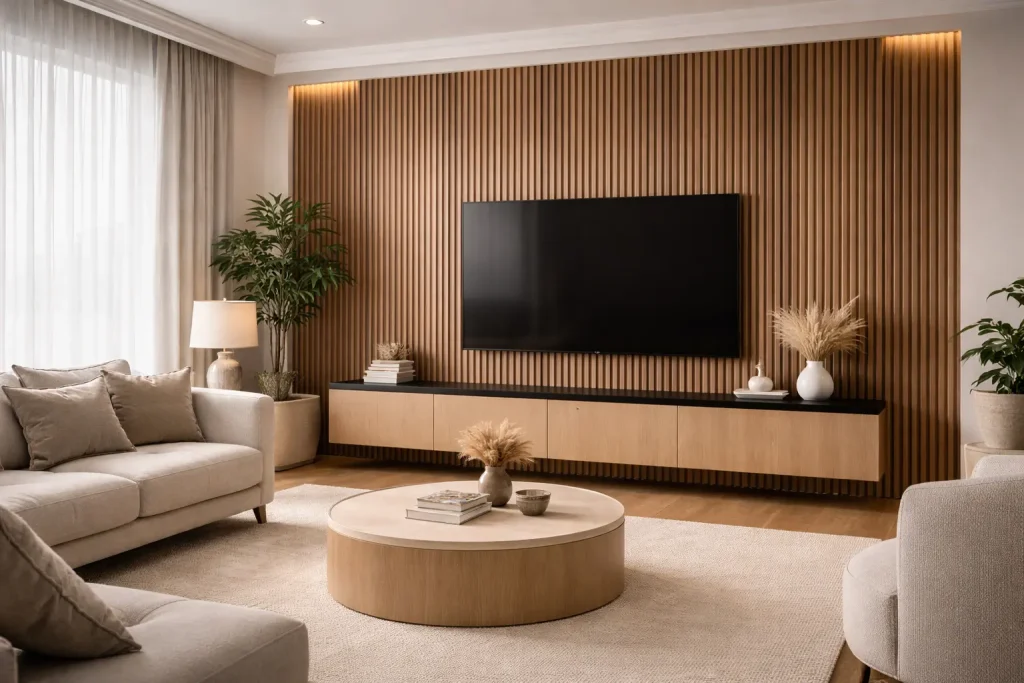
Have you noticed those walls with neat vertical grooves in living rooms, offices, or even new cafés popping up around the city? Those are fluted wall panels.
They’re basically wall coverings designed with repeated vertical lines. Nothing overly complicated. Just a smart way to add texture and depth without breaking walls or doing major civil work.
Planning a TV backdrop? A bedroom feature wall? Maybe a reception area that shouldn’t look flat and boring? A fluted panel wall can completely change the feel of the space without shouting for attention.
Let’s understand what they really are, the types you’ll find in the market, the materials used, and how they’re installed.
What Are Fluted Wall Panels?
Fluted wall panels are panels that come with evenly spaced vertical grooves carved into them.
Instead of leaving a plain and lifeless wall, a fluted panel wall adds quiet texture. When light falls on those grooves, it creates natural shadows. That play of light and shade is what gives the wall depth.
It’s subtle. Not flashy. But it makes a difference — and that’s exactly why designers keep coming back to it.
You’ll commonly see them on:
- TV backdrop walls
- Bed headboard walls
- Office reception areas
- Dining space feature walls
The most popular choice today? A fluted wood wall panel brings warmth and texture together.
Why Fluted Panels Are Trending Right Now
There’s something about vertical lines. They make a room feel taller. Cleaner. More structured.
Well-installed fluted wall panels can:
- Hide minor wall imperfections.
- Add a premium finish.
- Improve acoustics slightly.
- Create a focal point without loud colours.
In Indian homes, especially, where we often combine neutral walls with wooden furniture, a fluted wood wall panel blends beautifully.
It’s like adding texture without clutter.
Types of Fluted Wall Panels
Not all fluted wall panels are the same. The material changes everything — durability, cost, and look.
1. MDF Fluted Panels
- Most common and budget-friendly.
- Usually laminated or painted.
- Good for dry areas like bedrooms and living rooms.
2. PVC Fluted Panels
- Lightweight and moisture-resistant.
- Ideal for kitchens or semi-wet areas.
- A PVC-based fluted panel wall is easier to maintain.
3. Solid Wood Fluted Panels
- Premium option.
- A fluted wood wall panel made from teak, oak, or engineered wood looks rich and natural.
- It needs proper polishing and care.
4. WPC (Wood Plastic Composite)
- Durable and termite-resistant.
- A smart middle-ground option for Indian conditions.
Popular Fluted Wall Panel Designs
Design is where things get interesting. You don’t have to stick to basic vertical grooves.
Modern fluted wall panels come in:
- Slim, narrow grooves.
- Wide groove panels.
- Curved fluted designs.
- Half-wall fluting (lower panel only).
- Fluted panels combined with marble or laminate.
- In living rooms, many homeowners install a fluted wood wall panel behind the TV unit, then add soft LED strip lighting. That indirect lighting highlights the grooves beautifully.
- For bedrooms, a fluted panel wall behind the headboard makes the space feel hotel-like.
Choosing the Right Material for Indian Homes
Here’s where experience matters. India has humidity, dust, and sometimes termites — depending on the city. So when selecting fluted wall panels, consider:
- PVC or WPC panels for humid areas.
- MDF or fluted wood wall panel for drier climates.
- PVC (low maintenance) for rental homes.
- Solid wood fluted panels for luxury homes.
- Also, check the wall quality. Panels need a fairly level surface.
- If your wall has plaster cracks, fix that first. A strong base matters — just like in structural work.
- Foundation first. Finish later.
- For durable walls, strong foundations and bases, choose JK Super Cement – known for high strength and excellent performance.
Installation Guide
Installing fluted wall panels isn’t complicated, but it should be precise.
Step 1: Measure Properly
- Mark the exact wall area.
- Avoid last-minute cutting adjustments.
Step 2: Prepare the Surface
- The wall should be smooth, dry, and level.
Step 3: Install a Base Framework (If Needed)
- Sometimes, plywood backing is fixed first for a better grip.
Step 4: Fix the Panels
- Panels are attached using adhesive, screws (hidden) and a nail gun.
- A fluted wood wall panel may require more secure fixing due to its weight.
Step 5: Finishing
- Seal joints. Add edge trims. Install lighting if planned.
- Done properly, a fluted panel wall can last for years without issues.
Common Mistakes to Avoid
- Installing panels on damp walls.
- Ignoring the electrical planning behind the panel.
- Using a low-quality adhesive.
- Not aligning grooves perfectly – once grooves are misaligned, your fluted wall panels lose their clean look.
- If you’re adding a TV unit, plan wiring in advance. Don’t break the panel later to add a socket.
Maintenance Tips
Maintenance depends on the material.
For MDF or fluted wood wall panel:
- Dry cloth dusting
- Avoid excess water
For PVC fluted panel walls:
- Mild soap cleaning works
- Avoid harsh scrubbing — it damages the finish.
Cost Overview
Prices vary by city and material, but roughly:
- PVC fluted panels: ₹150–₹300 per sq. ft.
- MDF fluted panels: ₹200–₹450 per sq. ft.
- Fluted wood wall panel (solid wood): ₹500+ per sq. ft.
- Installation costs extra.
- Always check quality over price. Cheap panels may warp in 1–2 years.
Are Fluted Wall Panels Worth It?
Honestly? Yes – if used smartly. You don’t need to panel every wall.
One well-designed fluted wall panel feature is enough to change the room’s personality.
Keep the rest simple. Texture works best when balanced.
FAQs
1. What are fluted wall panels used for?
They are decorative panels used to create textured feature walls in living rooms, bedrooms, offices, and commercial spaces.
2. Are fluted panel walls waterproof?
PVC and WPC fluted panel walls are water-resistant. MDF and wood versions are not ideal for wet areas.
3. Is a fluted wood wall panel expensive?
Yes, solid wood options cost more than MDF or PVC but offer a premium finish.
4. Can fluted wall panels be installed on uneven walls?
Minor unevenness is manageable, but major surface issues should be repaired first.
5. Are fluted wall panels termite-proof?
PVC and WPC panels are termite-resistant. Natural wood panels need treatment.
6. Does a fluted panel wall improve sound insulation?
They offer slight sound absorption but are not full acoustic panels.
7. Can I remove fluted wall panels later?
Yes, but removal may damage the underlying paint or plaster.