The festive season always inspires us to decorate our homes – to give them a fresh, nature-inspired Diwali makeover without burning the budget. Imagine walking into a room and instantly feeling your shoulders drop. No big statement chandelier. No brand-new sofa. Just light streaming in, a hint of green in the corner, maybe the sound of water trickling somewhere nearby. That’s the quiet magic of biophilic interior design – spaces that borrow from nature to make you feel calmer, fresher, and more alive.
Now, this isn’t about turning your living room into a greenhouse. It’s about weaving nature into your everyday interiors so it feels natural, not forced. In our concrete-heavy Indian cities, that little touch of green and sunshine makes a bigger difference than you think.
Start with the simplest: light
Before you buy a single plant or piece of bamboo furniture, take a long look at how sunlight moves through your home. Morning light in the bedroom can make waking up feel gentler. Afternoon light in the living room means you might not need to switch on the lights until evening.
If your windows are small or blocked by buildings, consider mirrors to bounce light around, or even sheer curtains that let light in but soften the glare. Natural light is the cheapest, most effective mood-lifter out there, and a key ingredient in nature-inspired interiors.
Bring in the greens
Yes, plants are the obvious part. But biophilic design isn’t about crowding your space with pots from floor to ceiling. It’s about placing them where they’ll thrive and where you’ll see them.
- In the kitchen: A little pot of tulsi or mint on the windowsill – practical and fragrant.
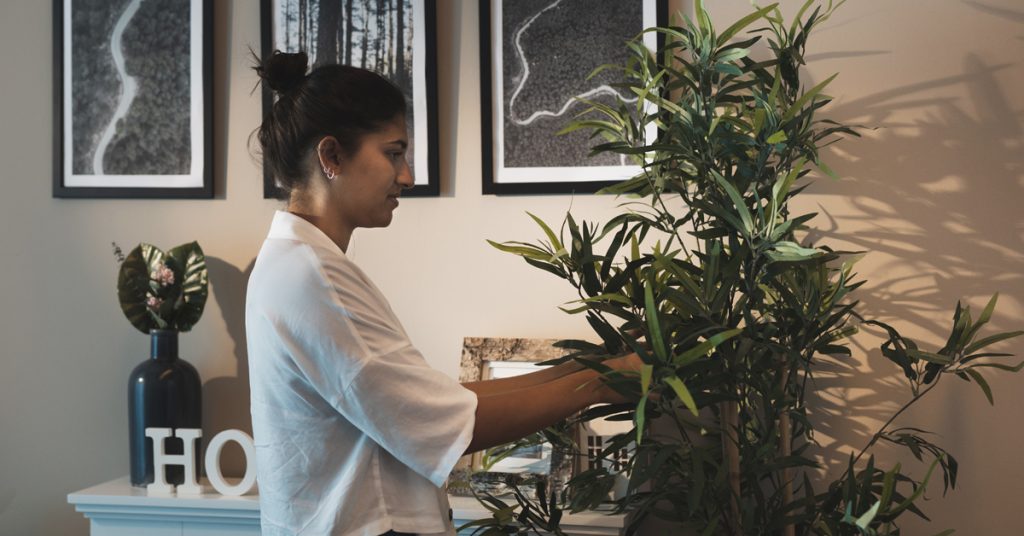
- In the living room: A tall, leafy plant in that empty corner instantly makes the space feel warmer.
- For balconies: Hanging planters or a vertical garden if you’re short on floor space.
Choose plants you can care for. Snake plant, pothos, and peace lily forgive a little neglect. If you’re the type who forgets to water, avoid delicate ferns — you’ll only end up with crispy leaves and guilt.
Mix in natural textures
Nature isn’t smooth and perfect. It has grains, knots, and imperfections — and that’s what makes it interesting. Swap out one or two synthetic elements for real, tactile materials like:
- A jute rug under your coffee table.
- Terracotta pots instead of plastic ones.
- A wooden bench that shows its age in the grain.
These materials age well. A scratch on a wooden table adds character, while a chip in a plastic one looks broken.
Think beyond plants
Biophilic interior design isn’t just about greenery. It’s also about evoking the patterns, colours, and elements you find outdoors.
- Colours: Soft earthy browns, muted greens, gentle blues. These tones are easy on the eyes and help a space feel grounded.
- Patterns: Think leaf prints on cushions, stone-textured tiles in the bathroom, or a woven cane headboard.
- Elements: A small tabletop fountain for the sound of running water, or even a bowl of fresh flowers on the dining table.
These little cues will make your senses freshen up.
Let the air move
We obsess over cooling with ACs, but the air inside your home needs to breathe, too. Keep windows open when you can. Arrange furniture so airflow isn’t blocked. Even a ceiling fan can help move fresh air around so the space doesn’t feel stale.
If you live in a humid place like Goa or Chennai, high ventilators or louvred windows can keep the air moving without letting in too much heat or rain.
Create a view – even if you don’t have one
Not all of us have the luxury of a mountain or garden view. But you can create your own little green focal point.
If your window faces another building, put a row of potted plants along the sill. Hang a planter so you see leaves instead of a concrete wall. Even a large framed photo of a forest or ocean can trick the mind into feeling calmer.
Blend modern and natural
Some people hear “nature-inspired interiors” and think they have to forego all modern comforts. That’s not true. A sleek modular kitchen can still have a bamboo blind. A contemporary sofa can be dressed with a handwoven throw.
The beauty of biophilic design is in the balance – a little softness to offset all the straight lines and hard edges modern interiors tend to have.
Make it part of your routine
The nicest thing about bringing nature in is that it naturally makes you care for your space. Watering plants, opening windows, letting the sun in – these aren’t chores. They’re small rituals that keep your home alive.
And here’s the unexpected part- it changes how you feel about your home. Instead of just being a place you come home to after work, it becomes a place you actively enjoy spending time in.
Biophilic design is less about following a trend and more about going back to something we’ve always known. Our grandparents’ homes with their verandahs, courtyards, and plenty of fresh air were naturally biophilic long before the term existed.
You don’t need a huge budget. Start with one sunny corner, one plant you can keep alive, or one piece of natural material you genuinely like. Slowly, your home will start to feel fresher, calmer, and more yours.
FAQs
1. Do I need a big house to try biophilic interior design?
Not at all. A single potted plant near a window, bamboo blinds, or even a small wall shelf with herbs can make a small home look equally fresh.
3. Is this going to cost me a lot of money?
Not necessarily. Many elements of nature-inspired interiors are free, like letting in more sunlight, rearranging furniture for airflow, to start with.
4. How do I make it feel connected to nature if my home does not have a good view?
Placing potted plants on the sill, hanging a planter in front of the window, or putting up a large framed photo of a forest, beach, or garden can do the work.
5. Does biophilic interior design mean I have to give up my modern furniture?
No. Modern and natural can work beautifully together. A sleek sofa with a handwoven throw, or a glass dining table with wooden chairs, does perfectly well.
6. What’s the quickest way to make my home feel more biophilic?
Keep the windows open, place one indoor plant, and add a natural texture like a jute mat or terracotta pot. Even these three small changes can shift the mood instantly.