When people talk about doors in construction, the focus usually goes to the door panel, frame, or hardware. But spend a little time on a real site with construction professionals, and you’ll hear another term pop up quite often: door threshold.
It may look like a small strip at the bottom of a doorway, but the door threshold plays a surprisingly important role in both residential and commercial buildings. It helps seal gaps, prevents water from entering, improves durability, and even contributes to the overall finishing of a doorway.
In simple terms, a door threshold is the strip or raised section installed at the bottom of a door opening, usually between two rooms or between indoor and outdoor spaces. Depending on the design and material used, thresholds can also act as a barrier against dust, insects, moisture, and even noise.
Let’s break down the meaning, types, sizes, and uses of door thresholds the way professionals in construction usually explain them.
What is a Door Threshold?
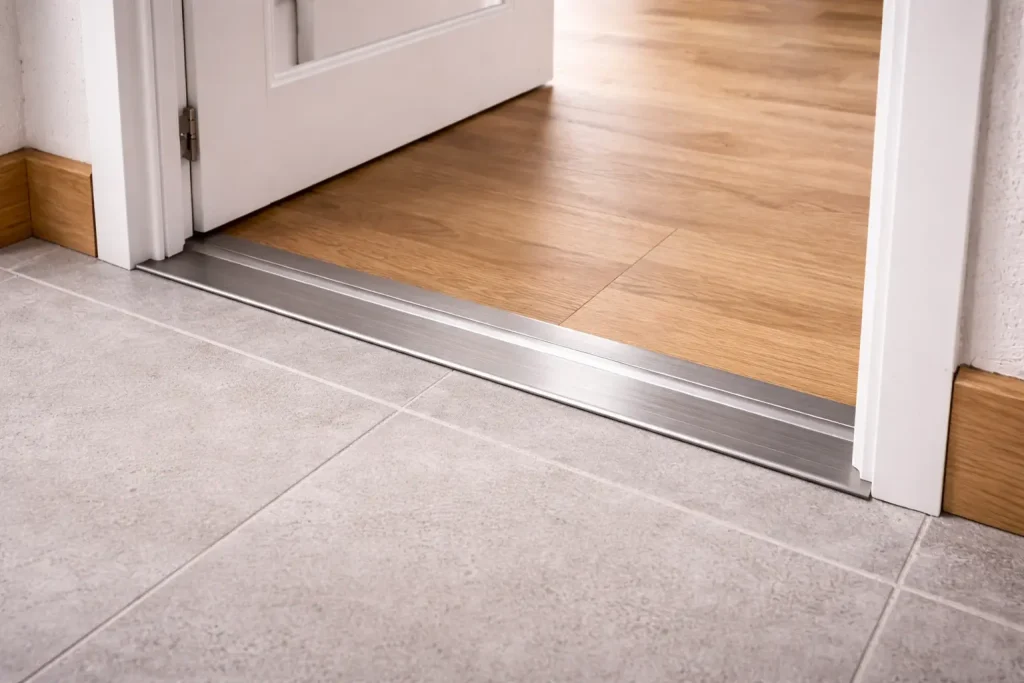
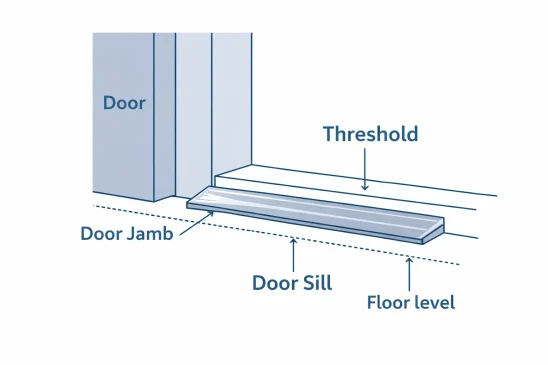
A door threshold is a horizontal strip installed at the bottom of a doorway, connecting the floor on one side of the door to the floor on the other side.
It sits directly beneath the door shutter and usually aligns with the bottom of the door frame. When the door closes, the bottom edge of the door rests against or near the threshold.
Why it matters in construction
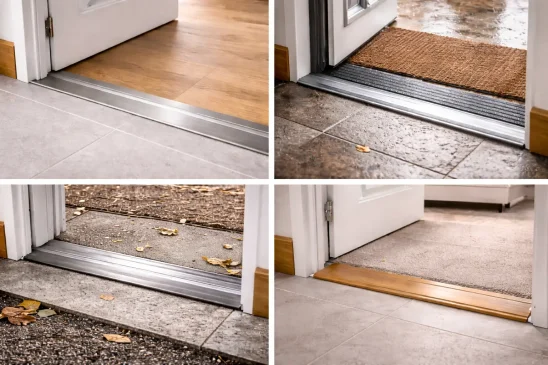
On site, contractors often say that thresholds are installed for three main reasons:
- Protection – Prevents water, dust, or insects from entering.
- Transition – Provides a smooth change between different flooring materials.
- Structural finishing – Strengthens the bottom of the doorway opening.
In older houses, thresholds were sometimes raised stone or wood pieces. In modern buildings, they are often metal, PVC, or engineered materials designed for durability.
Types of Door Thresholds Used in Construction
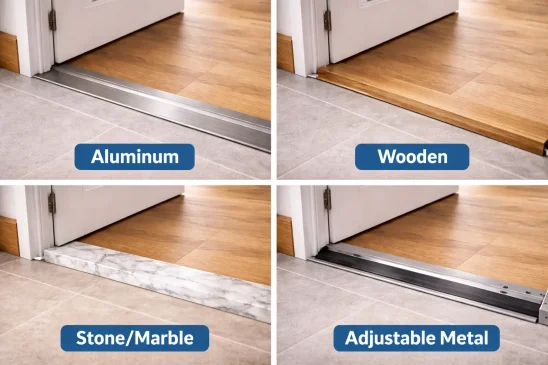
There isn’t just one kind of threshold. Depending on the building type, flooring, and door usage, several door threshold types are commonly used.
Wooden Door Thresholds
The wooden door threshold is one of the traditional options used mainly in residential interiors.
Carpenters often prefer hardwood thresholds like teak or oak, especially when the flooring or door frame is wooden.
Advantages
- Natural appearance
- Matches wooden doors and flooring
- Easy to cut and install
- Repairable if damaged
Where they are used
You’ll usually see wooden thresholds in:
- Bedroom doorways
- Living room entrances
- Interior floor transitions
However, they are not ideal for wet areas, because moisture can damage the wood over time.
Aluminium Door Thresholds
Aluminium door thresholds are widely used in modern homes and commercial spaces because they are durable and lightweight.
Architects often recommend aluminium thresholds where durability and a clean finish are important.
Benefits
- Rust-resistant
- Strong and lightweight
- Suitable for heavy traffic areas
- Modern appearance
Typical uses
These thresholds are common in:
- Entrance doors
- Balcony doors
- Office doorways
- Sliding doors
They are especially useful where the threshold must handle frequent foot traffic.
Stone or Marble Door Thresholds
In many homes, especially in India and the Middle East, stone or marble thresholds are very common.
These are usually made from marble, granite, or natural stone and installed while the flooring work is done.
Why builders use stone thresholds
- Extremely durable
- Water-resistant
- Long lifespan
- Matches stone flooring
Common locations
Stone thresholds are often found at:
- Main entrance doors
- Bathroom doorways
- Balcony doors
They also serve as a visual divider between rooms with different flooring.
Rubber or PVC Door Thresholds
Another practical option is the rubber or PVC door threshold, usually used for weatherproofing.
These thresholds are often combined with door seals to block water, dust, or air.
Key advantages
- Waterproof
- Flexible material
- Affordable
- Easy to install
Where they work best
They’re commonly used in:
- Exterior doors
- Garage doors
- Industrial buildings
- Utility rooms
They’re not always decorative, but they perform well where weather protection is needed.
Standard Door Threshold Sizes
When discussing door threshold sizes, contractors usually select dimensions based on the door width and flooring level difference.
Typical threshold dimensions include:
| Dimension | Common Size |
| Width | 75 mm – 150 mm |
| Thickness | 10 mm – 25 mm |
| Length | Equal to door opening |
For example:
- A 900 mm door will typically have a 900 mm threshold length.
- Thickness depends on the height difference between floors.
Architects sometimes design custom thresholds when the flooring materials change between rooms.
Uses of Door Thresholds in Buildings
While thresholds may appear simple, they serve several practical purposes in construction.
1. Sealing the Door Bottom
Thresholds help reduce gaps under the door, preventing dust, insects, and cold air from entering.
2. Water Protection
At entrance doors or balconies, thresholds help stop rainwater from flowing inside.
3. Flooring Transition
When two rooms have different flooring materials, the threshold creates a smooth and clean transition.
4. Structural Support
Some thresholds strengthen the bottom part of the door opening, especially in heavy-use doors.
5. Visual Finishing
Architects also use thresholds to create a neat finishing detail at doorways.
Choosing the Right Door Threshold
Selecting the right threshold depends on several practical considerations.
Professionals usually consider:
- Door location (interior or exterior)
- Flooring materials
- Water exposure
- Traffic level
- Design aesthetics
For example:
- Interior rooms → wood thresholds
- High traffic areas → aluminium thresholds
- Wet areas → stone or PVC thresholds
The right choice ensures durability and better door performance.
FAQs About Door Thresholds
What is the purpose of a door threshold?
A door threshold seals the gap at the bottom of a door, helps prevent dust and water entry, and creates a smooth transition between different flooring surfaces.
What is the difference between a door threshold and a door sill?
A threshold is installed inside the doorway at floor level, while a door sill is usually part of an exterior door frame and helps drain water away from the building.
What materials are used for door thresholds?
Common door threshold materials include wood, aluminium, marble, granite, rubber, and PVC.
What is the standard height of a door threshold?
Most thresholds range from 10 mm to 25 mm in height, depending on flooring differences and design needs.
Are door thresholds necessary?
Yes. They improve insulation, protect interiors from water and dust, and provide a finished transition between rooms.
Where are door thresholds commonly installed?
They are typically installed at main entrances, bathrooms, balconies, and between rooms with different flooring materials.