The quick answer
A wall corner is where two walls meet — usually at 90°.
It’s also the most vulnerable part of any room.
With the right design, protection, and finishing, corners can go from chipped edges to clean, intentional features.
What a wall corner actually is on site
Two types you deal with:
• Outside corners → the edges sticking out into the room
• Inside corners → the inward junctions
Outside corners take the most damage. Inside corners mostly get ignored.
Why corners start looking bad so quickly
It’s not bad paint.
Its impact.
• Furniture hits while shifting
• Luggage scrapes during movement
• Kids run toys into walls
• Even cleaning tools chip edges
And plaster or drywall edges are weak at corners.
Flat walls survive. Edges don’t.
Wall corner design ideas that actually work
Use shelves instead of leaving it empty
Corners often become dead space.
Add:
• Floating corner shelves
• Slim vertical units
• Ladder-style shelves
Suddenly it becomes storage + display.
Wrap a gallery wall around the corner
Instead of stopping frames at one wall, carry them across.
It softens the edge visually.
And makes the room feel more connected.
Turn it into a seating spot
A small chair, lamp, and rug in a corner near a window works surprisingly well.
Feels intentional.
Not leftover space.
Use plants to soften edges
Tall plants or layered planters break the sharpness of corners.
Especially useful in tight spaces.
Add niches if you’re renovating
Corners are the easiest place to carve out small recessed niches.
For décor. For lighting. Even for functional storage.
Wall corner protectors — where practicality comes in
What they are
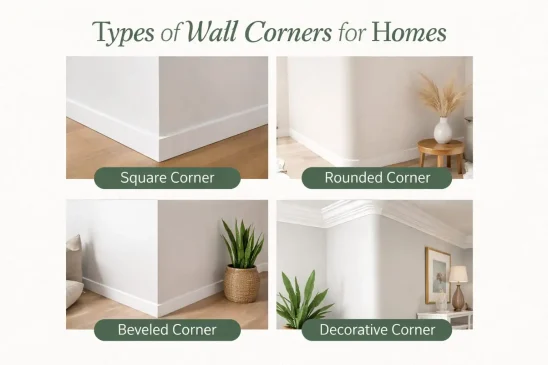
Corner protectors are L-shaped or rounded profiles fixed on outside edges.
Their job is simple:
Take the hit so the wall doesn’t.
Where they actually make sense
• Entry passages
• Narrow corridors
• Kids’ rooms
• Areas near furniture movement
In high-use spaces, repainting corners repeatedly makes no sense.
Protect once. Forget it.
Types of corner guards (what works where)
PVC / uPVC
Most common.
• Affordable
• Easy to install
• Works well in homes
Rubber
Used where impact is heavier.
• Parking areas
• Service corridors
You’ve seen those black-yellow guards — that’s this.
Stainless steel / aluminium
Cleaner look.
• Premium interiors
• High-traffic areas
Strong and long-lasting.
Decorative trims
Wood or designer profiles.
More aesthetic than protective.
Used where design matters more than impact resistance.
Corner beads — the hidden layer most people don’t see
Before paint, before finish — this is where durability starts.
What they do
Corner beads sit under plaster or drywall.
They:
• Keep edges straight
• Prevent cracking
• Strengthen corners
Skip this, and corners start failing early.
Types you’ll find
• Metal → strong, traditional
• PVC → flexible, moisture-safe
• Paper-faced → better bonding with plaster
Most sites don’t discuss this.
But it decides how clean your corners stay after a year.
Protection vs design — balancing both
You don’t always need visible guards.
Two approaches:
Concealed
• Corner beads under plaster
• Tile-in metal trims
Clean look. Protection hidden.
Exposed
• PVC guards
• Metal trims
Visible, but practical.
Sometimes it even adds a design edge.
What usually goes wrong
Not material.
Planning.
• No corner bead used
• Furniture hits same corner repeatedly
• No protection in high-traffic zones
• Poor finishing → uneven edges
Then repainting becomes routine.
If this was my own house
I’d divide corners into two types:
• High-use zones → protect them properly
• Visual zones → design them intentionally
And always:
• Use corner beads during finishing
• Plan furniture movement
• Avoid leaving corners empty
Because corners don’t fail randomly.
They fail where you ignore them.
FAQs — how people actually think about it
What is a wall corner and why does it get damaged so easily?
It’s the edge where two walls meet, usually exposed and sticking out into the room. Because it takes direct hits from movement, even small impacts cause chipping over time. That’s why corners wear out faster than flat walls.
How can I make an empty corner look better?
Use it instead of ignoring it — shelves, plants, or even a small seating setup work well. Wrapping décor like frames or lighting around the corner also makes it feel intentional rather than leftover space.
What is a wall corner protector?
It’s a protective strip fixed on edges to absorb impact instead of the wall. Common in both homes and commercial spaces where corners get hit repeatedly by furniture or movement.
Which material is best for corner guards?
PVC works for homes, metal for durability, and rubber for heavy-impact areas. The choice depends on how much wear that corner will actually face over time.
Are corner beads really necessary?
Yes. They sit under plaster and keep edges straight while preventing cracks. Without them, corners tend to chip or become uneven much faster.
Can I add corner guards later?
Yes, surface-mounted options can be installed on painted walls easily. They’re a quick fix for already damaged or high-use corners.
What’s the difference between baby guards and wall guards?
Baby guards are soft and meant to prevent injuries. Wall guards are harder and meant to protect the wall from damage.
How do I make corners look premium?
Use metal trims, clean edges, or integrated lighting and niches. The key is making it feel deliberate, not accidental.
Where should I definitely protect corners?
Entryways, corridors, and areas near furniture movement. These are the first places where damage starts.
What’s the biggest mistake people make with corners?
Ignoring them during planning. Most issues come from not protecting or designing them early.
Final thought
Corners are small details.
But they take the most abuse.
You can either keep fixing them every year.
Or design and protect them once — and stop thinking about them.