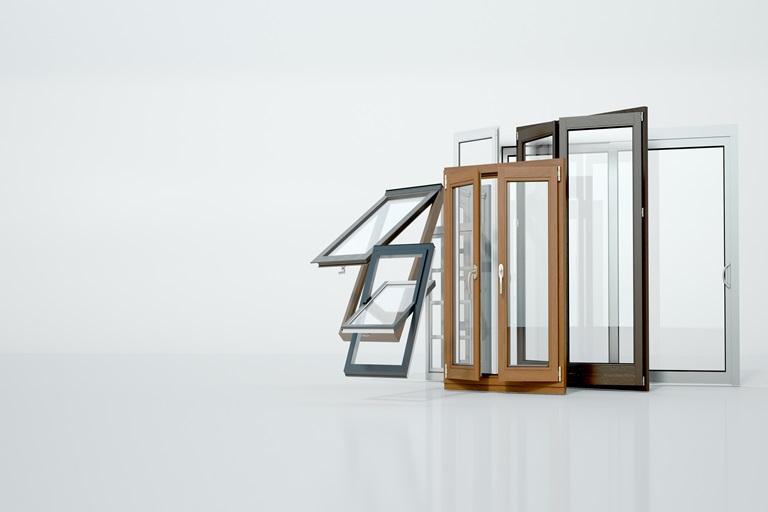
Windows are essential to complete the exterior look of a home while making the indoor atmosphere comfortable. They add style, and character into your living spaces while providing the desired level of natural light. However, with a plethora of options, selecting the right one can be a challenge. Therefore, we have provided a list of window glass types that you can choose for your home or office.
Window Glass Types at a Glance
Different window glass types offer different benefits depending on the requirements of a home. Some types of glass are selected for strength and safety, while others are preferred for privacy, energy efficiency, noise reduction or appearance.
The following comparison can help you understand common house window glass options:
| Type of Window Glass | Main Benefit |
|---|---|
| Clear Float Glass | Natural light and standard window applications |
| Insulated Glass | Improved thermal insulation |
| Gas-Filled Glass | Enhanced insulation between glass panes |
| Low-E Glass | Reduced heat transfer and UV exposure |
| Laminated Glass | Safety and noise reduction |
| Tempered Glass | Higher strength and impact resistance |
| Frosted Glass | Privacy while allowing natural light |
| Tinted Glass | Privacy and sunlight control |
| Patterned Glass | Privacy with decorative appearance |
| Stained Glass | Decorative and artistic appearance |
| Reflective Glass | Reduced glare and daytime privacy |
| Smart Glass | Adjustable transparency and privacy |
When choosing a glass window for a home, consider factors such as climate, sunlight exposure, privacy requirements, safety and the location where the window will be installed.
How to Choose the Right Type of Window Glass
Choosing the right window glass for your home involves thoughtful consideration of various factors. Here are some crucial factors to consider:
Energy efficiency:
When selecting window glass, pay attention to its energy efficiency. Consider Low-E (Low Emissivity) coatings or double-paned windows. These features can significantly impact your living space’s insulation.
Climate considerations:
Consider your local climate. For colder regions, windows with better insulation properties are crucial to retain heat. In contrast, in warmer climates, you might want glasses that reduce solar heat gain.
UV protection:
They protect your furniture and belongings from harmful UV rays. Choose window glass that has UV coatings to minimise the fading of carpets, furniture, and other items exposed to sunlight.
Privacy preferences:
Your level of desired privacy can influence your choice of window glass. Options like frosted or tinted glass provide varying degrees of privacy while still allowing natural light into your space.
Aesthetic appeal:
The appearance of your windows contributes significantly to your home’s appeal. Consider the style of your home and choose a window glass type that complements its overall look.
Different Types of Window Glass for Strength and Efficiency
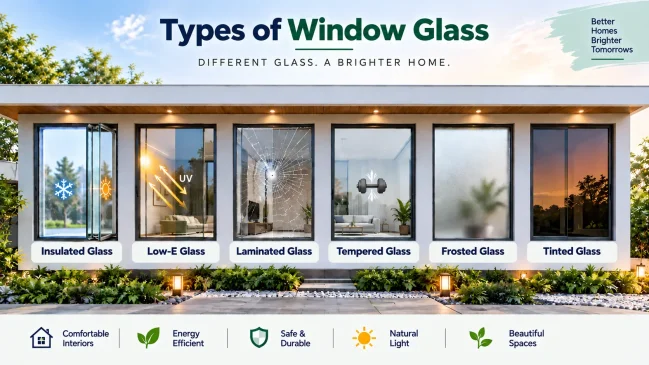
If your preference is durability and efficiency of the glass, you can consider the following types of glass:
Clear float glass:
This is the standard type of window glass used in most windows. It is made by floating molten glass on a bed of molten metal. It is a cost-effective option but has limitations to durability and energy efficiency as other options.
Insulated glass:
This type of glass consists of two or more panes separated by an insulating spacer. The insulating spacer enhances energy efficiency by providing adequate sunlight with reduced heat transfer between the indoors and outdoors. It is suitable for homes and offices in both cold and hot climatic regions.
Gas-filled glass:
These glasses have gas (such as argon or krypton) between the panes to enhance thermal insulation. These gases have higher density compared to the surrounding air which creates a barrier against heat transfer. When considering these types of glasses, ensure that they have leak-free seals, as tampered seals could lead to condensation buildup.
Low-E glass:
Low-emissivity glass contains an ultra-thin coating that reflects heat while enabling natural light to penetrate. This feature helps in maintaining low indoor temperatures with protection from UV rays.
Laminated glass:
These are made by sandwiching a layer of PVB (polyvinyl butyral) between two or more glass panes. Laminated glass offers increased strength, safety, and noise reduction. You can opt for these if you want to reduce unwanted noise from the streets.
Tempered glass:
This glass is heat-treated to increase its strength and durability. It is highly resistant to breakage and shattering, making it a safer option, especially in areas prone to impact.
Types of Window Glass for Home Privacy and Appearance
If your preference is to go for more privacy while making your windows look appealing, you can explore these options:
Frosted or obscure glass:
This type of window glass is treated to create a blurred or frosted effect, allowing light to pass through while maintaining privacy. It is commonly used in bathrooms or areas where privacy is essential.
Tinted glass:
They come in diverse colours and shades to offer both privacy and an enhanced aesthetic appeal. It reduces the visibility from the outside while controlling the amount of light entering the room.
Patterned or textured glass:
These glasses feature designs or textures that add an artistic touch to windows. They can range from subtle textures to intricate patterns, enhancing privacy while creating visually appealing windows.
Stained glass:
These glasses feature decorative and artistic qualities to add colour and elegance to windows. These are preferred to make decorative panels or smaller sections of windows to create a unique and visually appealing look.
Reflective Glass:
This glass has a reflective coating that provides privacy during the day by reflecting light and reducing visibility from the outside. It also helps in controlling heat and glare from the sun.
Smart glass:
It can change its properties based on external conditions or user control. You can switch its properties from being opaque to transparent with a remote control or voice command.
Choosing Window Glass Based on Your Requirements
The right house window glass depends on what you expect from the window. Different window glass types can be considered based on requirements such as privacy, safety, thermal comfort, noise reduction and appearance.
For Privacy
Frosted or obscure glass can be considered for areas where privacy is important while allowing natural light to enter. Tinted, patterned and smart glass can also provide different levels of privacy.
For Strength and Safety
Tempered glass is designed for higher strength and resistance to impact, while laminated glass can provide additional safety because of its layered construction.
For Energy Efficiency
Insulated, gas-filled and Low-E glass can be considered where reducing heat transfer and improving thermal comfort are important.
For Noise Reduction
Laminated glass can help reduce unwanted outside noise because of the layer placed between the glass panes.
For Decorative Windows
Patterned, stained and textured glass can be used where the appearance of the glass window is an important part of the overall home design.
Choosing window glass based on the specific requirements of each space can help balance comfort, privacy, safety and appearance.
Choose JK Cement’s Pozzolana cement for superior strength and longevity in your every construction venture.
FAQs
Which type of window glass is best for windows?
The ‘best’ type of glass for windows depends on several factors like climate, desired functionality, and budget. Choose the type of glass that suits your needs and budget.
What kind of window glass is used in houses?
Houses commonly use several types of glass depending on the purpose. Float glass or annealed glass is prevalent due to its affordability, while low-E glass is considered as it reflects UV rays and has good thermal insulation properties.
What is the best glass for a bedroom?
For bedrooms, privacy and noise reduction are often priorities. Opting for glass types like tinted, frosted, or even laminated glass can provide the necessary privacy for a more peaceful environment.
What is the highest quality of glass?
Determining the highest quality of glass depends on the specific requirements. However, in terms of overall properties like strength, energy efficiency, and safety, laminated or tempered glasses are considered high-quality options.
Which glass is more expensive?
Specialised glass types such as smart glass, or high-grade laminated glass tend to be more expensive due to their added features, like energy efficiency or enhanced safety.
What is the most popular type of glass?
Float glass or annealed glass is among the most popular due to its widespread use in standard windows.
What are the different types of window glass?
Common window glass types include clear float glass, insulated glass, gas-filled glass, Low-E glass, laminated glass, tempered glass, frosted glass, tinted glass, patterned glass, stained glass, reflective glass and smart glass. Different types are used depending on requirements such as strength, energy efficiency, privacy, safety and appearance.
Which type of window glass is best for a house?
The best house window glass depends on the location of the window and its requirements. Insulated and Low-E glass can be considered for thermal performance, laminated and tempered glass for safety, and frosted or tinted glass for privacy.
Which window glass is best for privacy?
Frosted or obscure glass is commonly used where privacy is required because it allows natural light to enter while reducing visibility. Tinted, patterned and smart glass can also provide different levels of privacy.
Which type of window glass is best for hot climates?
Low-E, insulated and reflective glass can be considered for windows exposed to significant sunlight because they can help manage solar heat and reduce heat transfer.
Which glass is best for bedroom windows?
The best glass for bedroom windows depends on privacy, comfort and noise requirements. Tinted or frosted glass can provide privacy, while laminated glass can help reduce outside noise. Insulated glass may also be considered for thermal comfort.
Which window glass is best for reducing outside noise?
Laminated glass can help reduce outside noise because of its layered construction. The overall noise reduction can also depend on the complete window system and installation.
What is the difference between laminated glass and tempered glass?
Laminated glass consists of two or more layers of glass bonded together with an interlayer, while tempered glass is heat-treated to increase its strength. Laminated glass is commonly considered for safety and noise reduction, while tempered glass is used where higher impact resistance is required.
Is Low-E glass suitable for house windows?
Low-E glass can be suitable for house windows because its coating helps manage heat transfer while allowing natural light to enter. Its suitability depends on factors such as climate, window orientation and sunlight exposure.
What is insulated window glass?
Insulated window glass generally consists of two or more glass panes separated by a spacer. The space between the panes helps reduce heat transfer between indoor and outdoor environments.
How do I choose the right glass window for my home?
Choose a glass window based on climate, sunlight exposure, privacy requirements, safety needs, energy efficiency, noise levels and the location of the window within the home.