If you’ve ever watched a child try to do homework at the dining table while the TV is on and someone’s making tea in the kitchen, you know how quickly focus can vanish. A dedicated study room isn’t about creating a “strict” space — it’s about giving kids and teens a corner of the home where their minds can settle, their books have a place, and distractions fade into the background.
In Indian homes, especially in cities where space is tight, that’s easier said than done. But with a little planning, even a small room (or part of a room) can become a productive, inspiring study zone — one that grows with your child.
Layout First — Because Flow Matters
When it comes to study room layout in India, the temptation is to buy a nice desk, push it against a wall, and call it done. But how the space flows matters.
If possible, place the desk where natural light falls from the side — not directly in front (causing glare) or behind (casting shadows on books). For younger children, keep the desk where you can glance in from another room — supervision without hovering.
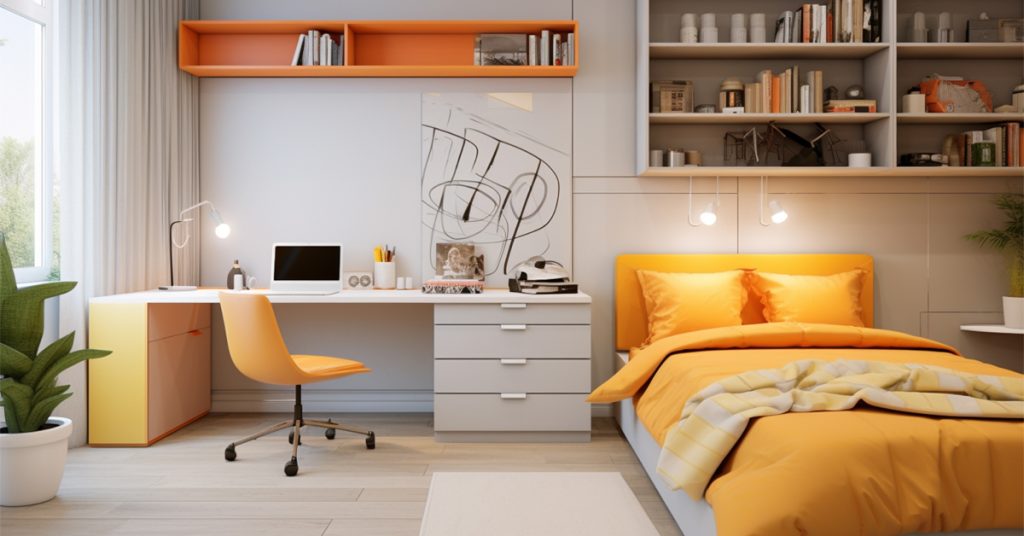
Leave space behind the chair so kids can push back and stretch without bumping into storage. If you’re combining the study space with a bed or play area, use low partitions or bookshelves to subtly mark the “study zone” from the “relax zone.”
Furniture that Fits — Literally and Ergonomically
Ergonomics might sound like an office term, but kids’ posture matters just as much.
For smaller children:
- Adjustable chairs that can grow with them.
- A desk height of around 22–24 inches for primary schoolers.
For teens:
- Standard 29–30-inch desk height with enough leg space for long hours.
- A comfortable, supportive chair — no dining chairs for study marathons.
Consider wall-mounted foldable desks in compact rooms. They save space and can be folded away after use, leaving the room open for other activities.
Lighting — The Silent Performance Booster
Good lighting is one of the most overlooked elements of kids’ study room design.
- Natural light is ideal — it keeps the room bright and boosts mood.
- Task lighting like an adjustable table lamp is essential for evening study sessions.
- Avoid harsh white light — warm or neutral tones are easier on the eyes.
If the room doubles as a bedroom, consider layered lighting — a bright mode for study, softer ambient lighting for relaxation.
Color Schemes that Help, Not Hinder
While you might be tempted to splash bright red or deep purple on the walls, remember — strong, intense colors can be distracting in a study space.
- For focus: soft blues, muted greens, or warm neutrals.
- For creativity: light yellows, dusty pinks, or pastel aqua.
These tones create a calm background that lets books and supplies stand out without visual clutter.
Storage — The Real Secret to a Tidy Mind
Clutter competes for attention. A desk piled with worksheets, paint sets, and last week’s science project makes it harder to settle down and start.
- Open shelving for books and everyday stationery.
- Closed cabinets or boxes for art supplies, projects, and gadgets.
- A pinboard or cork wall for schedules, awards, and little personal touches.
For compact urban homes, vertical storage is a lifesaver. Floor-to-ceiling shelves make use of every inch, and labelled boxes help kids keep track of their own supplies.
Age-Proofing the Design
Kids grow fast. That unicorn-themed wallpaper might not last past Class 5, and the giant pinboard for college prep might be overkill for a 7-year-old.
Plan the study room layout India style with adaptability in mind:
- Keep the core furniture neutral and durable.
- Use changeable elements like chair cushions, wall art, and desk accessories for personalisation.
- Choose flooring and wall finishes that can handle spills, pen marks, and the occasional “DIY science experiment gone wrong.”
The Role of a Strong Foundation
It’s easy to think only of décor when designing a study room. But the room’s structure quietly plays a big role in how it feels and functions.
A wobbly shelf because the wall isn’t strong enough? A desk pushed away from the wall because of dampness? These can be avoided when you build with high-quality cement like JK Super Strong for structure and JK WallMaxX for a smooth, durable finish. It’s the difference between a room that needs “patching up” every couple of years and one that stays reliable through school years and beyond.
A Parent-Designer’s Checklist for Study Spaces
- Walk the light. See how sunlight moves through the room at different times before fixing the desk position.
- Think ahead. Leave space for a bigger desk or extra storage as your child grows.
- Power points matter. Place them near the desk for laptops, lamps, and chargers.
- Go vertical. Tall shelves save space and keep books within reach.
- Choose finishes that last. Smooth, strong walls are easier to keep clean — and resist everyday knocks.
FAQ
What is the best study room layout for kids in India?
Place the desk where natural light comes from the side, keep it away from noisy zones, and ensure enough leg space and storage nearby.
How can I design a small study room for two kids?
Use a long shared desk with separate chairs, vertical storage, and personal pinboards so each child has their own section.
What colors are best for a study room?
Soft blues, muted greens, warm neutrals, or pastels — they help with focus and reduce visual distraction.
How do I keep a study room organised?
Combine open shelves for everyday use with closed cabinets for less-used items, and label storage boxes clearly.
Should a study room have natural light?
Yes. Natural light boosts mood and focus, but always adds task lighting for evening use.
How do I make the study room design last as my child grows?
Use adaptable furniture and neutral finishes, updating décor elements like wall art and accessories over time.