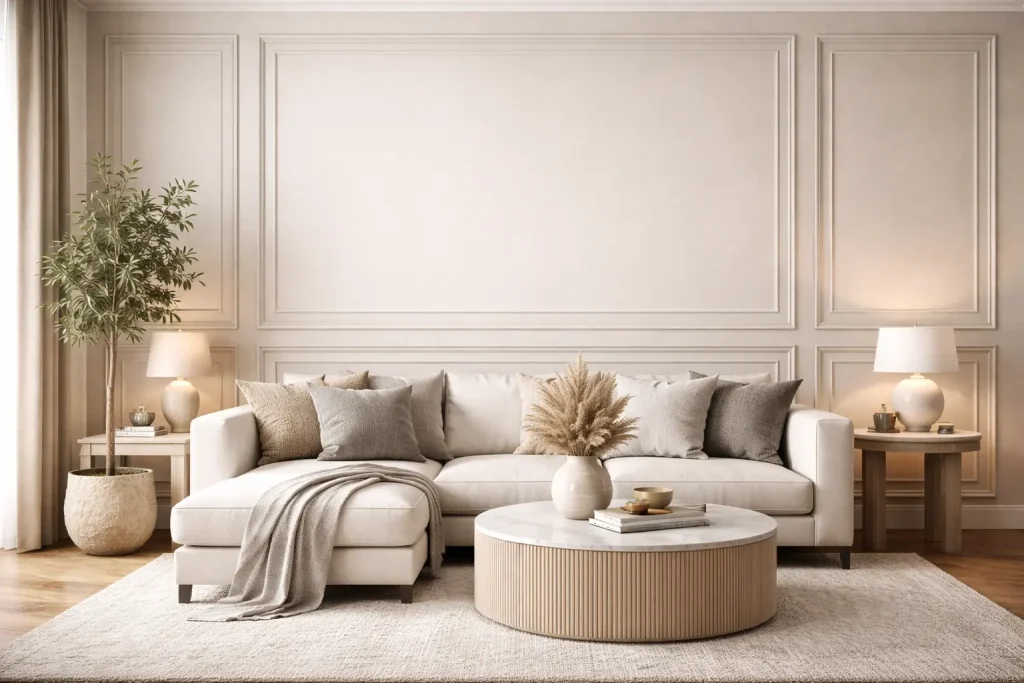
If you spend time with architects, interior designers, carpenters, or site contractors, you’ll notice how often the conversation turns to wall detailing. Plain painted walls are fine, but when someone wants to add depth, elegance, or a bit of character to a room, one design feature almost always comes up—wainscoting.
In simple words, wainscoting wall design refers to decorative wall panels installed on the lower portion (and sometimes the full height) of a wall. Originally used centuries ago to protect walls from damage and moisture, wainscoting has evolved into one of the most popular modern interior wall design elements.
Today, modern wainscoting wall designs are used in living rooms, bedrooms, hallways, dining areas, and even offices to add architectural interest without completely remodeling a space.
Let’s explore the different panel styles, design ideas, and practical uses of modern wainscoting—just the way professionals discuss them when planning interior finishes.
What is Wainscoting in Interior Design?
Wainscoting is a decorative wall treatment made using panels, moldings, or wooden strips installed on part or all of a wall surface.
Traditionally, wainscoting covered the lower one-third of the wall, but modern designs often extend it half-height or even full height depending on the style of the room.
Besides aesthetics, it offers practical benefits:
- Protects walls from scratches and furniture marks
- Adds depth and texture to flat walls
- Creates a luxury interior look
- Improves visual balance in large rooms
Interior designers often use wainscoting to break the monotony of plain painted walls.
Popular Types of Wainscoting Panel Styles
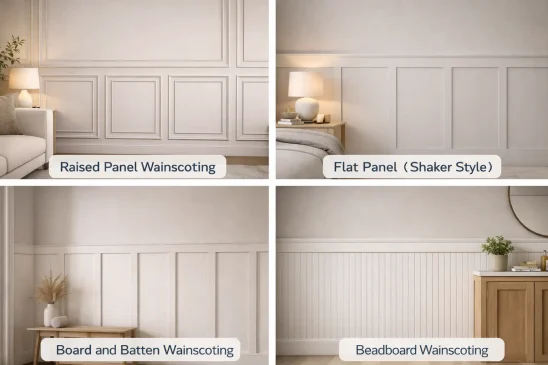
Different architectural styles use different panel layouts and molding patterns. Each style creates a unique look.
Raised Panel Wainscoting
Raised panel wainscoting is one of the most traditional and elegant wall panel styles.
Here, the center portion of the panel slightly protrudes outward, creating depth and shadow lines.
Why designers like it
- Creates a luxury and classic interior feel
- Works well in formal spaces
- Looks elegant with crown molding and trim
Best places to use
- Dining rooms
- Formal living rooms
- Luxury hallways
- Traditional homes
It’s commonly seen in classic European and colonial interiors.
Flat Panel Wainscoting (Shaker Style)
Flat panel wainscoting—often called Shaker style—is a favorite in modern and minimalist homes.
Instead of raised surfaces, the panels remain flat and recessed inside simple frames.
Why it works in modern homes
- Clean, minimalist look
- Works well with neutral colors
- Fits contemporary interior design
Ideal for
- Bedrooms
- Living rooms
- Apartments
- Modern homes
Architects often recommend this style when clients want subtle elegance rather than heavy ornamentation.
Board and Batten Wainscoting
Board and batten is one of the most trending modern wainscoting wall designs.
This style uses vertical boards with narrow strips (battens) placed over the seams.
Why homeowners love it
- Adds vertical lines that make ceilings look taller
- Simple yet visually striking
- Works well in modern farmhouse interiors
Best areas to install
- Entryways
- Bedrooms
- Staircase walls
- Accent walls
Contractors also like it because it’s relatively easy to install compared to more detailed molding styles.
Beadboard Wainscoting
Beadboard wainscoting features narrow vertical planks separated by small grooves.
This design creates a charming cottage-style or coastal look.
Key benefits
- Light and textured appearance
- Perfect for small spaces
- Affordable paneling option
Popular locations
- Bathrooms
- Kitchens
- Hallways
- Cottage-style homes
Because of its texture, beadboard adds visual interest without overwhelming the room.
Modern Wainscoting Design Ideas for Homes
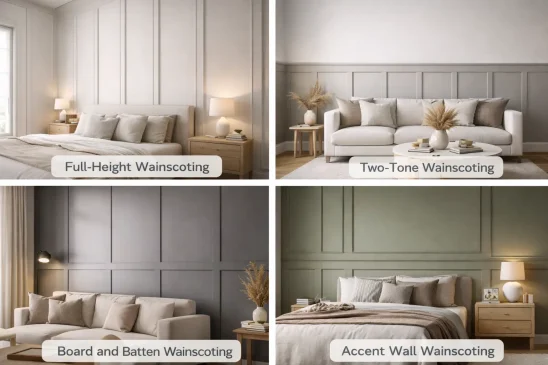
Beyond traditional styles, designers now experiment with creative wainscoting layouts.
Some popular ideas include:
1. Full-Height Wainscoting Walls
Instead of covering just the lower portion, panels extend from floor to ceiling, creating a dramatic wall feature.
2. Two-Tone Wainscoting
The panel section is painted one color, while the upper wall has a contrasting shade.
3. Geometric Panel Layouts
Modern homes often feature square or rectangular grid panel designs for a contemporary look.
4. Accent Wall Wainscoting
Instead of covering the entire room, one wall becomes a decorative focal point.
Standard Wainscoting Height and Dimensions
In interior design, wainscoting size and proportion are very important.
Common height guidelines include:
| Type | Typical Height |
| Traditional wainscoting | 900 mm – 1100 mm |
| Half-wall wainscoting | 1200 mm – 1500 mm |
| Full-height paneling | Floor to ceiling |
The thickness of molding usually ranges from 12 mm to 25 mm, depending on the design style.
Interior designers adjust these proportions to maintain visual balance with ceiling height.
Materials Used for Wainscoting Panels
Modern wainscoting panels can be made from several materials.
Common options include:
- Solid wood panels – Premium finish
- MDF panels – Budget-friendly and smooth for painting
- PVC panels – Moisture-resistant
- Plywood with molding trims – Popular in custom designs
Contractors often recommend MDF or PVC because they are cost-effective and easy to maintain.
Why Wainscoting is Trending in Modern Interiors
Homeowners today want simple upgrades that dramatically improve interiors. Wainscoting is perfect for that.
Reasons for its growing popularity include:
- Makes walls look architecturally designed
- Adds luxury feel without major renovation
- Improves wall durability
- Works with both modern and classic interiors
That’s why designers often call it “the easiest way to upgrade a plain wall.”
FAQs About Wainscoting Wall Designs
What is wainscoting in interior design?
Wainscoting is a decorative wall treatment using panels or moldings installed on part or all of a wall to add texture, protection, and architectural detail.
What are the different types of wainscoting?
Common types include raised panel, flat panel (Shaker style), board and batten, and beadboard wainscoting.
What is the standard height of wainscoting?
Traditional wainscoting height ranges from 900 mm to 1100 mm, but modern designs may extend halfway up the wall or even to the ceiling.
Is wainscoting expensive?
Costs vary depending on material and design. MDF or PVC panels are affordable, while solid wood wainscoting is more expensive.
Can wainscoting be used in modern homes?
Yes. Many modern wainscoting designs use simple geometric panels or flat panel styles, making them perfect for contemporary interiors.
Which rooms are best for wainscoting?
Wainscoting works well in living rooms, dining rooms, bedrooms, hallways, entryways, and staircases.