Every home has a room where people gather. Where guests are welcomed, tea is shared, and stories unfold. That space, the living room, isn’t just about furniture or design. It’s about how it feels to sit there and connect with others.
In today’s world of screens and rushed schedules, genuine conversation has quietly taken a backseat. But when you step into a room that’s been thoughtfully laid out, where the chairs seem to invite you and nothing feels too far or too formal, you feel the difference.
So, how do you create that? How do you design a living room layout that brings people closer, encourages real conversation, and still works for everyday living?
Let’s explore.
Why Layouts Matter More Than Furniture
You can have the fanciest sofa set or a Scandinavian-style L-shaped unit, but if the layout isn’t right, even the best pieces will fall flat. A good living room layout isn’t about symmetry. It’s about connection.
The way chairs and sofas face each other can transform your living room into a space that welcomes and invites connections. That’s why it’s not about how many cushions you have – it’s about how people sit around each other.
The Classic Circle or Semi-Circle
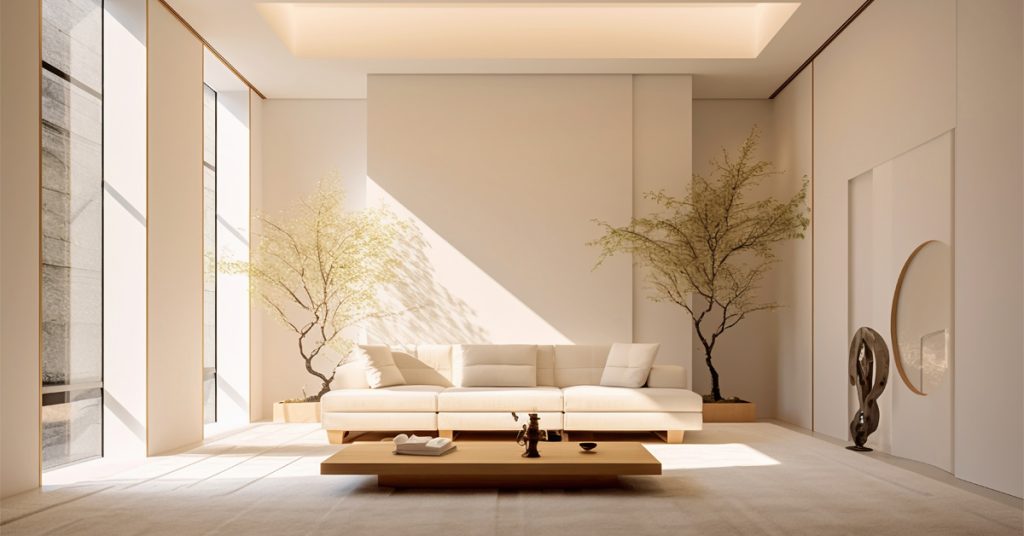
This is the most effective of all living room layout ideas for conversation. Place your main sofa across from a couple of chairs, and add a coffee table in the centre. This layout works like magic during family gatherings, where everyone can see everyone and the energy flows.
Even a 10×12 room could be transformed into a cosy, circular layout just by rethinking the placement of two chairs, not by buying new furniture.
L-Shape with a Purpose
L-shaped sofas are loved for a reason- they’re space-savvy and great for lounging.
But if you want to create a space for conversations, you need to be careful. Don’t stick the entire L-shape to the wall. If space allows, float it slightly inward and add one chair across the open end. It instantly opens the layout for better eye contact.
And if your L-shape has a chaise, place it in a direction where people can either put up their feet or turn easily to face someone. It shouldn’t isolate anyone.
Two Sofas Facing Each Other
This layout exudes old-school joint family charm. Perfect for long, slow chats on Sunday afternoons. Add a rug beneath to anchor the space, and a warm-toned wall colour like muted mustard or clay to make it feel intimate.
Use the Corners Wisely
Corners are often wasted, but they can be your best allies in small homes. A compact bench, a jhoola (swing), or even a snug armchair with a side table can turn into a one-on-one conversation nook.
And don’t ignore the lighting here. A lamp placed just right – not too bright, not too dull — creates a mood that says, “Stay. Talk.”
Zoning Without Walls
In open-plan homes or studio apartments, the key is to maintain enough flow so people don’t feel boxed in, but still feel gathered. You can zone your living room layout using:
- Rugs to define the conversation zone
- False ceilings or lighting design for visual separation
- Console tables or planters as soft dividers
Don’t Overcrowd – Give Space to Speak
We’ve all seen living rooms packed with corner tables, ottomans, plant stands, and magazine racks- somehow, the seating feels secondary. A great living room layout gives breathing space.
Leave 18-24 inches between seating and tables. Keep pathways clear. The idea is to create a visual openness.
Make the TV Optional
If the TV is the focus, conversation takes a back seat. Position your primary seating away from the screen. Make it so that watching TV is a choice, not the default. Or better yet, hide the TV in a cabinet when not in use.
You’ll be amazed at how many more real chats happen when the remote is out of sight.
Floor Seating Has Its Own Charm
From small and tier-2 cities to metropolitan cities, we’ve seen a quiet return of gaddas, chatais, and low-level diwans. This is because they create an informal, relaxed energy. Ideal for heart-to-hearts.
If your living room doubles as a play area or a yoga zone during the day, flexible floor seating is a great layout idea.
Don’t Forget the Sound
Good acoustics matter more than you think. Soft furnishings like rugs, curtains, wall art, even bookshelves help absorb echo. That means voices don’t bounce off like in an empty hall, and conversations feel more natural.
It’s Not Just Design – It’s Behaviour
Sometimes, creating a “conversation-friendly” living room design isn’t about layout alone. It’s about intention. Small practices like lighting a diya or candle in the evening and turning off overhead white lights and switching to warm lamps can create a space for real conversations.
These small things, together with the right layout, help turn a living room into a space for real connection.
A home doesn’t remember how new your sofa was. But it does hold echoes of laughter, whispers, arguments, reconciliations – all the living that happens in the living room. So when you plan your living room layout, don’t just think in square feet or angles. Think in moments. Think in conversations. Because furniture may fill a room. But the layout is what brings people together.
FAQs
1. Is there such a thing as a “best” living room layout for conversation?
Honestly? Not one-size-fits-all. The best living room layout depends on your room size, how many people usually sit together, and what else the space is used for. But here’s a good thumb rule: if people can sit comfortably facing each other — not craning their necks or shouting across furniture — you’re on the right track.
2. I live in a small apartment. Can I still make space for conversation?
Absolutely. You don’t need a massive drawing room. A smart living room layout idea in small spaces is to use flexible seating — like a single compact sofa with a pouffe or two chairs that can be pulled in when needed. A rug in the centre can act like an invisible boundary, creating a cozy spot where conversations naturally happen.
3. Should the TV always be the focal point?
Not if you’re trying to encourage more talking and less remote-passing. Many modern living room layouts now treat the TV as optional — off to the side, or even hidden in a cabinet. That way, conversation becomes the star of the room.
4. My current layout feels a bit stiff. How can I loosen it up?
Try this: pull the seating a little inward from the walls, add a side table between chairs, maybe even angle one piece slightly. These subtle changes can make your living room layout feel more relaxed and welcoming — like it’s meant for real chats, not just formal sitting.
5. What kind of furniture works best for a conversation-friendly layout?
Comfort first. Then flexibility. Sectionals, armchairs, ottomans — as long as they’re arranged to face each other in some way, they work. Circular or square coffee tables in the middle also help centre the layout and give everyone shared access — to snacks, cups, or even the family ludo board.
6. Can floor seating be part of a proper living room layout?
Of course. Floor cushions, diwans, or even a low-level platform with soft throws — these are all fantastic living room layout ideas, especially in homes that love hosting. They add an informal, intimate vibe where people tend to linger longer.
7. How do I know if my layout is working?
Watch how people move. If guests tend to stand, hover, or sit far apart, something’s off. But if they walk in, plop down, and stay chatting — even after the chai is cold — then congratulations. You’ve nailed your living room layout without even needing an interior degree.
Honestly? Not one-size-fits-all. The best living room layout depends on your room size, how many people usually sit together, and what else the space is used for. But here’s a good thumb rule: if people can sit comfortably facing each other — not craning their necks or shouting across furniture — you’re on the right track.
Absolutely. You don’t need a massive drawing room. A smart living room layout idea in small spaces is to use flexible seating — like a single compact sofa with a pouffe or two chairs that can be pulled in when needed. A rug in the centre can act like an invisible boundary, creating a cozy spot where conversations naturally happen.
Not if you’re trying to encourage more talking and less remote-passing. Many modern living room layouts now treat the TV as optional — off to the side, or even hidden in a cabinet. That way, conversation becomes the star of the room.
Try this: pull the seating a little inward from the walls, add a side table between chairs, maybe even angle one piece slightly. These subtle changes can make your living room layout feel more relaxed and welcoming — like it’s meant for real chats, not just formal sitting.
Comfort first. Then flexibility. Sectionals, armchairs, ottomans — as long as they’re arranged to face each other in some way, they work. Circular or square coffee tables in the middle also help centre the layout and give everyone shared access — to snacks, cups, or even the family ludo board.
Of course. Floor cushions, diwans, or even a low-level platform with soft throws — these are all fantastic living room layout ideas, especially in homes that love hosting. They add an informal, intimate vibe where people tend to linger longer.
Watch how people move. If guests tend to stand, hover, or sit far apart, something’s off. But if they walk in, plop down, and stay chatting — even after the chai is cold — then congratulations. You’ve nailed your living room layout without even needing an interior degree.