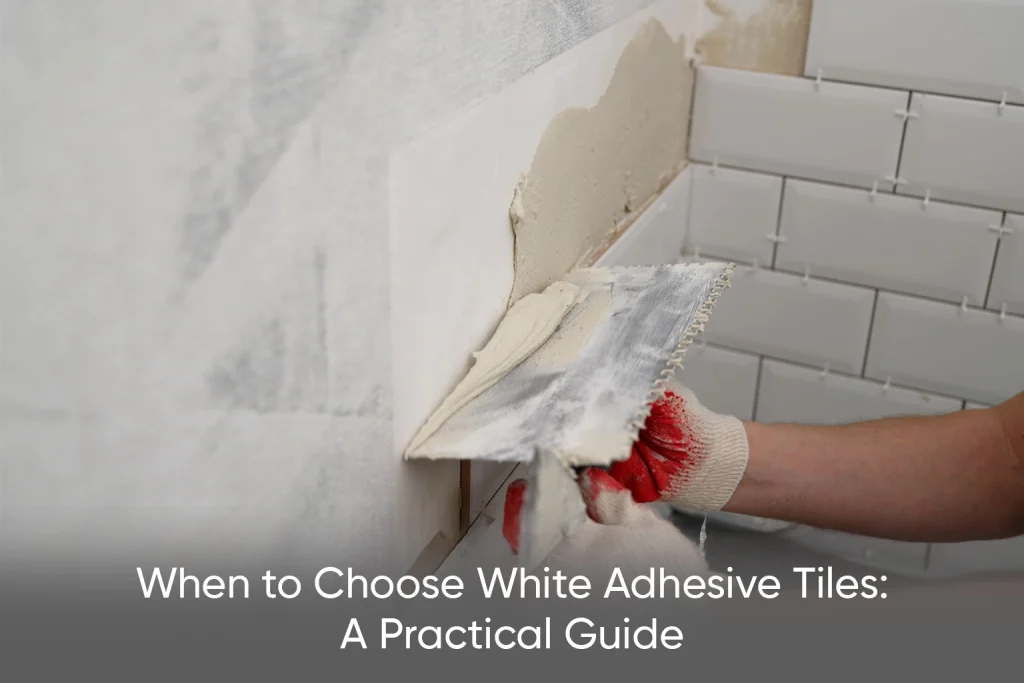
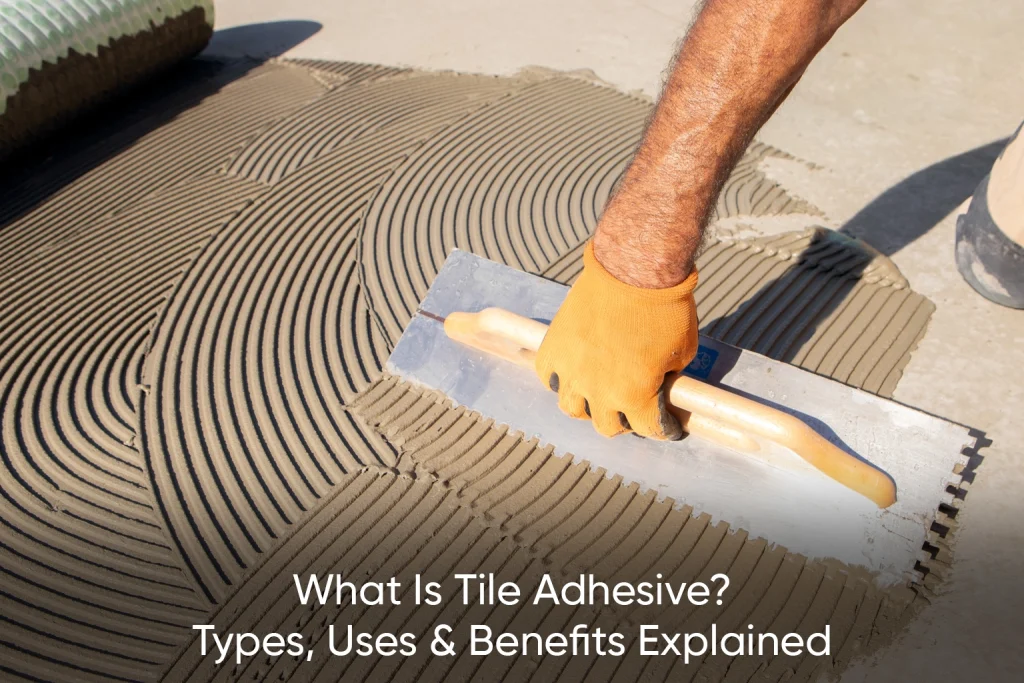
Tile adhesive is a specialized bonding agent factory-engineered specifically to fix tiles and stones to various surfaces. While traditional methods relied on a basic, site-mixed blend of sand and cement, modern tile adhesives are polymer-modified. This means they are fortified with liquid polymers and high-grade chemicals that allow them to create a chemical bond. This is essential for modern, non-porous tiles like vitrified or porcelain, which do not have the natural pores required for traditional cement to “grip.”
Types of Tile Adhesive
According to the JKTylo technical specifications, adhesives are categorized based on their performance and the specific environments they are designed for:
- Cementitious Adhesives (Type 1 & 2): These are grey or white cement-based powders like JKTylo 111 Classik Grey Adhesive or JKTylo 211 Anti-Skid. They are polymer-modified to provide high bonding strength for ceramic and vitrified tiles on internal floors and walls.
- High-Performance Adhesives (Type 3 & 4): These are designed for more demanding applications, such as large-format tiles or exterior cladding. They offer enhanced flexibility to handle thermal expansion and contraction.
- Specialized Adhesives (Type 5): Products like JKTylo 909 PU ANCHOR are polyurethane-based. These are “multipurpose” and used for challenging substrates like plywood, metal, or glass where standard cement-based adhesives cannot stick.
Key Uses and Chemical Advantages
The JKTylo range is designed to offer “Unshakeable Power” through several key chemical and physical properties:
- Anti-Skid & Sag Resistance: For wall applications, the chemical composition ensures that even heavy tiles stay in place without sliding down during the setting process.
- Thermal Flexibility: The polymers in the adhesive allow the bond to remain flexible. This acts as a shock absorber, preventing tiles from “popping up” or buckling due to weather changes.
- No VOCs: Modern adhesives are formulated with no Volatile Organic Compounds, ensuring they are environmentally friendly and safe for indoor air quality.
- Full Bedding: When applied with a notched trowel, the adhesive ensures 100% coverage, eliminating hollow air pockets that lead to cracked tile corners
FQAs
1. What is tile adhesive and why is it better than traditional sand-cement mortar?
Tile adhesive is a factory-engineered, polymer-modified bonding material designed to securely fix tiles and stones to different surfaces. Unlike traditional sand-cement mortar, tile adhesive creates a chemical bond, making it ideal for modern non-porous tiles like vitrified and porcelain. This ensures stronger adhesion, faster installation, and long-lasting durability.
2. Which type of tile adhesive should I use for vitrified or porcelain tiles?
For vitrified and porcelain tiles, cementitious polymer-modified adhesives (Type 1 & 2) such as JKTylo 111 Classik Grey Adhesive or JKTylo 211 Anti-Skid are recommended. These adhesives provide high bonding strength and prevent tile slippage on both floors and walls, making them suitable for internal residential and commercial applications.
3. When should high-performance tile adhesives be used?
High-performance tile adhesives (Type 3 & 4) should be used for large-format tiles, exterior wall cladding, and areas exposed to temperature fluctuations. Their enhanced flexibility helps absorb thermal movement, reducing the risk of tile cracking, debonding, or buckling over time.
4. Can tile adhesive be used on non-traditional surfaces like plywood or metal?
Yes. Specialized polyurethane-based adhesives (Type 5), such as JKTylo 909 PU Anchor, are designed for challenging substrates like plywood, metal, glass, and mixed surfaces. These adhesives offer superior grip where cement-based adhesives fail, making them ideal for renovation and custom installation projects.
5. What are the chemical advantages of modern tile adhesives?
Modern tile adhesives offer multiple chemical advantages, including anti-skid and sag resistance for wall tiles, thermal flexibility to prevent tile pop-ups, zero VOC formulation for better indoor air quality, and full bedding coverage that eliminates hollow spaces. These properties ensure a strong, safe, and long-lasting tile installation.