A strut is one of those construction elements people see on site but rarely stop to understand.
In simple terms, a strut in construction is a member that takes compression and keeps structures stable.
It doesn’t hang or bend – it pushes back against force.
Once you understand the meaning of strut, you’ll notice how quietly essential it is, from excavations to scaffolding to roof systems.
Once you understand the meaning of strut, you’ll start spotting struts everywhere – from scaffolding to bridges to everyday buildings.
At times, excavation sides cave in because temporary struts are skipped to save time, while at other times buildings stand firm during heavy monsoons because struts are placed exactly where pressure builds up.
Understanding the meaning of strut isn’t just theory – it’s practical safety.
In Indian construction, where soil conditions, weather, and timelines are unpredictable, struts quietly do the hard work. This guide explains what struts are, why they matter, and how they’re actually used on Indian sites.
What Is a Strut in Construction?
The meaning of strut is straightforward:
A strut is a structural member designed to resist compressive force.
In plain language:
- A strut pushes back
- It stops things from moving inward
- It keeps parts of a structure from collapsing under load
- A strut in construction works only in compression.
Where Struts Are Used on Site
You’ll commonly find struts in:
- Excavation support systems
- Scaffolding
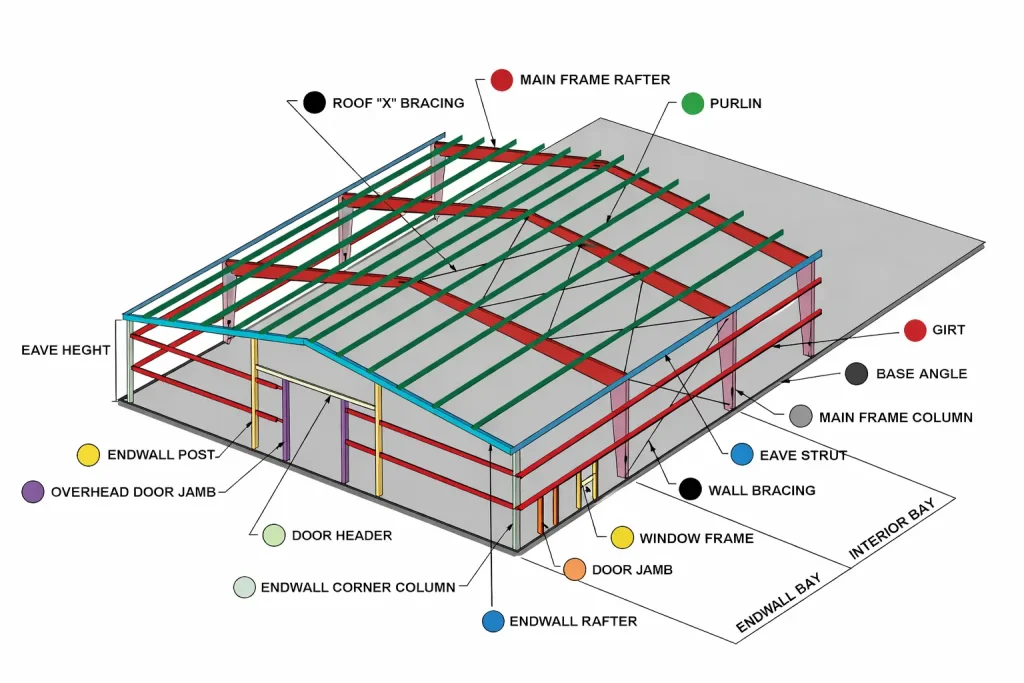
- Roof trusses
- Temporary formwork
- Bridges and steel frames
Once you understand strut in construction, it becomes easy to identify them on any site walk.
What Are the Types of Struts in Construction?
Struts are of various types- there is no ‘one strut rule’. The types depend upon their material, shape and size. This is categorised based on where and how they’re used, and the load they carry.
1. Steel Struts
Steel struts are the go-to choice on most serious construction sites. They are:
- Used in deep excavations
- Found in basements and metro projects
- High strength and reusable
- They’re strong, adjustable, and dependable.
Contractors like them because they go up fast and can take heavy pressure without fuss.
When timelines are tight and loads are high, steel struts are usually the safest bet.
2. Timber Struts
Timber struts are still very much in use, especially on smaller projects.
- They’re easy to cut
- Easily fitted
- Don’t need specialised equipment.
- Need careful sizing.
Popular in rural areas and low-rise construction, where budgets are tight.
3. Concrete Struts
They’re designed to carry the load for the life of the building.
- Used to support long-term.
- Used for retaining walls, basements, and large foundations.
- Once cured properly, they become rigid, reliable, and part of the permanent structure.
In many infrastructure projects, concrete struts aren’t removed at all.
4. Hydraulic Struts
They’re extremely effective, especially in deep pits or unstable soil where ordinary struts won’t do the job safely.
- Used where conditions keep changing – deep basements and heavy excavation work
- Can be adjusted using hydraulic pressure
- Allows precise control as excavation progresses.
- They’re not cheap
5. Cross Struts
These are diagonal struts placed between vertical members.
- Used in scaffolding
- Prevent lateral movement
- Improve overall stability
Without cross struts, scaffolding becomes unsafe, even if vertical members are strong.
How Struts Actually Work on a Site
Imagine a basement excavation in soft soil. As digging goes deeper, soil pressure increases. Side walls want to collapse inward.
This is where struts come in.
- Horizontal struts are placed between retaining walls.
- Load from the soil gets transferred to the strut.
- Strut pushes back equally on both sides.
That’s the meaning of strut in action – pure compression. Miss one strut or place it late, and cracks start appearing fast.
Tips for Using Struts in Construction
Struts look simple, but mistakes happen often. Here’s what actually matters.
1. Never Delay Strut Installation
In excavation work, struts should be installed immediately after reaching the designed depth. Waiting “one more day” is risky.
2. Proper Alignment Is Critical
A strut only works when it’s straight. Even a small tilt cuts down its load-carrying capacity. Always check alignment properly before locking it in place.
3. Quality of Material Matters
Cement quality and proper curing decide how long the support will actually last. That’s why contractors rely on trusted options like JK Super Cement.
4. Don’t Remove Struts Too Early
This is one mistake seen far too often. A strut should come out only after the structure can safely take the load on its own.
5. Design Before Execution
Never place struts based on guesswork. Spacing, size, and load calculations must come from proper structural design.
Why Struts Are Essential in Indian Construction
Indian construction faces:
- Variable soil conditions
- Heavy monsoons
- Tight sites and boundaries
In such conditions, struts act like silent insurance. They don’t add beauty, but they prevent disasters.
A good engineer always respects struts.
A strut is not just another piece of steel or wood; its role is critical. The meaning of strut goes beyond definitions – it’s about safety, stability, and load control.
Whether it is a small house excavation or a large infrastructure project, struts in construction are the support that holds everything in place.
FAQs
1. What is the meaning of strut?
A strut in construction is that part of the structure that holds it against compressive forces and prevents collapse.
2. Where are struts commonly used?
Struts are used in excavations, scaffolding, trusses, and temporary supports.
3. Are struts permanent or temporary?
They can be both. Some are temporary during construction, others remain permanently.
4. What material is best for struts?
Steel is most common, but timber, concrete, and hydraulic struts are also good choices.
5. Can a strut fail?
Yes, if it is misaligned, removed too quickly or made from weak material.
6. What happens if struts are removed early?
It can lead to sudden collapse or structural damage.
7. Is a strut the same as a column?
No. A column carries vertical loads, while a strut resists compressive forces in various directions.