(If the base is wrong, nothing above it really stays right — you just notice it later.)
The short answer
A footing is the widened concrete base placed under a column or wall to spread the building load safely into the soil.
Simple job. Critical impact.
If this fails, the entire structure starts reacting — cracks, tilting, uneven floors.
What a footing actually does on site
Think of it like this.
A column is narrow. The load it carries is concentrated.
So if you place that directly on soil, pressure becomes too high — soil starts compressing unevenly.
The footing solves that by spreading the load.
More area → less pressure → stable structure.
That’s the whole logic.
Footing vs foundation (where most people get confused)
People use both words interchangeably on site, but they’re not the same.
• Foundation = the entire system below ground
• Footing = the bottom-most part that directly touches soil
So every footing is part of a foundation. But foundation includes more than just footings.
Why footing decisions go wrong (and show up later)
You don’t see footing after construction.
Which is exactly why people don’t pay attention to it.
Then months later:
• One corner settles slightly
• Hairline cracks start near windows
• Doors stop closing properly
You’d think it’s plaster or finishing.
It’s not.
It usually started below ground.
Types of footing — what actually gets used on Indian sites
Isolated footing (most common)
One column → one footing.
Simple square or rectangular base.
Used when columns are spaced out and soil is decent.
You’ll see this in most independent houses.
Strip footing
Runs continuously under a wall.
Instead of separate pads, you get a long strip of concrete.
Common in load-bearing walls, boundary walls, smaller structures.
Combined footing
Two columns share one footing.
Usually happens when:
• Columns are too close
• Or one column sits near a boundary
Instead of forcing two separate footings, they’re merged.
Strap footing
Looks like two isolated footings connected with a beam.
Used when one column is near the edge and can’t be centred.
The strap balances the load with the inner footing.
Raft (mat) footing
One big slab under the entire building.
Used when soil is weak or inconsistent.
Instead of multiple small footings, everything sits on one large base.
Expensive upfront. But avoids uneven settlement.
Grillage footing
Layers of beams embedded in concrete.
Not common in houses.
Mostly used for heavy industrial loads or towers.
Pile footing (pile cap)
When surface soil is weak, loads go deeper through piles.
The pile cap sits on top and distributes load across those piles.
You won’t see this unless soil conditions demand it.
The part most people ignore — soil
Footing design starts with soil.
Not drawings.
Not assumptions.
Soil decides:
• How big the footing needs to be
• How deep it should go
• Whether shallow footing is even possible
Skip soil understanding — and you’re guessing.
Basic design logic (simplified)
Engineers don’t just “pick a size.”
They calculate it.
Step one:
Total load from column ÷ soil capacity = required footing area
If soil is weak → bigger footing
If soil is strong → smaller footing works
Then checks happen:
• Bending (footing acting like a slab)
• Shear (one-way and punching)
• Depth and reinforcement
That’s how the final size is fixed.
Where construction actually messes things up
Design is rarely the issue.
Execution is.
Seen repeatedly:
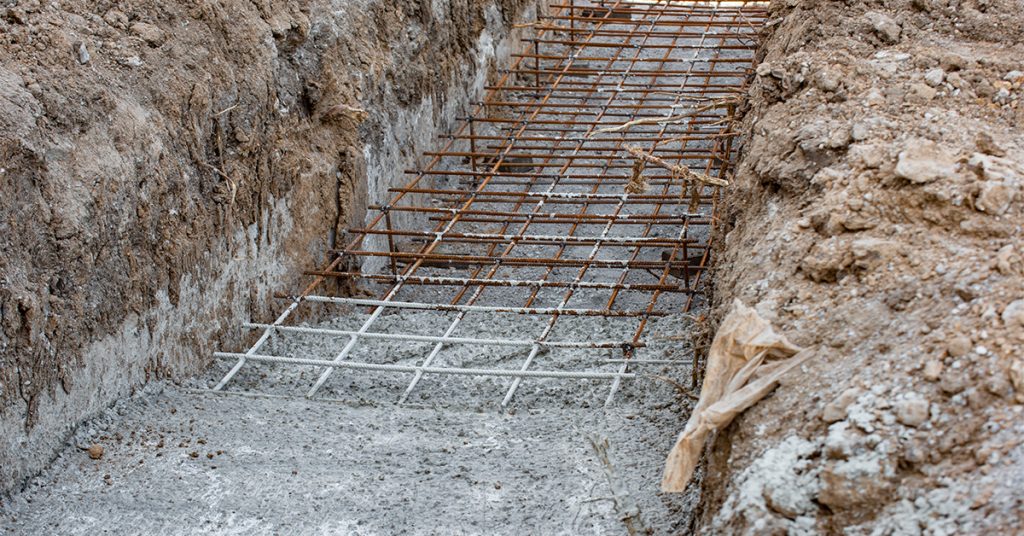
• Footing placed on loose soil
• Excavation not levelled properly
• Reinforcement shifted during concreting
• Poor compaction → honeycombing
• No proper curing
And then later — settlement.
Not dramatic. Slow. But permanent.
Small site habits that make a big difference
• Always compact the base properly
• Use PCC (plain cement concrete) before footing
• Check dimensions before pouring concrete
• Keep proper cover to reinforcement
• Don’t rush curing
These are basic things. Still skipped often.
If this was a typical house build
I wouldn’t overcomplicate it.
• Proper soil check
• Correct footing size as per design
• Clean excavation
• Good concrete quality
• Strict supervision during pouring
Because once footing is done, you don’t get a second chance.
FAQs —
What exactly is footing in simple terms?
It’s the base that spreads your building’s weight so the ground can safely hold it.
Is footing the same as foundation?
No. Footing is just one part of the foundation — the part that directly touches soil.
Which footing is best for a house?
Most houses use isolated footings. If soil is weak, raft or piles may be required.
When do you use combined footing?
When columns are too close or near boundaries and separate footings won’t work.
Why is raft footing used?
To spread load across a large area when soil can’t handle concentrated pressure.
How deep should footing be?
Depends on soil. There’s no fixed number. It should reach stable ground.
Can I skip soil testing for a small house?
People do. But that’s where many long-term issues start.
What causes footing failure?
Mostly poor execution — bad soil preparation, weak concrete, or incorrect sizing.
Final thought
Footing is not visible after construction.
So it’s easy to ignore.
But it quietly decides:
• Whether your walls stay crack-free
• Whether floors remain level
• Whether repairs become a habit
Everything above ground depends on what’s done below it.
And once it’s buried, there’s no fixing it without starting over.