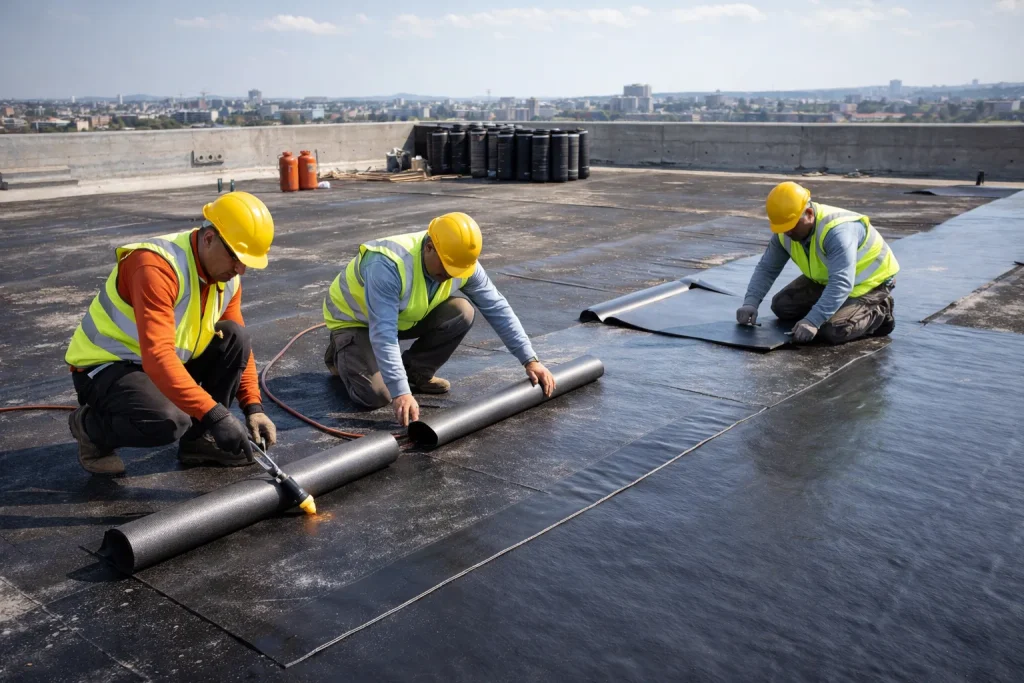
A waterproofing membrane sheet is basically a ready-made protective layer you lay over concrete or masonry so water simply doesn’t get inside.
Unlike liquid coatings that depend a lot on how well someone applies them on site, these come with fixed thickness and more predictable performance.
What this really means on a construction site
On paper, waterproofing sounds simple. In reality, it’s where things quietly go wrong.
A membrane sheet acts like a skin over your structure. Once it’s in place properly, water has no easy path inside.
And because it’s factory-made:
• You’re not guessing thickness
• You’re not depending entirely on the applicator
• You’re reducing chances of uneven coverage
That last part matters more than people realise.
Why most people underestimate waterproofing
Water damage is slow. That’s the problem.
Nothing happens for months. Sometimes a year.
Then suddenly:
• Paint starts bubbling
• Damp patches show up
• That musty smell doesn’t go away
• Plaster begins to flake
And the real issue? It’s already inside the structure.
Once water reaches the steel inside concrete, corrosion begins. Steel expands, concrete cracks, and that’s where things get expensive.
You’d think waterproofing is about stopping leakage. It’s actually about protecting the structure itself.
Also, something most people ignore — waterproofing works best only when the base concrete is dense and well-made. If the concrete itself is porous, even the best membrane struggles to perform consistently.
Types of membrane sheets — what actually works where
Bituminous sheets (APP / SBS)
These are the ones you’ll see most commonly on roofs.
They’re asphalt-based, reinforced, and built to handle Indian weather — heat, rain, expansion, contraction.
Reliable. Not fancy. But they work.
PVC / TPO sheets
More common in commercial or industrial setups.
They reflect heat, handle UV better, and don’t degrade easily under exposure.
If a roof is constantly exposed, these make more sense.
EPDM rubber sheets
Very flexible.
Useful where there’s movement — large surfaces, expansion zones.
Not as common in regular homes, but technically very strong.
HDPE / PP sheets
These are your go-to for bathrooms and basements.
Especially where water pressure is involved — like underground structures.
If there’s any place you don’t want to gamble, it’s a basement.
What you actually gain with membrane sheets
Consistency
Liquid coatings depend heavily on the applicator. Membranes don’t.
You get the same thickness across the surface. No thin patches hiding somewhere.
Protection where it matters
The real job is keeping water away from reinforcement steel.
Once that’s protected, most long-term structural issues don’t even begin.
Toughness on site
Tiles going on top, workers walking over it, tools dropping — membranes handle this better than coatings.
Faster work
No waiting around for curing.
Install, seal, move ahead.
Money saved later
Fixing a leak after interiors are done is messy. And expensive.
Breaking tiles, redoing plaster, repainting — costs stack up fast.
Waterproofing done right once is always cheaper than fixing it later.
Where you should not cut corners
Roof
This takes the maximum beating — sun, rain, temperature swings.
Overlap joints properly. Minimum 75–100 mm.
This is where most shortcuts happen.
Bathroom
Everyone focuses on tiles. That’s the mistake.
The real problem area is the floor-to-wall joint.
If the membrane doesn’t go up at least 600 mm on the wall, you’re inviting trouble.
Basement
Water pressure builds from outside.
This isn’t just moisture — it’s force.
You need a membrane that can handle pressure, not just surface water.
External walls
In cities with heavy rains — Mumbai, coastal Karnataka, even parts of Delhi during monsoon — walls absorb water.
Membranes help reduce internal dampness over time.
Membrane vs liquid waterproofing — the honest difference
Membranes are more reliable.
Liquid coatings are easier to apply but more dependent on workmanship.
So it comes down to this:
If the area is critical or large → membrane
If it’s small or low-risk → coating can work
That’s usually how site decisions are made.
What actually goes wrong (this is the part most skip)
Most failures are not because of bad material.
They’re because of poor execution.
Seen it too many times:
• Joints not sealed properly
• Membrane punctured during tile work
• Applied on damp concrete
• No protective layer added before finishing
And then after one monsoon — leakage.
You’d think the sheet failed. It didn’t.
The joint did.
Simple decision logic (no overthinking)
If this is a typical home setup:
• Roof → Bituminous or TPO
• Bathroom → HDPE/PP under tiles
• Basement → Pressure-resistant HDPE system
And three non-negotiables:
• Seal joints properly
• Protect the membrane before finishing
• Never apply on wet surfaces
That alone avoids most failures.
FAQs — the way people actually ask
What exactly is a waterproofing membrane sheet?
It’s a pre-made layer that blocks water from entering your structure. Think of it as a barrier that sits between your building and moisture.
Which one should I use for my roof?
Bituminous works well for most homes. If the roof is fully exposed and you want longer durability, TPO is a better option.
Do bathrooms really need waterproofing if tiles are there?
Tiles don’t stop water. They just cover it. The membrane underneath is what actually prevents leakage.
How long do these membranes last?
If installed properly, around 15–25 years is common. Poor installation can reduce that drastically.
Can I apply it on slightly damp concrete?
No. This is where many sites mess up. Moisture affects bonding and leads to early failure.
Final thought
Waterproofing is one of those things you don’t notice when it’s done right.
And you can’t ignore when it’s done wrong.
It doesn’t add visual value. No one sees it.
But it quietly decides whether your walls stay clean or start peeling in two years.
That’s the difference.