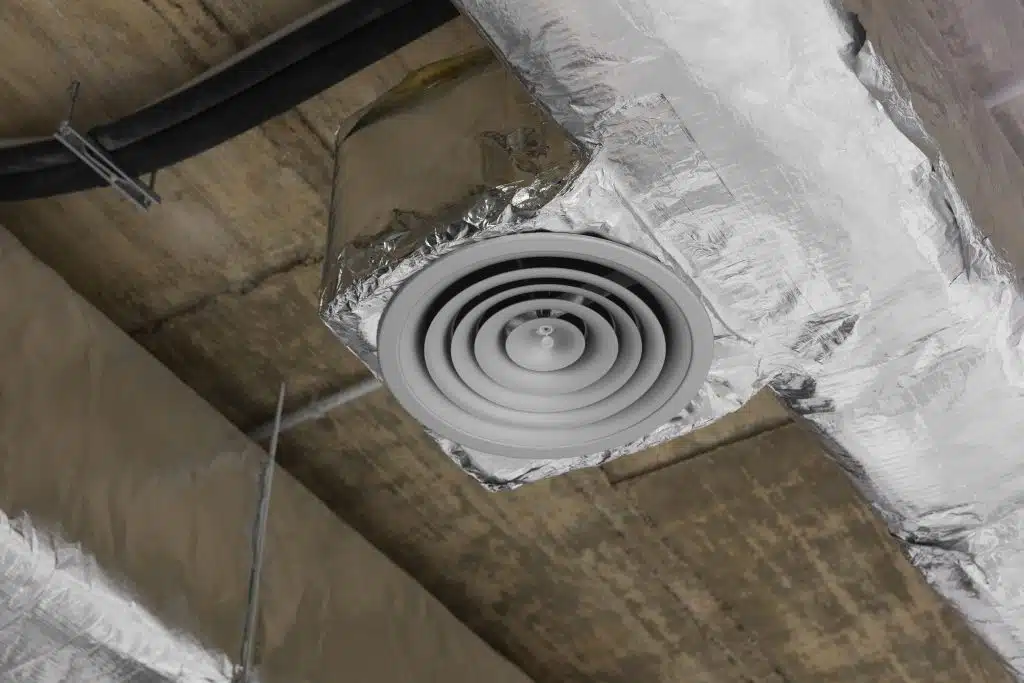
Ventilation isn’t just about keeping the air fresh; it also helps maintain a healthy living environment by removing harmful toxins and gases. However, with various ventilation options available, it can be tricky to choose the right fit. So, here is a quick guide to the different types of ventilation systems. This way, you can select one that best suits your living space and its air circulation requirements.
Importance of Ventilation in New Construction Projects
Ventilation holds considerable importance, especially in new construction projects. Here’s why:
Maintains Indoor Air Quality (IAQ)
Ventilation systems ensure the circulation of fresh air. They do so while removing pollutants and odours. This improves the IAQ and protects the occupants’ health.
Prevents Harmful Gas Buildup
Proper ventilation prevents the accumulation of gases. These include carbon dioxide and VOCs, which may originate from building materials and new furnishings. This reduces possible health risks.
Controls Humidity Levels
Ventilation regulates indoor humidity. It prevents moisture buildup and subsequent issues, like mold growth, which can compromise both health and structural integrity.
What Are the Types of Home Ventilation Systems?
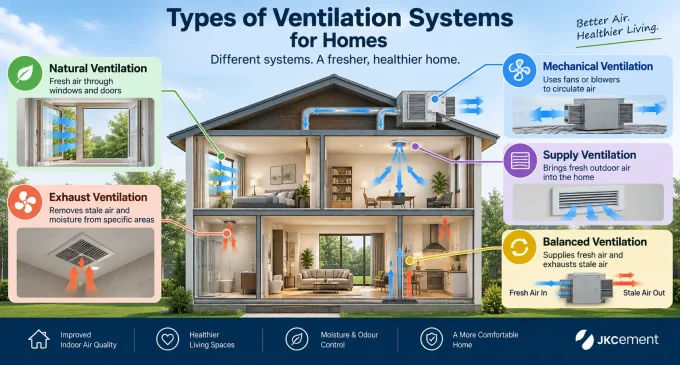
Various types of ventilation systems cater to different needs and preferences. Here’s an overview of the most common types:
| Ventilation Type | How It Works | Best For | Main Benefit |
|---|---|---|---|
| Natural | Uses windows, doors and natural airflow | Homes with good outdoor airflow | Simple and low-cost |
| Mechanical | Uses fans or blowers | Controlled indoor airflow | Consistent ventilation |
| Exhaust | Removes stale indoor air | Kitchens and bathrooms | Removes moisture and odours |
| Supply | Brings outdoor air indoors | Living spaces | Improves fresh-air supply |
| Balanced | Supplies and exhausts air | Well-sealed homes | Balanced airflow |
Natural Ventilation
Natural ventilation happens when air moves freely in and out of your home through open windows and doors. So, when you’re designing a new home, consider adding plenty of windows and doors to let the fresh air in. This will keep your home cool and comfortable. It will also ensure good air circulation, which is important for your health.
Moreover, placing windows and doors strategically, like on opposite walls, can create a cross-breeze. This can enhance ventilation even more. It’s a simple way to make your home feel airy and pleasant without relying solely on fans or air conditioning.
Mechanical Ventilation
Mechanical ventilation is also called heat recovery ventilation. This type of ventilation system is usually installed on the roofs of houses or apartment buildings. It works by transferring heat between incoming and outgoing air to provide fresh air. This system is designed to keep the air flowing in your home while also controlling its temperature.
Exhaust Ventilation
Exhaust fans remove stale air and moisture from specific areas. These include kitchens, bathrooms, and laundry rooms. They expel indoor air to the outside. This creates negative pressure that draws fresh air in through cracks, vents, or intentional openings elsewhere in the house.
Supply Ventilation
Supply ventilation systems introduce fresh outdoor air into the home while simultaneously exhausting stale indoor air. They usually incorporate fans or blowers to distribute air evenly throughout the living spaces. This balanced approach ensures a continuous flow of fresh air. It leads to better indoor air quality and comfort.
Balanced Ventilation
Balanced ventilation systems provide both supply and exhaust airflow. They maintain a neutral pressure within the home. These systems often include two separate fans—one for supplying outdoor air and another for exhausting indoor air. This balances the airflow and ensures consistent ventilation throughout the house. It also reduces indoor pollutants and maintains comfort levels.
Which Ventilation System Is Best for a Home?
- Natural ventilation: Suitable where windows and cross-ventilation provide adequate airflow.
- Exhaust ventilation: Useful for bathrooms, kitchens and laundry areas.
- Supply ventilation: Useful when controlled fresh-air intake is required.
- Balanced ventilation: Suitable when both fresh-air supply and stale-air removal need to be controlled.
- Mechanical ventilation: Useful where natural airflow is insufficient or greater control is required.
How To Plan Out Your Home Ventilation?
To plan out your home’s ventilation system, you must consider certain factors. The following are some of the important ones:
Climate and Local Conditions:
Understand the current climate in your region. This includes temperature variations, humidity levels and air pollution levels. Doing so will help you customize ventilation solutions accordingly.
Window Placement:
Whether you live in an apartment or a house, well-placed windows are key for fresh air. Position them where they can catch breezes and face open areas. This will boost airflow and the air quality inside.
Window Design:
When planning your home, think about where to place the windows and how big they should be. For good airflow, go for larger windows on sides facing open areas. This setup will let fresh air circulate throughout your home. It will keep your living space well-ventilated.
Exhaust Fans:
If your home feels stuffy because of poor air circulation, invest in exhaust fans. These fans come in two types: point-source and ducted. Point-source fans are good for clearing out smells or pollutants from specific spots, like bathrooms and kitchens. Ducted systems deliver fresh air to common areas like the living room and bedroom. This keeps your home well-ventilated.
Indoor Air Quality:
Implement measures to reduce indoor air pollutants. Use low-VOC materials, include air filters and maintain clean ventilation systems. This will improve indoor air quality considerably.
| Factor | Natural Ventilation | Mechanical Ventilation |
|---|---|---|
| Air movement | Wind and temperature differences | Fans/blowers |
| Energy use | Generally lower | Requires electricity |
| Control | Limited | Greater control |
| Dependence | Outdoor conditions | Equipment |
| Suitable for | Naturally ventilated homes | Homes needing controlled airflow |
How to Ventilate Your Home?
To effectively ventilate your home, consider these tips:
- Decide on your ventilation goals—whether it’s removing moisture, improving energy efficiency or enhancing air quality. Also, assess your house’s layout and needs.
- Understand your financial limits. Plan accordingly, considering the costs of different ventilation systems and features.
- Make sure your ventilation system is sized correctly for your home. This will help you avoid inefficiencies or inadequate airflow.
- Use sensors to track indoor air quality, including humidity and pollutant levels. Adjust your ventilation system as needed.
- Regularly clean and maintain filters, fans and other components. It will help you keep your ventilation system running smoothly and efficiently.
- For mechanical systems, consider hiring professionals. They will ensure proper installation and compliance with safety standards.
Signs of Poor Home Ventilation
- Stuffy or stagnant indoor air
- Persistent condensation
- Excess indoor humidity
- Musty odours
- Visible mould or mildew
- Poor airflow in enclosed rooms
- Excessive moisture in bathrooms or kitchens
To build a well-ventilated house that exudes strength and durability, choose a reliable cement company like JK Cement. Explore a wide range of strong cement options that assure long-lasting performance.
FAQs
What maintenance is required for ventilation systems?
Regularly clean filters, fans and ducts. Also, ensure proper functioning to maintain efficiency and indoor air quality.
Is PPC type cement a suitable material for constructing components of home air ventilation systems?
Portland Pozzolana Cement (PPC) can be used in certain aspects of home air ventilation systems. It is used to construct durable ductwork in areas where appropriate ventilation materials are limited.
What are the two basic types of ventilation systems?
The two basic types of ventilation are natural and mechanical.
- Natural ventilation relies on natural forces like wind and temperature differences.
- Mechanical ventilation uses fans or blowers to circulate air.
What are the health benefits associated with proper ventilation?
Proper ventilation can improve indoor air quality. It reduces the concentration of pollutants and allergens. This can lead to improved respiratory health and may reduce the risk of allergies.
What are the main types of ventilation systems?
The main types of ventilation systems are natural, mechanical, exhaust, supply and balanced ventilation.
What is natural ventilation?
Natural ventilation uses wind and temperature differences to move outdoor air through openings such as windows, doors and vents.
What is mechanical ventilation?
Mechanical ventilation uses fans or blowers to control the movement of outdoor and indoor air within a building.
What is exhaust ventilation used for?
Exhaust ventilation removes stale, humid or polluted air from areas such as kitchens, bathrooms and laundry rooms.
What is supply ventilation?
Supply ventilation uses mechanical equipment to bring fresh outdoor air into a home and distribute it through the living space.
What is balanced ventilation?
Balanced ventilation uses separate supply and exhaust airflow to bring outdoor air in while removing stale indoor air.
Which type of ventilation is best for a home?
The suitable ventilation system depends on the home’s layout, climate, indoor air quality requirements, budget and desired level of airflow control.
How can I improve ventilation in my home?
You can improve ventilation through strategically placed windows, cross-ventilation, exhaust fans or appropriately designed mechanical ventilation systems.