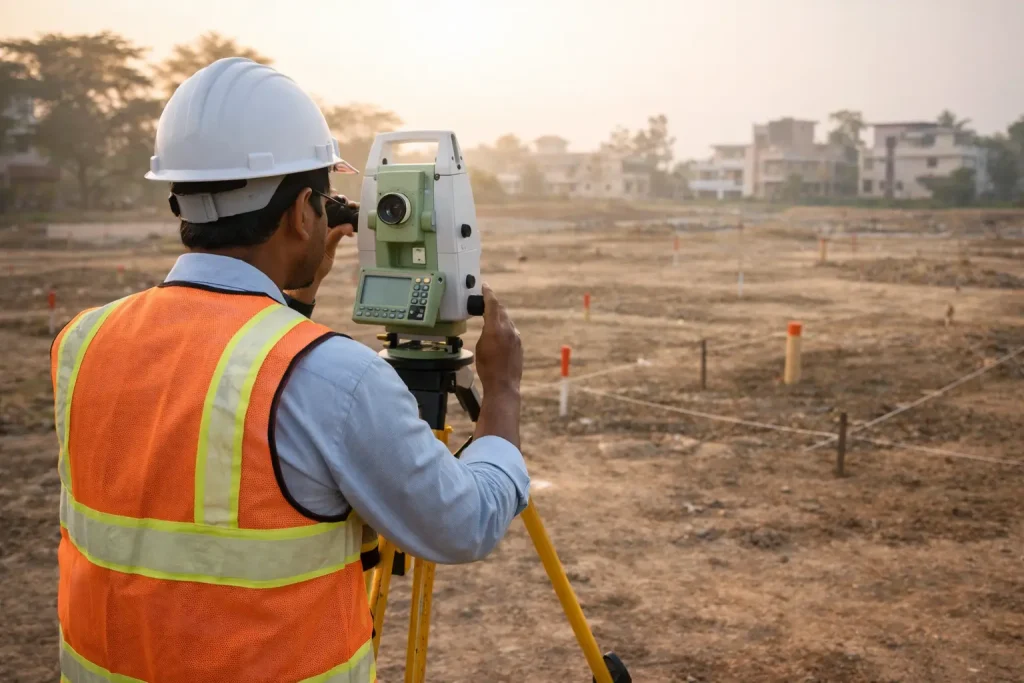
Many sites stop work mid-way – not because of cement quality or because of labour issues, but because someone skipped proper land surveying.
A neighbour complains. The municipal officer shows up.
Turns out the foundation crossed the boundary by two feet.
If you’re planning to build anything more permanent than a garden shed, a land surveyor is one of the first professionals you actually need.
Before the first brick is laid or cement hits water, a land surveyor steps in with maps, measurements, and yes, even a surveyor’s compass, to tell you exactly what you own and where you can build.
In simple terms, a land surveyor makes sure your construction starts on the right land, in the right direction, and within the right limits.
They make sure your plot lines are correct, levels are right, and drawings actually match the ground reality.
In Indian construction, where land records can be old and plots are irregular, the role of a land surveyor becomes even more critical.
Skipping this step is like starting a road trip without checking directions. This blog will explain the meaning, role and importance of a land surveyor.
What is a Land Surveyor?
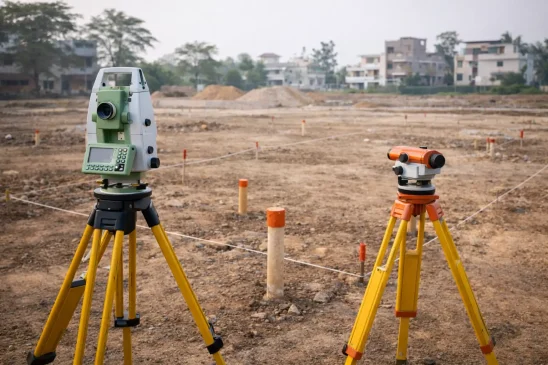
A land surveyor is a trained professional who measures land accurately and records its boundaries, size, slope, and features.
They use modern tools today, but the logic still comes from traditional instruments like the surveyor’s compass, chains, and levelling tools.
Think of a land surveyor as Google Maps for your construction site.
They tell you:
- Where your land begins and ends.
- How steep or flat it is.
- Whether it matches government records.
Without a land surveyor, you’re guessing. And guessing is expensive in construction.
Even when advanced machines are used, the basics of land surveying and orientation still rely on principles once performed using a surveyor’s compass.
Types of Land Surveyors You’ll See on Sites
Not all surveyors do the same job.
On real projects, different types of land surveyors step in at different stages.
1. Boundary Surveyors
They confirm plot boundaries using old records, site markings, and sometimes a surveyor’s compass for direction reference.
2. Topographic Surveyors
They map slopes, levels, trees, drains, and natural features.
This is crucial before planning foundations.
3. Construction Surveyors
They mark column positions, road alignments, and building layouts on site.
4. Quantity & Level Surveyors
They check height differences, excavation depths, and finished floor levels.
Every land surveyor plays a role in keeping construction aligned, legally and structurally.
The Role of a Land Surveyor in Construction
On-site, a land surveyor’s role is practical, not theoretical.
They:
- Verify land boundaries before excavation.
- Mark building lines as per the approved drawings.
- Check levels so foundations don’t go too deep or too shallow.
- Ensure roads, drains, and utilities follow the right slope.
One wrong marking can throw off the entire structure. Good land surveyors save time, material, and arguments.
Uses of Land Surveying in Real Projects
Land surveying isn’t just for big highways or towers. Even a single house benefits from it.
Here’s where a land surveyor helps directly:
- Avoids boundary disputes.
- Prevents uneven foundations.
- Helps architects design correctly.
- Supports approval drawings.
- Guides drainage planning.
Without land surveying, cement quality won’t matter much. Even the best concrete can fail if the base is wrongly aligned.
This is why most engineers insist on surveying before recommending materials or mixes.
You’ll see this approach reflected across practical construction guides, including those shared on the JK Cement blog, where planning always comes before pouring.
How a Land Surveyor Prevents Construction Mistakes
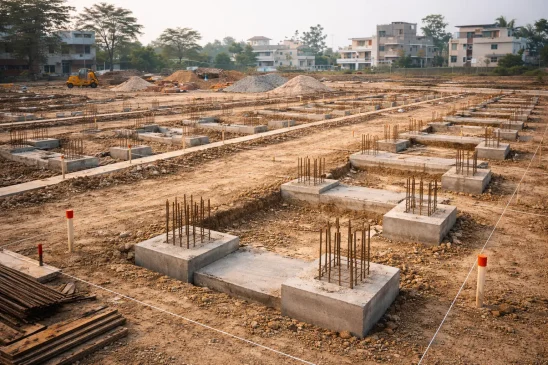
This is where the real value comes in.
A land surveyor:
- Stops encroachment issues before they start
- Ensures columns fall where the drawings say
- Keeps floor levels consistent across rooms
- Helps avoid waterlogging due to wrong slopes
Using tools like a surveyor’s compass, levels, and total stations, surveyors catch errors when they’re still cheap to fix.
Imagine a missing survey causing rainwater to flow into the building instead of out.
Fixing it later would cost more than the original survey.
Why Builders and Homeowners Should Never Skip Surveying
Many homeowners feel surveying is optional. It isn’t.
A land surveyor protects:
- Your investment
- Your legal standing
- Your peace of mind
Whether you’re using OPC, PPC, or blended cement, all of it sits on the foundation.
And that foundation depends on correct land data.
Even material selection advice, such as choosing the right cement for foundations, assumes the land has been properly surveyed.
This connection between planning and materials is something brands like JK Cement consistently highlight through their construction resources.
Construction looks tough from the outside. But most problems come from small, ignored steps. A land surveyor, armed with experience and tools like a surveyor’s compass, quietly ensures your building starts right and stays right.
If you’re planning a construction project, start with surveying, then proceed to material planning. That’s where good construction actually begins.
For practical guidance on cement choices and construction basics, exploring trusted resources like the JK Cement can help you connect planning with execution the right way.