Building a home or purchasing a piece of land is a big investment. But imagine you visit your plot after a few months and discover that your neighbor has extended the boundary wall by a few feet. You may also find that someone has built a temporary shed on your vacant land. These scenarios are common in different parts of the country. This is why it is important to understand the meaning of encroachment and legal implications. Read on this blog post to find out the details!
What Is Encroachment?
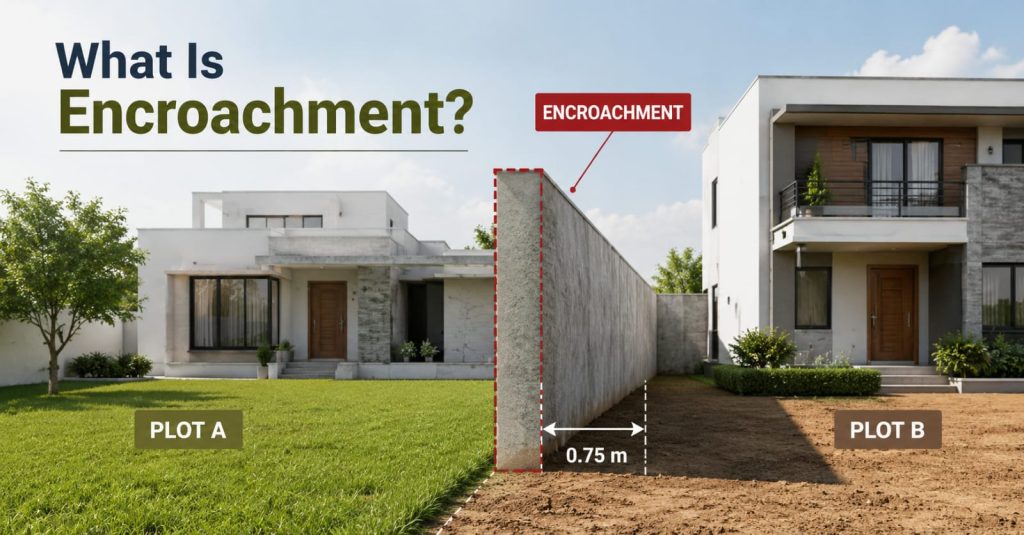
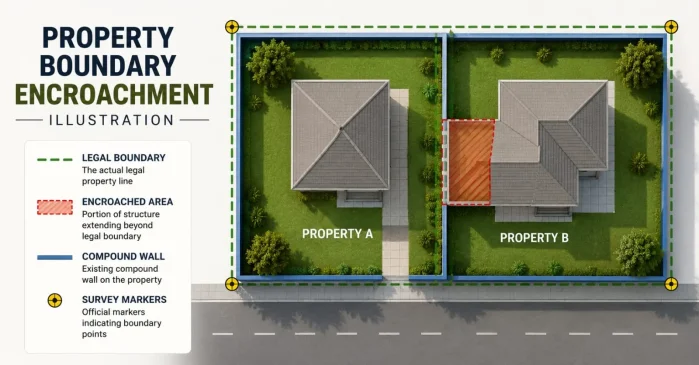
Encroachment is the unlawful use of another person’s land for occupation and construction without legal permission. Some of the common examples of encroachment are:
- A neighbor builds a compound wall two feet inside your property.
- A shopkeeper extends a platform onto a public footpath.
- Someone parks construction materials permanently on government land.
- A building projects balconies over public roads.
- People construct temporary huts on government land.
Encroachment of land sometimes happens accidentally due to the following reasons:
- Incorrect measurements
- Missing survey markers
- Outdated property records
But remember that accidental land encroachment may also result in legal complications. This is why it is advisable to do a property survey and proper documentation before construction.
What Are the Different Types of Encroachment in India?
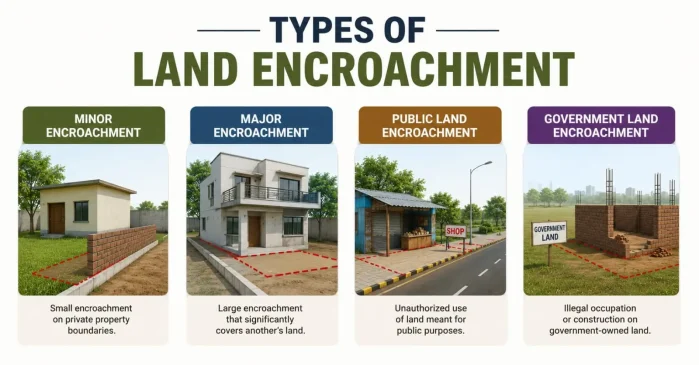
Given below are the different forms of encroachment:
Minor encroachment:
It is a situation where the parties can solve the problem through a simple conversation or negotiation. A common example of minor encroachment is a garden or a fence that overlaps property boundaries.
Major Encroachment
When the unlawful concern regarding the property is greater, the case usually goes to the court. The parties negotiate their viewpoints to win the case. The best example of a major encroachment is extending a building over property lines.
What Are the Legal Implications for Encroachment in India?
Each state across the country has its own Land Encroachment Act. A property owner must know the legal implications to handle the situation. Given below are some legal ways under the Land Encroachment Act:
- Permanent or temporary injunction (An official order from the court sent to the person for encroachment.) The court forbids encroachers from using the entire property in a permanent injunction. However, a temporary injunction is a situation where the court refrains from allowing encroachers to use the property for some time.
- A property owner can file a case under Order 39, Rules 1 and 2 of the Land Encroachment Act against encroachers.
- The court examines the application, and your reply will be filed. Your response decides the acceptance or rejection of the application.
- The justice system of India passes an ex parte injunction in case a reply is received from a single party. The court does not wait for the response from the second party.
- You can send a written notice to the encroacher for leaving your space. If they fail to do so, you can go to court for help.
What Are the Documents Required to Prove the Ownership of the Land?
Given below are the documents required to prove land ownership:
- Title deed
- Purchase agreement
- Mutation certificate
- Utility bills (Must be in your name)
What Are the Tips to Protect the Land From Encroachment?
Given below are a few tips to reduce the risk of land encroachment:
- Provide a Power of Attorney (PoA) to a family member in case you are an NRI or reside far away from the property.
- Place a board or create a fence around the property.
- Hire a caretaker for your property who will visit the property regularly.
- Build a small concrete structure for a security guard. However, make sure you complete the documentation process.
- Renew the lease agreement with the tenants regularly.
- Sell the property if the encroacher refuses to leave the property.
The Final Words
The encroachment meaning is more than just a legal term. It is about protecting one of your most valuable assets. An unauthorized construction on public land or a dispute over farmland can result in years of litigation. Fortunately, you can prevent most issues through proper land surveys and proper documentation. What’s more? Be careful before buying a property. A few extra checks today can save years of legal trouble tomorrow.
FAQs
1. What is the meaning of encroachment?
Encroachment means the unauthorized use, occupation, or construction on land that legally belongs to another person, the government, or a public authority. It can involve crossing property boundaries, extending structures, or occupying public spaces without permission, often leading to legal disputes in India.
2. What is the definition of encroachment?
Encroachment is the unlawful occupation, construction, or extension onto another person’s or government’s land without legal rights or consent. It may include permanent or temporary structures and can result in civil disputes, penalties, or removal under applicable Indian laws.
3. How do you define encroachment in simple words?
In simple terms, encroachment means using or building on land that you do not legally own. For example, extending a boundary wall, balcony, or fence beyond your property’s legal limit is considered an encroachment and may require legal correction.
4. Is encroachment a criminal offense in India?
Encroachment is generally a civil matter, but it can become a criminal offense if it involves criminal trespass, force, fraud, or intentional illegal occupation. Depending on the circumstances, authorities may initiate civil action, criminal proceedings, or both under Indian law.
5. What are common examples of encroachment?
Common examples include extending a boundary wall onto a neighbor’s land, constructing a balcony beyond property limits, occupying government land, building shops on footpaths, blocking public roads, or installing permanent structures without legal authorization.
6. How can I check if my property has been encroached upon?
Compare your property’s sale deed, survey map, and revenue records with an on-site measurement by a licensed surveyor. You can also verify official land records with local revenue or municipal authorities to identify any unauthorized occupation.
7. Can the government remove encroachment from public land?
Yes. Government departments, municipal corporations, and local authorities can issue notices and remove unauthorized structures built on public land. The action is taken according to applicable laws and due legal procedures to protect public property.
8. How can property owners prevent encroachment?
Property owners can prevent encroachment by conducting regular site inspections, installing clear boundary markers or fencing, maintaining updated land records, obtaining accurate land surveys, and ensuring all construction follows approved building plans and local regulations.