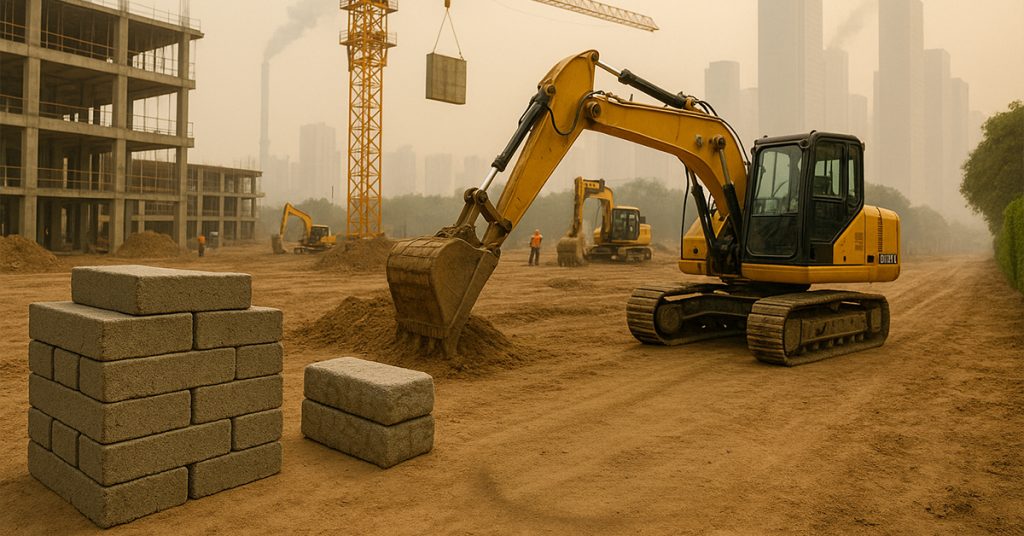
If you’ve ever stood near a construction site, you know that smell — cement dust in the air, diesel from a mixer, that fine grey haze that coats everything in sight.
It’s progress, sure. But it’s also pollution, right there in our lungs.
Now, something’s changing on sites across India.
You’ll still see cranes and concrete mixers, but fewer open piles of sand, less white haze swirling up in the sun. Builders are quietly switching to green construction materials — and it’s proving that you can build fast, build big, and still let the neighborhood breathe.
Why We Need to Rethink How We Build
For decades, Indian construction meant dust, diesel, and debris.
Mixing cement on open roads. Uncovered trucks spilling sand. Generators running all day. Every one of those things added to India’s air problem. But dust-free construction doesn’t need futuristic tech — just better habits.
- Use enclosed batching plants instead of open mixing.
- Replace manual sand-cement mixes with ready-mix plasters.
- Store materials under cover.
- Sprinkle water and control waste movement.
The Cement Story You Don’t Hear About
Here’s the truth — cement builds our cities but also leaves a big carbon footprint.
For every tonne of traditional cement made, about a tonne of CO₂ is released.
But there’s a cleaner path emerging — sustainable cement.
Variants like PPC (Portland Pozzolana Cement) and LC3 (Limestone Calcined Clay Cement) use industrial waste materials such as fly ash or calcined clay.
Less limestone means fewer emissions — and a lower carbon footprint overall.
The best part? It doesn’t compromise on strength.
In fact, it performs better in Indian climates — more durable, less shrinkage, and cleaner to handle on-site. That means less fine dust in the air, fewer allergic reactions, and safer work conditions.
At JK Cement, we’ve been steadily increasing our share of blended cement and reducing the clinker factor to cut CO₂ intensity — already bringing it down to 512 kg per tonne of cementitious material, with a target of 465 kg by 2030.
That’s not just sustainability talk — that’s measurable progress.
Clean Construction Is Smart Construction
Ask any site engineer — dust-free doesn’t mean slow.
Covering material stacks, using pre-packed products, and installing dust barriers make the job safer and smoother.
Many modern sites now:
- Use wet-cutting tools to stop stone and tile dust from going airborne.
- Recycle concrete waste for pathways and paving.
- Switch to low-emission or electric machinery.
Cleaner sites are easier to manage, equipment lasts longer, and worker health improves. The industry is realizing that responsible construction is actually smart business.
What Green Building Materials Look Like
“Green” isn’t just about paint color — it’s about smarter choices all through the build.
- Fly ash bricks — made from recycled waste, they save energy and topsoil.
- Gypsum plaster — gives a smooth finish without open mixing.
- Low-VOC paints — have fewer harmful fumes, healthier indoor air.
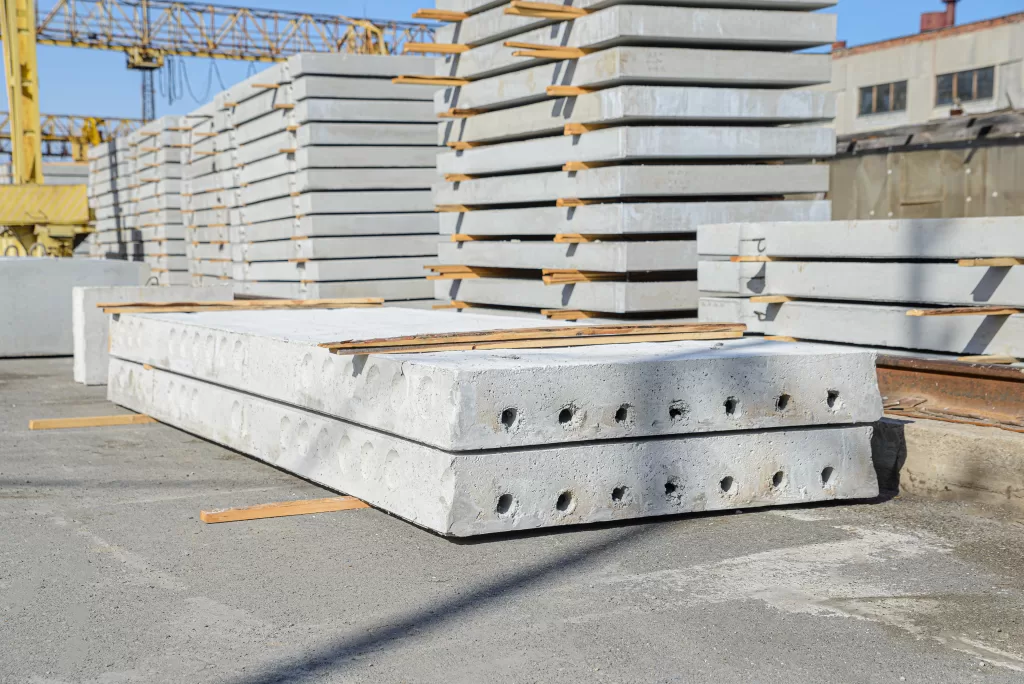
- Precast components — factory-made slabs and walls mean less dust and faster work.
These are no longer “premium” options. Many of them cost less than traditional materials. The shift is mostly mindset — understanding that clean construction is part of clean living.
India’s Builders Are Catching On
Cities like Pune, Noida, and Ahmedabad now enforce strict air-quality rules for construction.
Sites can be fined for uncovered trucks or excessive dust.
So builders are turning to green options not just to comply — but because it’s working.
Many report 30–40% lower dust levels after adopting eco-friendly materials.
Workers say they feel healthier.
Equipment doesn’t clog.
And surrounding communities can literally see the difference — clearer air, quieter sites, cleaner roads.
The Bigger Picture
Some call it a trend. But really, it’s a shift in how India builds.
Construction dust is a major chunk of urban air pollution.
Every tarp, every batch of sustainable cement, every ready-mix product chips away at that.
And there’s business value too:
- Projects finish faster.
- Fewer environmental complaints.
- Better marketability for “green-certified” projects.
Clean air isn’t just an environmental win — it’s a brand advantage.
Breathing Room for the Future
At the end of the day, it’s not about data or targets.
It’s about people — the masons who spend 10 hours on-site, the kids who live next door, the city that grows around it. It’s about the life that grows and flourishes and not the logistics.
When construction gets cleaner, everyone breathes easier.
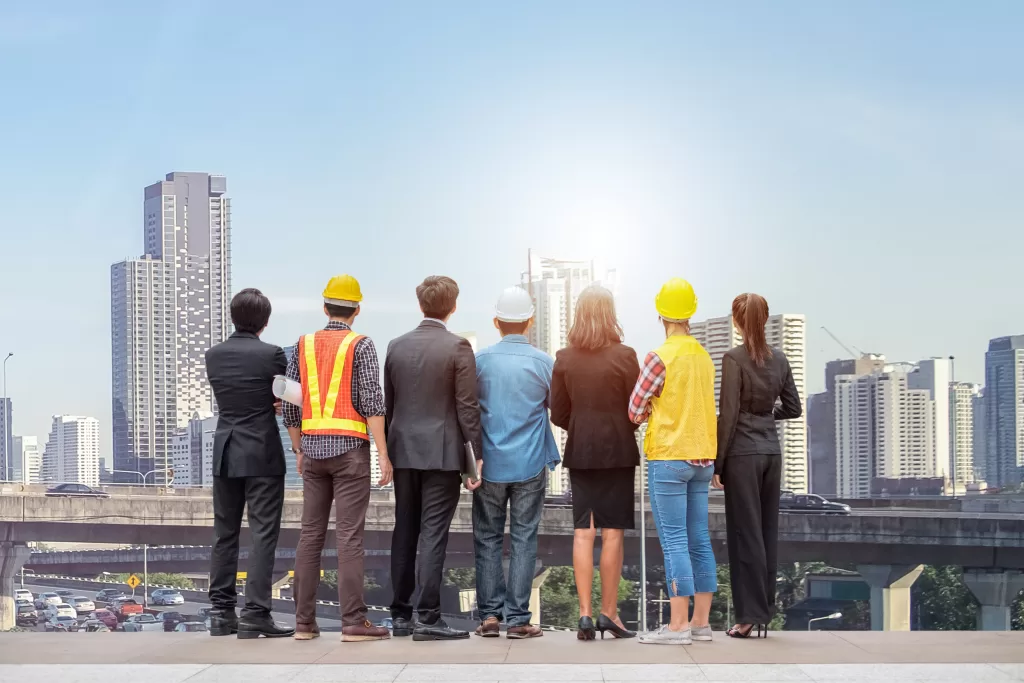
The future of buildings and construction in India isn’t just about taller towers — it’s about responsible and clean growth.
It’s about the quiet, everyday actions — covered sand piles, pre-mix trucks, and greener cements — that make progress look a little less dusty.
And maybe someday soon, walking past a construction site won’t mean holding your breath.
It’ll mean taking a deep one.
FAQs
1. What are green building materials?
Eco-friendly materials like fly ash bricks, gypsum plaster, and sustainable cement that reduce pollution and use recycled resources are called green building materials.
2. What is dust-free construction?
A method that controls on-site pollution by using enclosed mixers, ready-mix materials, and proper material handling.
3. How does sustainable cement help?
It uses industrial by-products like fly ash or calcined clay, cutting CO₂ emissions and improving durability.
4. Are green materials more expensive?
Not anymore — many are cheaper in the long run thanks to less waste and faster application.
5. Can small contractors adopt these methods?
Absolutely. Even covering piles, using water sprays, or switching to ready-mix plaster helps.
6. Does dust-free construction slow down work?
No dust free construction often speeds up work by reducing clean-up and improving efficiency.
7. Is sustainable construction the future of India’s cities?
Yes. With rising awareness and tighter norms, clean, green buildings are quickly becoming the standard — not the exception