

Have you ever been to a construction site for a flyover? You see engineers checking loads, soil conditions, drainage, and safety. The same thinking goes into different infrastructural projects. This is where civil engineering is useful. It is one of the oldest engineering disciplines. Yet it keeps changing with the way we live and build. So, what is civil engineering and why does it matter so much? Read on this blog post to find out!
Quick Answer
Civil engineering is the branch of engineering that involves the following roles and responsibilities:
- Planning and designing
- Site investigations
- Project management
- Regulatory compliance
- Team collaboration
- Quality and safety monitoring
Civil engineering professionals combine knowledge of mathematics, science, design principles, and practical site knowledge. The common applications of civil engineering projects are large infrastructure projects and water systems.
What Are the Major Branches of Civil Engineering?
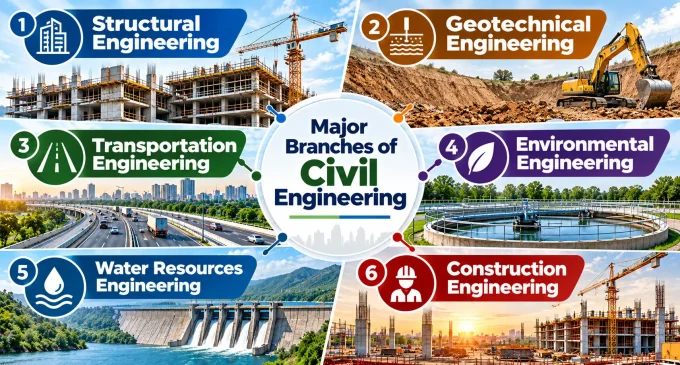
Given below are the major branches of civil engineering:
- Structural Engineering
This type of engineering focuses on the strength of structures. Structural engineers design and assess buildings, towers, and other structures. What’s more? They ensure that a structure can perform safely throughout its intended life.
- Geotechnical Engineering
A building may look strong above the ground. But what happens below it matters just as much. Geotechnical engineering deals with soil and rock. The structures transfer loads to the ground. The engineers understand the soil properties before construction. They investigate soil to study the following factors:
- Bearing capacity
- Settlement
- Groundwater conditions
Their work helps engineers select suitable foundation systems. It also supports the design of retaining walls, slopes, embankments, and underground structures.
- Transportation Engineering
The smooth movement of people and goods is part of transportation engineering. Given below are the things engineers study:
- Traffic patterns
- Road geometry
- Pavement materials
- Transportation safety
A good transportation engineer helps improve connectivity. This means a good plan can reduce travel problems.
- Environmental Engineering
Do you ever wonder who is responsible for wastewater treatment or pollution control? That’s the job of an environmental engineer. They protect human health and the natural environment. Moreover, they also develop solutions to manage waste for reducing environmental impacts. The role of environmental engineers is growing with urban development.
- Water Resource Engineering
This type of engineer collects, stores, and distributes water efficiently. Some of the common areas where water resource engineer are as follows:
- Dams
- Reservoirs
- Canals
- Drainage systems
- Flood management projects
The most interesting part is that these engineers help manage water for both domestic and industrial activities.
- Construction Engineering
Construction engineers are responsible for turning designs into completed structures. These type of engineers deal with the following:
- Materials
- Equipment
- Labour
- Schedule
- Construction methods
They coordinate and guide workers at a project site. What’s more? They ensure the structures are built strong. This branch connects engineering design with practical construction work.
What Are the Common Applications of Civil Engineering?
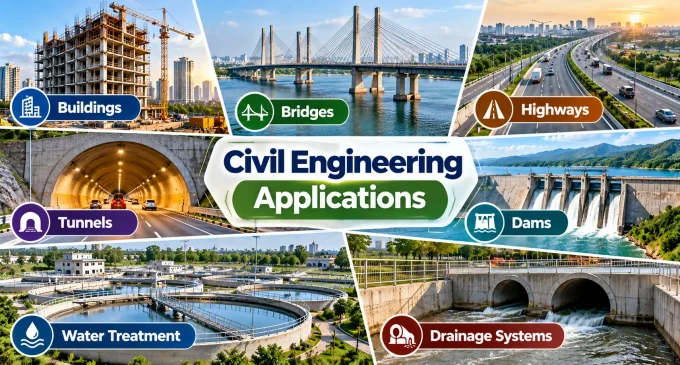
Given below are the common applications of civil engineering:
| Civil Engineering Branch | Common Application |
| Structural engineering | Skyscrapers and buildingsBridges and tunnelsIndustrial facilitiesRetrofitting |
| Transportation engineering | Mass transit systemsHighways and roadsAviation and marine infrastructureTraffic management |
| Geotechnical engineering | Foundation designUnderground structuresEarth retaining structuresNatural hazard mitigation |
| Water resources engineering | Dams and reservoirsFlood defenseIrrigation infrastructureCoastal engineering |
| Environmental engineering | Water treatment plantsWastewater reclaimationSolid waste managementAir & soil remediation |
Why Is Civil Engineering Important in India?
India is a developing nation. This is why engineering skill becomes very important at every level. Strong foundations are important for new homes. Better infrastructure is necessary for cities. Moreover, rural communities need better connectivity. The challenge is to build safe and durable infrastructure. Sustainability is also becoming a bigger part of this conversation.
What Are the Career Opportunities in Civil Engineering?
The following are the career opportunities in civil engineering in India:
- Civil site engineer
- Structural engineer
- Geotechnical engineer
- Highway engineer
- Planning engineer
- Quantity surveyor
- Project engineer
- Construction manager
- Quality control engineer
- Environmental engineer
- Water resources engineer
- Estimation and costing professional
The Final Words
Civil engineering may start with drawings and calculations. But you see real impact everywhere. From roads to buildings, civil engineers are responsible for these types of applications. It is not only about constructing structures. It is about creating the infrastructure that helps people live, work and move forward.
FAQs
1. What does a civil engineer do on a construction site?
A civil engineer supervises construction activities, checks material quality, reviews technical drawings, and monitors project progress. They also coordinate with contractors and ensure that work follows approved designs, safety standards, and project requirements.
2. Which materials are commonly used in civil engineering?
Common materials include concrete, steel, bricks, cement, sand, aggregates, asphalt, and timber. Engineers select materials based on the project’s structural requirements, durability, cost, and environmental conditions.
3. What is the difference between civil engineering and architecture?
Civil engineering focuses on structural safety, infrastructure, and construction systems. Architecture focuses on building design, space planning, aesthetics, and functionality. Both professions work together to develop safe and practical buildings.
4. How does civil engineering support sustainable construction?
Civil engineering supports sustainable construction through efficient material use, waste reduction, water management, and environmentally responsible design. Engineers may also incorporate durable materials and energy-efficient infrastructure solutions.
5. What software do civil engineers commonly use?
Civil engineers commonly use AutoCAD, Civil 3D, STAAD.Pro, ETABS, and Revit. The software choice depends on the project and specialization. These tools support drafting, structural analysis, modelling, and project coordination.
6. What factors affect the cost of a civil engineering project?
Project cost depends on material prices, labor, site conditions, design complexity, project size, and construction methods. Equipment, transportation, permits, and maintenance requirements can also influence the overall budget.