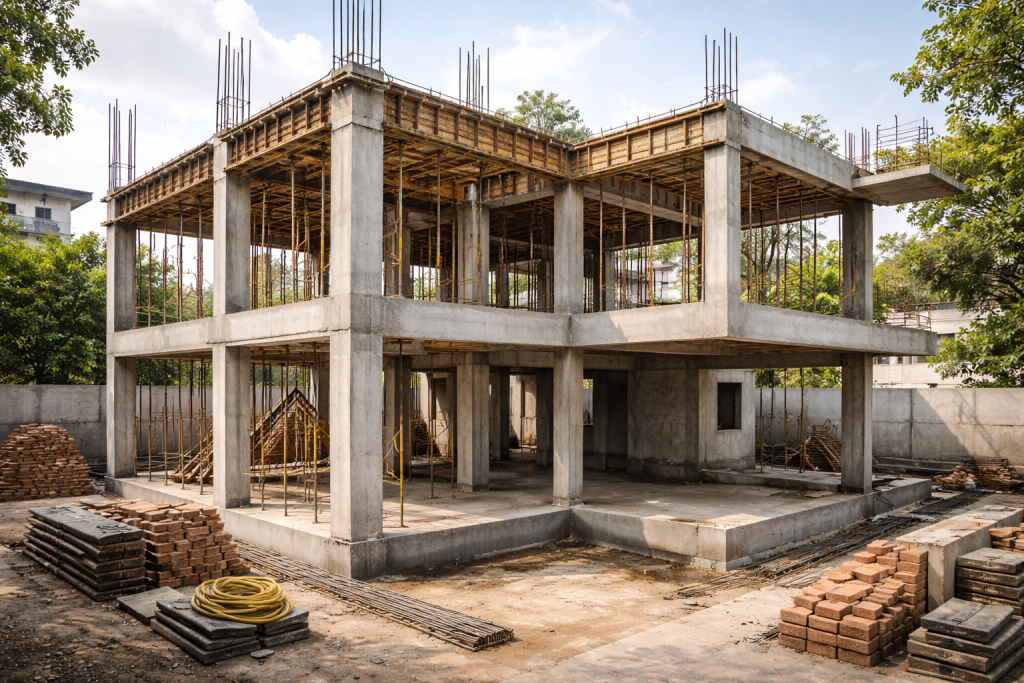
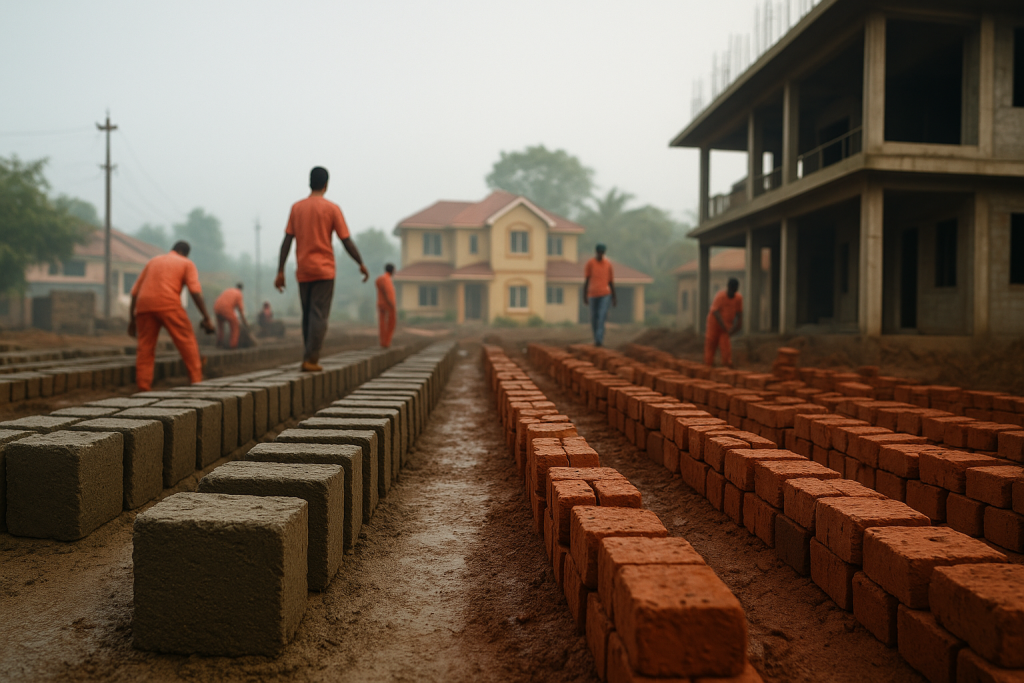
Ever watched a new house take shape in your neighborhood? There’s a special kind of excitement in the air: tea glasses clink, laborers share jokes as they unload materials, and, somewhere between the sound of a trowel scraping brick and the busy shuffle of feet, big decisions are being made right on that dusty plot. One of the biggest? What should the walls be made of—those classic red bricks we’ve all grown up seeing, or modern cement blocks you see in new high-rises?
It’s not just a builder’s headache. These choices end up shaping how our homes look, how strong they stand during storms, how cool—or hot—they feel come summer, and, of course, how much money ends up going from our pockets into the project. So, let’s roll up our sleeves—just like that site supervisor—and dive into which building material really makes the most sense for Indian homes today: cement blocks or bricks?
The Price Talk: Real Costs for Real People
If you’ve ever found yourself comparing costs at a local hardware shop or bargaining with a supplier, you’ll know that the numbers you see on paper rarely tell the full story. These days, cement block price in India mostly fall between ₹30 and ₹50 per piece, depending on whether you’re looking at solid blocks (the kind used for load-bearing walls) or hollow ones, which are a little bit lighter and often cheaper.
Red brick prices, meanwhile, stick to the range of ₹8 to ₹15 each in most markets, though you might see them priced lower or higher based on your city or dealer. On first glance, it seems like bricks are pocket-friendly. But here’s the catch—think of cement blocks as the “family pack” at the grocery store: each one can do the work of at least 6–8 smaller bricks. Once the wall is up, cement blocks often end up being the budget winner, especially when you add up mortar, labor, and plastering costs.
And for families keeping a close eye on every rupee, here’s another tip: Because cement blocks have smooth, straight edges, they fit together like puzzle pieces. You spend less on cement, get faster work, and save headaches that can come from uneven walls. Even a tiny difference in cement brick price can mean thousands saved across a home project.
Strength and Durability: Longevity in Action
Nobody wants cracks running through new walls after a heavy monsoon. That’s why builders obsess over strength tests. Cement blocks today are tough—engineers rate their compressive strength between 3.5 and 5 MPa, meaning they can hold up multi-storey builds and resist the bumps and knocks of city living.
Red bricks, though, carry a certain emotional strength: walk through old family homes and you’ll see walls built with these that have weathered dozens of festivals, weddings, and fierce storms. Still, hand-made bricks can have imperfections, and sometimes these hidden flaws mean trouble later.
When architects get to pick, they’ll often go for cement blocks for uniformity. But for a single-story home in a calm town, many still trust red bricks—the type you see stacked up beside an old temple, strong enough to last generations.
Temperature and Comfort: Everyday Home Life
Anyone who’s spent a summer afternoon hiding indoors knows how important it is to keep the heat out. Red bricks are brilliant at slow heat transfer—their pores absorb warmth, then let it go gradually after sunset, keeping living spaces comfy in the worst months.
Cement blocks, especially hollow types and AAC (Autoclaved Aerated Concrete), have improved a lot in keeping interiors cool but can sometimes retain more heat. This means if you’re designing a home to beat the Chennai sun or avoid AC running overtime, it’s worth asking not only about the cement block price in India but also their insulation qualities.
Environmental Impact: Responsible Choices
Many families want homes that respect nature. Red bricks, sadly, come at an environmental cost: the firewood and soil burned for each kiln mean lost trees and polluted air. As cities grow, the pressure mounts to find alternatives.
Cement blocks step up as a ‘less harmful’ choice—often made using fly ash (a recycling win!), and they don’t devour as much raw earth. Some newer eco-friendly AAC blocks offer amazing insulation and tick the sustainability box. Yes, their price can be higher, but knowing your home helps keep the air cleaner is a comfort money can’t always measure.
Moisture, Finishing, and Maintenance: The Everyday Battle
We’ve all seen walls with those powdery white marks—efflorescence from trapped moisture. Red bricks tend to soak up more water, sometimes leading to patches and peeling paint if not sealed properly. Cement blocks, by comparison, are denser and much less absorbent, meaning homes stay looking fresh longer without too much hassle.
Finish-wise, cement blocks make life easier, giving smooth surfaces that are ready to paint or plaster. If you love the rustic charm of exposed brick, though, nothing beats the old school beauty of red.
Labor and Speed: Saving Time and Effort
When deadlines matter—maybe your lease is running out or your daughter’s wedding date is fixed—speed is everything. Cement blocks, thanks to their bigger size, cover more wall area with fewer pieces and joints, meaning construction teams can work faster and save you precious days (and labor costs).
While masons are usually more familiar with bricks, and some argue they allow more flexibility in design, uneven batches can slow down work. Cement blocks simplify the job and make schedules more predictable.
Which Works Best for Indian Homes?
Honestly, it comes down to what you need and what kind of place you’re building in. If you’re in a city, especially in a multi-storey building or a compact plot where timelines matter, cement blocks usually make more sense. They go up faster, they’re uniform, and labour teams prefer them for bigger walls because the wastage is low and the finishing is cleaner.
In smaller towns or villages, or if you just like that old-school charm, red bricks still feel “right”. Most local masons have grown up working with them, and you get that familiar warmth in the walls.
If you’re conscious about the environment, or simply want a cooler home without spending extra on insulation, fly ash blocks or AAC blocks hit a sweet spot—lighter, cleaner, and easier on the planet.
And if the budget is tight (which is the case in 90% of home builds), compare cement brick prices and red brick prices in your specific area. Rates swing a lot depending on transport, kiln availability, and even the season. Sometimes your local supplier will suddenly offer a great deal because a fresh stock just arrived.
At the end of the day, building a home is part logic, part emotion. Whether you go with bricks or cement blocks, the goal is simple: a place that stands strong, stays comfortable through summers and monsoons, and feels like it was built for your family’s journey.
FAQs
1. What is the average cement block price in India?
Usually around ₹30–₹50 per block, with heavier, high-strength solid blocks sitting on the higher end.
2. How does cement brick price compare to red brick price?
Red bricks usually cost ₹8–₹15 each, but you need a lot more of them to build the same wall area. Cement blocks cost more per piece, yes — but because they’re bigger, straighter, and quicker to install, the overall wall cost often comes down, especially in bigger projects.
3. Are cement blocks stronger than bricks?
Most of the time, yes. Cement blocks are more uniform in size and density, which means their strength is predictable. That’s why engineers prefer them for multi-storey buildings.
4. Which is better for hot climates?
Clay bricks naturally stay cooler because they breathe better. But AAC blocks and hollow cement blocks also offer solid insulation and keep indoor temperatures down in hot regions.
5. Which option is more eco-friendly?
Blocks made with fly ash, AAC, or other recycled materials generally have a much lower environmental impact compared to traditional fired red bricks.
6. Do cement blocks need less plaster?
Yes. Their smooth, straight edges mean you use less mortar and thinner plaster, which saves both money and labour.
7. What’s the best choice for village homes?
In most villages, people still go with red bricks. They’re locally available, easy to source, and the local masons are very comfortable working with them.