Spend enough time on construction sites in India and you’ll notice a pattern. The tea is always strong, the conversations are never short, and sooner or later, the same question comes up between the site engineer, the contractor, and sometimes even the client: “OPC or blended cement — which one do we go with?”
It might sound like a small decision, but that choice shapes everything from how quickly your project moves to how well your building will age. And because our country’s construction landscape is as varied as its weather — coastal salt-laden air in Kochi, dry summer heat in Nagpur, freezing winters in Shimla — the answer is rarely one-size-fits-all.
So, let’s unpack it — slowly, clearly, and with enough detail that you’ll be able to walk onto your site tomorrow and make the call with confidence.
The Two Big Families of Cement You’ll Encounter
India’s cement market is built around two main categories. Both are covered by strict BIS standards, but they behave differently in real-world conditions.
1. Ordinary Portland Cement (OPC)
- Grades available: 33, 43, and 53 (IS 269:2020,)
- What it’s made of: Mostly clinker (burnt limestone and clay) plus gypsum for setting control
- Why it’s valued:
- High early strength, especially the 53 grade
- Predictable setting time — vital for tight schedules
- Works well in reinforced concrete (RCC) where formwork turnover is important
- High early strength, especially the 53 grade
- When it shines:
- High-rise slabs where deshuttering needs to happen in 7–10 days
- Precast beams, paver blocks, or factory-made segments
- Projects with limited curing windows
- High-rise slabs where deshuttering needs to happen in 7–10 days
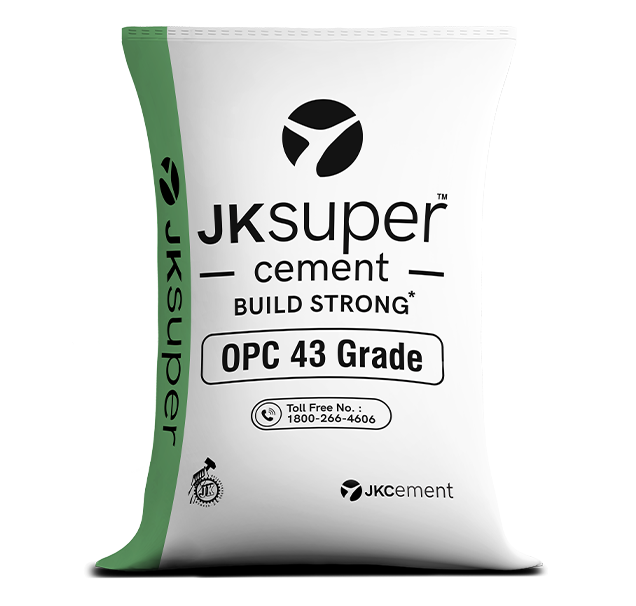
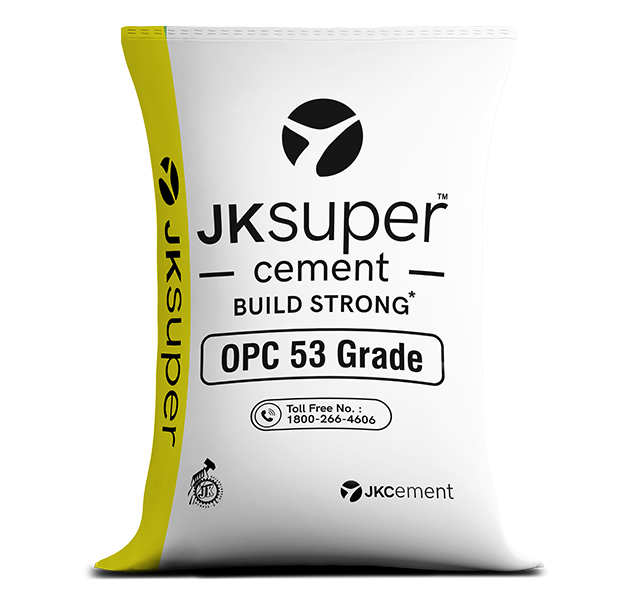
JK Cement OPC, available in 43 and 53 grades, is known for consistent particle size distribution and strict BIS compliance — two things that matter more than most people realise when it comes to concrete quality control.
2. Blended Cement
Blended cements start with OPC cement clinker, but replace a portion with finely processed industrial by-products. This changes both performance and environmental impact.
a. Portland Pozzolana Cement (PPC)(IS 1489 Part 1)
- Extra ingredient: Fly ash from thermal power plants
- Behaviour in concrete:
- Gains strength slowly, but keeps improving for months
- Makes concrete denser and less permeable to water
- Gives smoother finishes — ideal for plaster and mortar
- Gains strength slowly, but keeps improving for months
- Where it’s preferred:
- Mass concrete pours (raft foundations, retaining walls)
- Residential buildings where finish quality matters
- Areas with fluctuating curing conditions
- Mass concrete pours (raft foundations, retaining walls)
b. Portland Slag Cement (PSC) (IS 455)
- Extra ingredient: Ground granulated blast furnace slag (GGBS) from steel plants
- Why it’s special:
- Exceptional resistance to sulphate and chloride attack
- Lower heat of hydration — safer for large pours in hot climates
- Exceptional resistance to sulphate and chloride attack
- Best applications:
- Marine works, coastal housing, bridges
- Foundations in aggressive soils
- Water-retaining structures
- Marine works, coastal housing, bridges
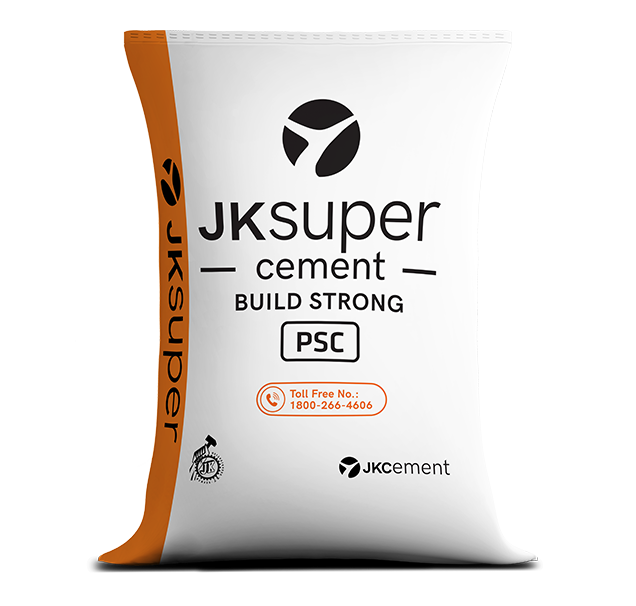
JK Super PPC and JK Super PSC are both designed with Indian site realities in mind — from the high workability needed in tier-2 town projects to the chemical durability required for coastal housing boards.
Blended Cement vs OPC — How to Actually Decide
Choosing between concrete types OPC PPC and PSC isn’t about brand loyalty; it’s about matching material behaviour to your project’s actual needs. Here’s a field-tested decision framework:
1. Project Timelines
- OPC edge: 53 grade can reach 27 MPa in just 7 days — great for quick formwork removal.
- PPC/PSC edge: Slower set means better control for large pours, reducing cold joints.
2. Site Durability Requirements
- OPC: Strong, but needs coatings or admixtures in aggressive environments.
- PPC: Denser matrix resists seepage; good for tanks, terraces, balconies.
- PSC: Naturally immune to sulphate/chloride attack — coastal champion.
3. Thermal Considerations
- OPC: Higher heat of hydration — can cause thermal cracking in thick sections.
- Blended cements: Lower heat generation — safer in large rafts or dams.
4. Environmental & Cost Factors
- Blended cements reuse industrial waste → lower CO₂ footprint
- Often priced slightly below OPC
- Better workability can mean lower cement consumption per m³ of concrete
5. Finishing Needs
- OPC 43 grade: Reliable smoothness for premium finishes.
- PPC: Often even smoother, with fewer hairline cracks.
Practical Site Scenarios
- Fast-track metro station deck in Delhi: OPC 53 chosen for 12-day cycle times.
- Village school in West Bengal (near saline groundwater): PSC used for plinth beams and foundation — no corrosion issues in 8 years.
- Township podium slabs in Pune: PPC switched in for better pumpability, avoiding segregation over 50-m boom pumps.
Things to Check Before You Lock Your Choice
- Curing capacity — Is water available for 10–14 days? If not, OPC may be safer.
- Weather window — For extreme summer work, blended cements reduce thermal cracking risk.
- Soil report — High sulphates? Go PSC.
- Design load — Early high loads need OPC; long-term heavy service can suit PPC/PSC.
- Local availability — Quality of fly ash/slag matters; poor quality negates benefits.
FAQs
Which cement is better for home construction — OPC or PPC?
For most houses, PPC is ideal. It resists moisture, delivers smooth finishes, and is economical. OPC is best reserved for RCC members where early strength is critical.
Is blended cement stronger than OPC?
Not at first. OPC gains strength rapidly in the first week. By 90 days, PPC and PSC often match or outperform it in durability and crack resistance.
Can PSC be used in RCC?
Yes, especially in aggressive soils or coastal zones. It performs well in basements, foundations, and marine RCC elements.
Why do engineers choose OPC for precast units?
Its high early strength and predictable setting allow faster demoulding, increasing factory output.
Which cement is best for coastal construction?
PSC — its slag content protects against chloride and sulphate damage.
Does PPC need more curing?
Yes, at least 10–14 days. The slower hydration improves long-term strength but needs patience.
Is blended cement more eco-friendly?
Absolutely. Using fly ash or slag cuts clinker content, reducing CO₂ emissions and conserving limestone.
Can OPC and PPC be used together?
Yes. Many sites use OPC for slabs/columns and PPC for plastering/masonry.
What’s the main difference between cement and concrete?
Cement is the binder. Concrete is cement plus sand, aggregates, and water.
Which grade of OPC should I choose — 43 or 53?
53 for early strength in structural works; 43 for better workability and finishing in general construction.
Why is PPC preferred for plaster?
Its fine particles and pozzolanic reaction give smoother finishes and fewer cracks.
How does sulphate attack affect concrete?
Sulphates in soil or water react with tricalcium aluminate in cement, causing expansion and cracking — PSC resists this naturally.
Is there a cost difference between OPC and PPC?
Typically, PPC is slightly cheaper and offers lower lifecycle maintenance costs.
Final Word
Blended cement vs OPC isn’t a debate with a single winner. It’s about fit-for-purpose selection. For speed, choose OPC. For resilience and sustainability, go PPC or PSC. And whatever you choose, ensure it comes from a trusted, BIS-certified manufacturer like JK Cement — because in construction, the bag’s label is as important as what’s inside it.