On most residential sites today, the talk is rarely about fancy designs. It’s about speed, labour availability, and finishing work before the monsoon or Diwali.
That’s exactly where interlocking bricks start making sense.
Interlocking bricks aren’t some new-age experiment. They’re simply bricks designed to sit into each other instead of depending fully on mortar.
Once masons understand the system, the work moves faster – lines stay straight, material waste drops.
If you’re wondering whether interlocking bricks are just another trend being pushed on small home builders, they’re not. They’re practical and save time.
On many sites, they quietly solve problems we’ve all dealt with for years.
Once you see how an interlock brick house actually comes together, it starts sounding logical. This blog will provide insight.
Why Interlocking Bricks?
Anyone who has spent time on a site knows this – good masons are harder to find than they used to be. Labour costs keep rising. And timelines are tighter than ever.
Traditional brickwork depends heavily on skill.
One slightly careless day, and you’re correcting alignment for the next three days with plaster. Interlocking bricks reduce that dependency. The shape does half the job – bricks align themselves, the walls rise faster, and the margin for error becomes smaller.
That’s why it is becoming important to discuss interlocking bricks design and the real price of interlocking bricks – not just the per-piece cost, but the overall site savings.
What Are Interlocking Bricks?
Interlocking bricks are specially manufactured masonry blocks with grooves, projections, or ridges that fit into each other.
Instead of relying fully on thick mortar joints, these bricks support one another mechanically.
In simple terms, they lock.
In traditional construction, strength comes from mortar holding everything together. In an interlock brick house, strength comes from both the brick shape and limited mortar use. That changes how walls behave during construction.
Alignment becomes easier, the levels stay consistent, and the walls look cleaner even before plastering.
Once they sit properly, they don’t shift easily.
Key features of interlocking bricks:
What differentiates interlocking bricks?
- Uniform size and shape
- Reduced mortar usage
- Faster wall construction
- Cleaner wall surfaces
In most interlocking brick construction, mortar is used only where structurally required – bonding courses, reinforcements, or specific load points.
That’s where real savings begin.
Types of Interlocking Bricks Used in Construction
Not all interlocking bricks serve the same purpose. Choosing the right type matters.
1. Concrete Interlocking Bricks
This is the most commonly used type.
- Made with cement, sand, and aggregates
- Durable, long-lasting and consistent
- Used to construct load-bearing walls
Concrete interlocking bricks design works well for single-storey houses and low-rise buildings when structural planning is done properly.
2. Fly Ash Interlocking Bricks
These are a sustainable option.
- Manufactured from industrial waste
- Give a smooth finish.
- Thermal performance is good.
Many homeowners prefer fly ash interlocking bricks when they want cleaner interiors with reduced plaster thickness.
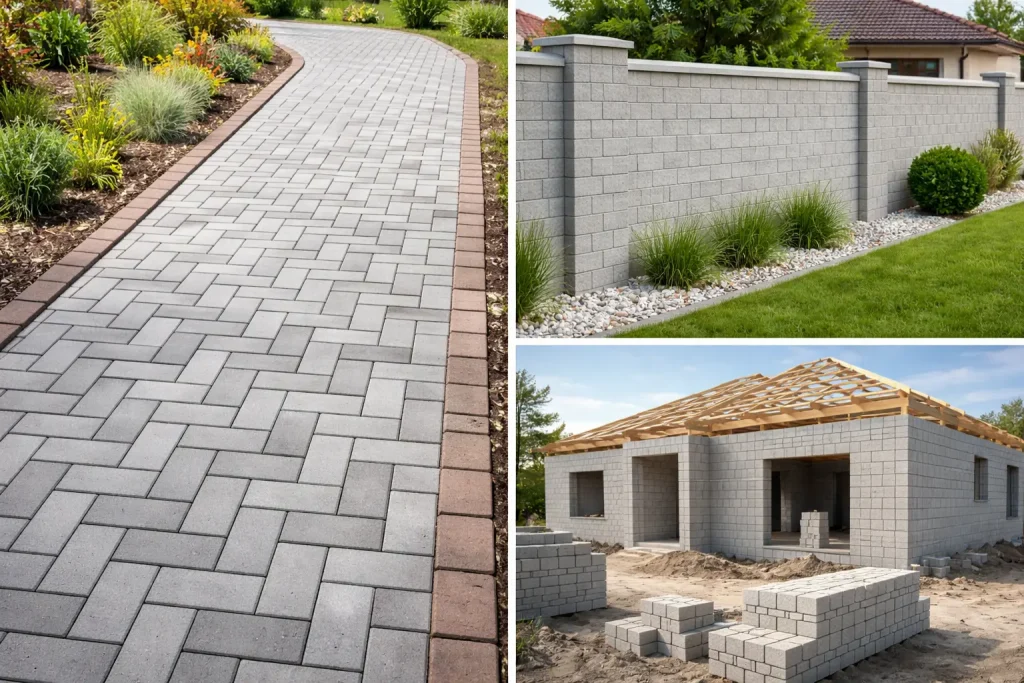
3. Interlocking Paver Bricks
These aren’t used for walls but still fall under the interlocking category. They are used for:
- Driveways
- Walkways
- Parking areas
Their locking system prevents surface movement over time.
4. Interlocking Stabilised Soil Bricks
These are primarily made with soil, and stabilised with cement.
- Eco-friendly
- Low cost
- Used in sustainable housing construction
Benefits of Using Interlocking Bricks on Site
The biggest advantage of interlocking bricks isn’t visible in drawings.
It shows up during execution.
1. Faster Construction
Less time is spent checking plumb and level repeatedly. Because the bricks guide alignment, masons work faster.
2. Lower Cement Consumption
Minimal mortar use means lower cement requirement. This directly affects the overall price of interlocking brick construction.
3. Cleaner Wall Finish
Walls built using a proper interlocking brick design often need less plaster. Surface undulations reduce significantly.
4. Consistent Quality
Factory-made bricks eliminate variations seen in locally sourced handmade bricks.
5. Long-Term Cost Efficiency
Even if the price of interlocking bricks seems slightly higher per piece, labour savings and reduced material usage balance the cost.
On many sites, the final numbers work out better than expected.
6. Design Flexibility and Practical Applications
There’s a common myth that an interlocking brick design limits creativity. That’s not true.
Interlocking bricks can be used to enhance the aesthetics of:
- Internal partitions
- Compound walls
- Low-rise residential buildings
When architects plan around the system early, an interlock brick house looks no different from conventional construction – except it performs better during execution.
Interlocking Bricks vs Traditional Bricks
This comparison happens on almost every site discussion.
Traditional bricks:
- Heavy dependence on mortar
- High skill requirement
- Slower construction
Interlocking bricks:
- Reduced mortar
- Self-aligning system
- Faster wall work
In an interlock brick house, mistakes show early – which gives you the benefit of correcting alignment immediately instead of hiding it later under thick plaster.
Understanding the Price of Interlocking Bricks
This is where most homeowners hesitate. The price of interlocking bricks depends on:
- Brick type
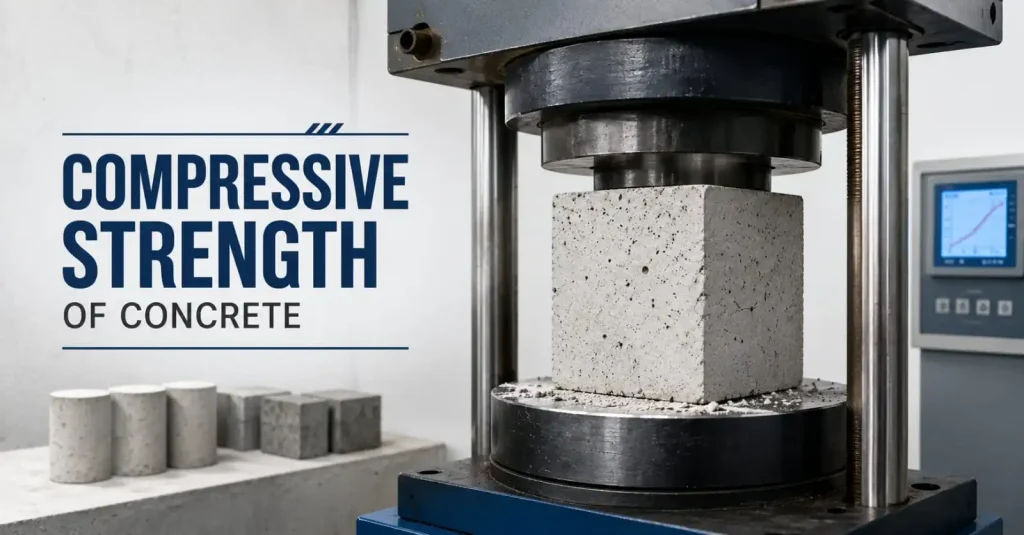
- Compressive strength
- Size and finish
- Transport distance
Yes, the per-piece cost can be higher than traditional bricks. But when you calculate, it shows:
- Reduced cement usage
- Lower labour days
- Less plaster material
The total project cost often comes down. Experienced contractors always look at overall execution cost – not just material rates.
Practical Tips from Real Construction Sites
- Use trained masons, even though the system is simpler.
- Ensure proper curing for concrete interlocking bricks.
- Follow structural drawings strictly.
- Don’t skip reinforcement where specified.
At the end of the day, brick quality and cement quality still matter – and good quality cement means JK Super Cement, for all specialised construction and long-lasting durability. A good system only performs well when the materials are reliable.
Interlocking bricks aren’t a shortcut. They’re a smarter way of doing the same job.
They reduce waste, save time, and bring discipline to construction.
If planned properly, an interlock brick house built with the right interlocking brick design can be strong, economical, and future-ready.
FAQs
1. What are interlocking bricks used for?
They’re commonly used for walls, partitions, and sometimes paving, depending on the type.
2. Is an interlock brick house structurally safe?
Yes. With proper design and reinforcement, it performs well.
3. What is the price of interlocking bricks compared to normal bricks?
Per unit cost may be higher, but the total construction cost often reduces.
4. Do interlocking bricks require plastering?
Minimal plastering is needed if alignment is done correctly.
5. Are interlocking bricks ok to be used for multi-storey structure construction?
Yes, they can be – but with proper structural planning.
6. Are interlocking bricks eco-friendly?
Fly ash interlocking bricks are particularly sustainable.
7. Do interlocking bricks need special labour?
Basic training helps, but most experienced masons adapt quickly.