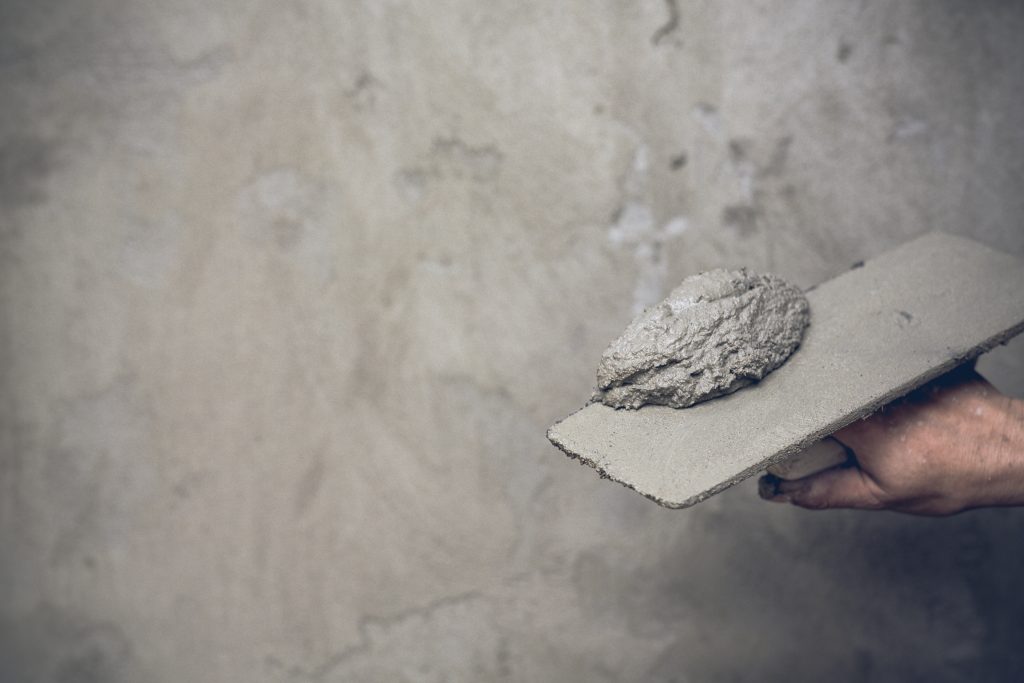
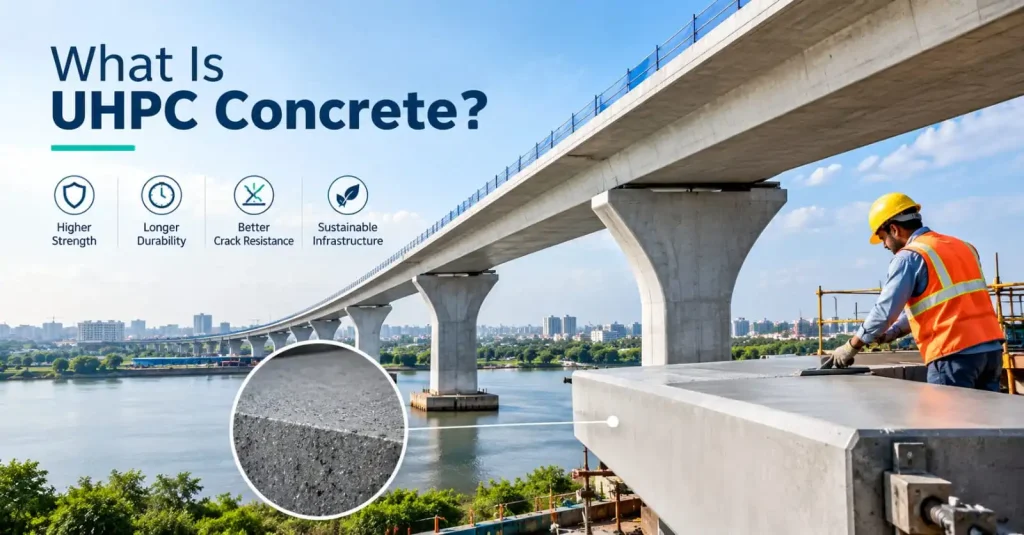
Before construction begins, the workers ask you to bring some building materials. One important construction material in the list is concrete. It is used in every structural element you see near you. The place from where you are reading this blog is also made of concrete. But ordinary concrete has now taken a backseat. Structural engineers now recommend using UHPC concrete for large and more efficient structures. What exactly is UHPC full form? Why is it different from ordinary concrete? What is its future in Indian construction? Read on this blog post to find out the details!
Quick Answer
The full form of UHPC is ultra-high-performance concrete. It is an advanced concrete that not only provides high strength but also ensures excellent durability. The most interesting part is that it resists cracks better than normal concrete. However, it is necessary to mix UHPC in the right proportions. It achieves compressive strength of around 120 MPa if the workers design and cure it properly. UHPC concrete is more expensive than ordinary concrete. However, it helps you save on future repair and maintenance costs.
What Is UHPC Concrete?
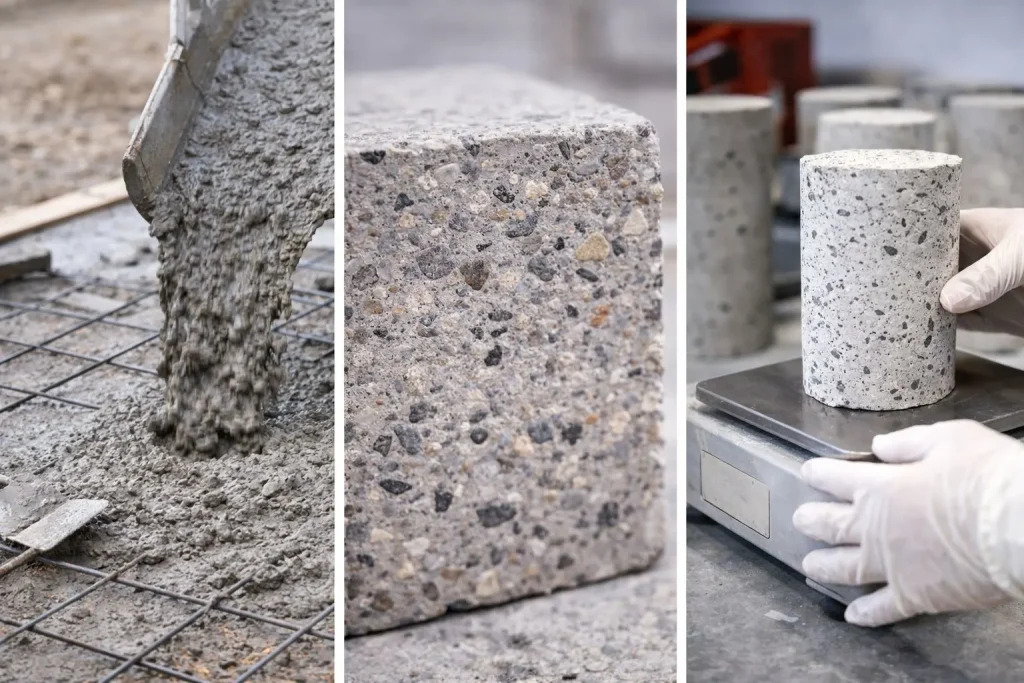
UHPC full form is ultra-high performance concrete. This type of concrete provides very high strength to the structures. What’s more? It also ensures excellent durability because it resists water penetration. Structural engineers often use UHPC concrete in modern construction because it manages harsh environmental conditions. Some common materials that are used to manufacture UHPC are as follows:
- Cement
- Fine sand
- Supplementary cementitious materials
- Chemical admixtures
- Fibres
The most intriguing part of UHPC concrete is that it has a very low water-to-binder ratio. Hence, it creates a dense concrete structure with limited pores.
How Is UHPC Concrete Different From Ordinary Concrete?
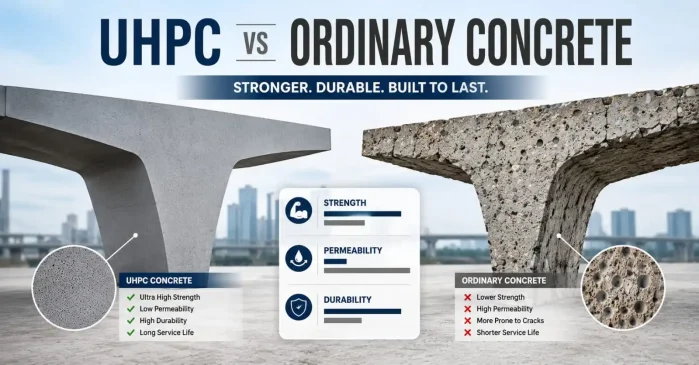
The table below highlights the difference between UHPC concrete and normal concrete:
| Parameter | UHPC Concrete | Normal Concrete |
| Compressive strength | The compressive strength of UHPC concrete is around 120 MPa or higher. | The compressive strength of normal concrete is around 20-25 MPa according to concrete. |
| Durability | UHPC concrete resists water and other chemicals efficiently. Thus, it is highly durable for the structures. | It is also durable if you choose good-quality cement and design it properly. |
| Fibres | Structural engineers often add steel or other fibers to UHPC concrete. | Normal concrete does not require additional fibers. |
| Crack resistance | It is more tensile than ordinary concrete. This means it resists cracks efficiently. | Normal concrete structures often crack under tension. |
| Workability | The workers must be careful about the proportion mix of UHPC concrete. | It is easy to mix and place the normal concrete on the structures. |
| Material cost | The cost of UHPC concrete is usually high due to the availability of cementitious material and fibers. | The material cost of normal concrete is lower than UHPC concrete. |
| Common applications | The common applications of UHPC concrete are as follows:
|
The applications of normal concrete are as follows:
|
What Are the Properties of UHPC Concrete?
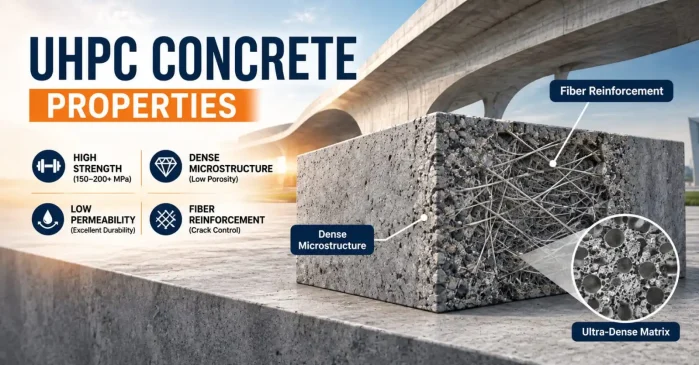
The following are the properties of UHPC concrete:
- High Compressive Strength
UHPC can achieve 120-250 MPa strength if the workers mix and cure it properly. Hence, it is substantially higher than other common structural concrete grades. This strength allows engineers to consider slim structural elements and lower self-weight.
- Low Permeability
This is one of the most important benefits of UHPC. It has a dense microstructure that makes water and other aggressive substances difficult to penetrate. Thus, UHPC concrete is really useful for infrastructure exposed to moisture and coastal conditions.
- Better Crack Control
Concrete is good in compression but weak in tension. However, UHPC uses fibers to make it more tensile. Fibers bridge the cracks and transfer tensile stress efficiently. It improves toughness and post-cracking behavior of the structure.
- High Strength-To-Weight Potential
A stronger material allows designers to reduce the size of structural components. For example, a precast bridge element may weigh less if the required performance is achieved with a thinner section. It makes transportation and lifting easier for the workers.
What Are the Common Applications of UHPC Concrete?
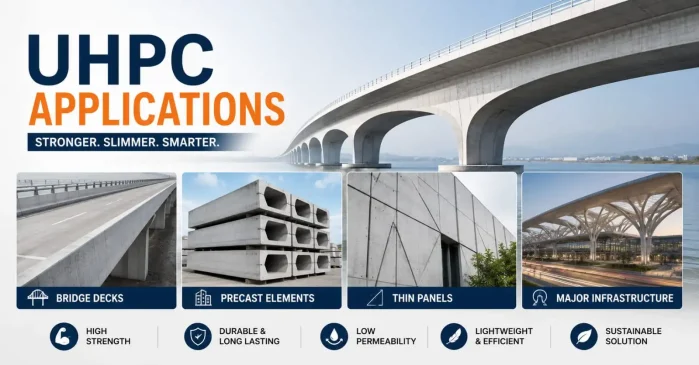
Given below are the common applications of UHPC concrete in Indian construction:
- Bridge decks and girders
- Precast and prestressed elements
- Thin architectural panels
- Marine and coastal structures
- Industrial floors
- High-rise structural components
- Infrastructure with severe environmental conditions
What is the Future of UHPC Concrete in Indian Construction?
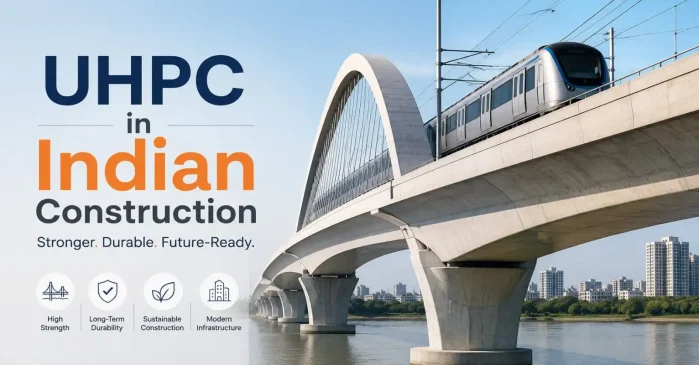
UHPC is a modern building material suitable for projects that require long-term durability and performance. Structural engineers often use UHPC in the following infrastructural projects:
- Bridges
- Metro projects
- High-rise buildings
- Large structures
But why? This is because of the properties of UHPC concrete. They not only offer strength but also resist cracks even in hard conditions. The best part is that UHPC structures require less repair and maintenance over time. However, there is a much wider scope of UHPC concrete in Indian construction. The local manufacturers must produce UHPC and spread awareness about it to the dealers. Moreover, it is necessary to train the workers to design the UHPC concrete efficiently.
The Final Words
The future of UHPC concrete in Indian construction is growing rapidly. This is because UHPC offers better strength and durability to the structures. It is highly useful for infrastructures where long-term performance is highly important. The demand for UHPC concrete can significantly rise if the manufacturers improve their local production and spread awareness among their network.
FAQs
1. What is the UHPC full form?
The UHPC full form is “ultra-high performance concrete.” It is an advanced concrete known for its high compressive strength, low permeability, toughness, and durability. UHPC is commonly used in demanding applications such as bridges, precast components, infrastructure repairs, and structures exposed to harsh conditions.
2. What is the strength of UHPC concrete?
UHPC concrete typically achieves a compressive strength of around 120–250 MPa, depending on its mix design, materials, and curing conditions. Some specialized UHPC mixes can achieve even higher strengths. This makes UHPC significantly stronger than many conventional structural concrete grades.
3. Is UHPC stronger than M60 or M80 concrete?
Yes, UHPC can be significantly stronger than M60 or M80 concrete in terms of compressive strength. However, its performance is not measured by strength alone. UHPC also offers low permeability, improved toughness, crack control, and excellent durability.
4. Is UHPC expensive in India?
Yes, UHPC concrete generally costs more than conventional concrete in India. Its higher cost comes from specialized cementitious materials, fibers, chemical admixtures, quality control, and curing requirements. However, its longer service life and reduced maintenance can make it cost-effective for suitable projects.
5. Can UHPC be used for houses?
Yes, UHPC can be used in residential construction, but it is usually unnecessary for standard houses. Conventional concrete is generally more economical for typical foundations, columns, beams, and slabs. UHPC is better suited to projects where exceptional strength, durability, or reduced structural weight is required.
6. Is UHPC environmentally friendly?
UHPC is not automatically environmentally friendly. Its high cementitious content can increase its initial embodied carbon. However, its high strength can reduce material quantities, while its durability and longer service life may lower repair and replacement needs over a structure’s lifetime.
7. What is the future of UHPC concrete in India?
The future of UHPC concrete in India is promising, particularly for bridges, precast elements, infrastructure repair, railways, metro projects, and marine structures. Wider adoption will depend on reducing costs, improving local production, developing technical expertise, and increasing awareness among designers, contractors, and manufacturers.