House Plan by Plot Size: Best Design Ideas for Indian Home Construction

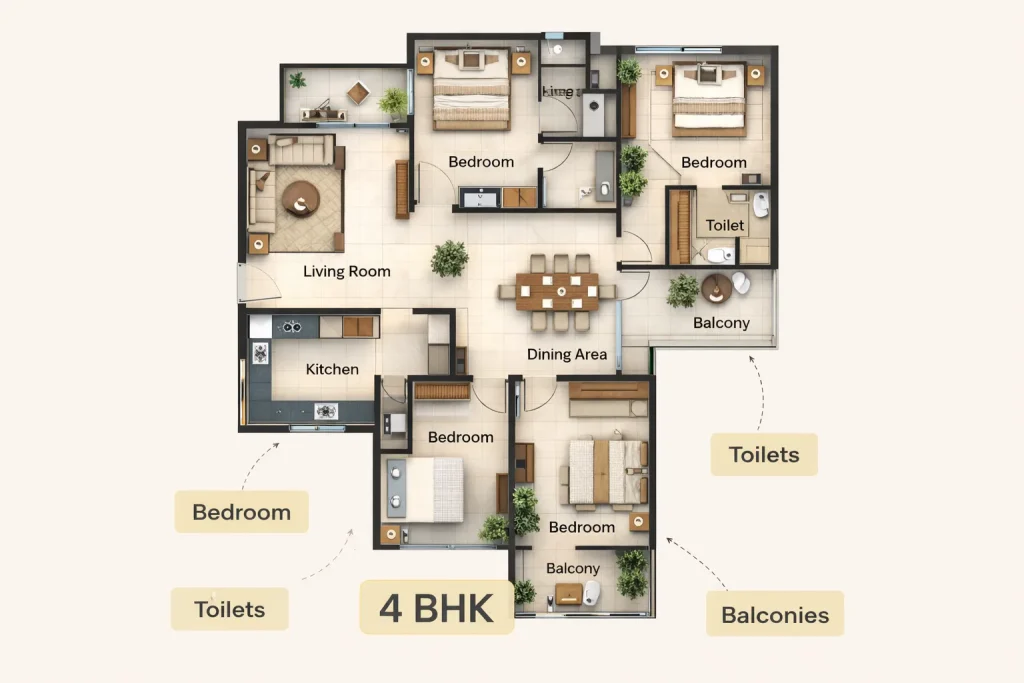
When you’re planning to build a house in India, the very first practical question is usually this: What kind of house plan will actually work on my plot size? Whether it’s a compact 15×30 house plan or a spacious 30×50 house plan, the right design depends less on fancy drawings and more on how well the plan responds to real life. It’s plot size.
Get the house plan right for your plot size, and half your problems are already solved.
This guide breaks down house plans by plot size.
20×30 House Plan (600 sq ft): Compact but Completely Livable
A 20×30 house plan is extremely common in cities like Bengaluru, Pune, and Indore.
Small plot. Big expectations. A lot of owners go for a duplex 20 30 house plan, keeping the ground floor for parents and the upper floor for kids.
The mistake people make here is trying to force everything in.Instead, think of vertical and multi-use spaces.
What works well on a 20 30 house plan:
- Ground floor: living room + kitchen + common toilet.
- First floor: 1 or 2 bedrooms.
- Staircase placed along the wall, not in the centre.
If you’re building small, material quality matters even more. Good cement and proper curing avoid cracks that show up fast in compact homes.
You can explore JK Cement’s home construction basics here: https://www.jkcement.com/blog/basics-of-cement/
Keep the kitchen at the back and the living room near the entrance. It helps with ventilation and Vastu alignment.
15 40 House Plan: Long Plot, Smart Zoning
A 15×40 house plan looks narrow on paper, but can feel surprisingly airy if designed right.
The key challenge?
Length without darkness.
Best layout approach:
- Living room → dining → kitchen in a straight flow.
- Bedrooms pushed to one side.
- Courtyard or skylight in the middle.
In many 15×40 house plan projects, a small open-to-sky shaft becomes the hero.
It brings light into toilets and kitchens – especially useful during monsoons when windows stay shut.
This plot size is ideal for:
- 2 BHK single-floor homes
- Rental floors
- Independent houses in small towns
Don’t overbuild. Keep circulation simple.
15 30 House Plan: Budget-Friendly and Efficient
Always design the foundation for future floors – even if you’re starting small.
A 15×30 house plan is often chosen when:
- Budget is tight
- The plot is in a dense locality.
- Construction needs to finish quickly.
This is where simplicity wins.
What usually works:
- One bedroom + living + kitchen
- Open kitchen layout to avoid a boxed-in feel
- Minimal internal walls
Plinth height, damp-proofing, and curing matter a lot here.
25 40 House Plan: The Most Balanced Plot Size
Ask any architect, and they’ll agree – 25×40 house plan is a sweet spot. Not too small.
Not too expensive. This plot also allows better staircase placement, which improves movement and natural airflow.
What you can comfortably fit:
- 3 BHK
- Separate dining space
- Car parking
- Small backyard or utility
Popular choice:
- Ground floor: parents’ bedroom + living
- First floor: kids’ bedrooms
A 25×40 house plan works beautifully for nuclear families who want privacy without wasting space.
20 50 House Plan: Narrow Front, Big Possibilities
A 20×50 house plan is common in new layouts and highway-facing plots. Length gives flexibility, but only if planned properly.
Design tips that work:
- Front parking
- Central courtyard or light well
- Bedrooms towards the quieter rear side
Many owners convert a 20 50 house plan into:
- Home + rental unit
- Home + small office
- Home + shop (front-facing)
Because the plot is long, structural alignment must be precise. Column placement errors here cause trouble during extensions.
25 50 House Plan: For Growing Families
A 25×50 house plan is where comfort really kicks in.
You can plan:
- 4 bedrooms
- Wide balconies
- Proper utility spaces
- Storage that doesn’t eat into living areas
This size works well for joint families or people planning long-term.
One smart trend:
- The ground floor is fully senior-friendly
- Upper floors for a younger family
Also, you get freedom to experiment with elevation design, without worrying about crowding.
30 50 House Plan: Premium Living Without Wastage
A 30×50 house plan gives you breathing space, literally.
This plot size is ideal if you want:
- Large living areas
- Natural ventilation from all sides
- Home office, pooja room, guest room
But bigger plots don’t mean careless planning. Keep the following in mind:
- Keep rooms functional
- Use an open plan
- Ensure the built-up area balances out the open spaces.
At this scale, quality materials make a visible difference. Finishes last longer, and maintenance drops.
Let the Plot Decide the Plan. There’s no “best” house plan in isolation. The best plan is one that aligns with your plot size and budget.
Whether it’s a 20×30 house plan or a 30×50 house plan, the fundamentals stay the same:
- Good light
- Easy movement
- Strong structure
Design smart today so you don’t regret it five monsoons later.
FAQs
1. Which is better: a 20 30 house plan or a 15 40 house plan?
Depends on the layout. A 15×40 house plan suits linear layouts, while a 20 30 house plan feels wider and more compact.
2. Can a 15 30 house plan be extended later?
Yes, if the foundation is designed for future floors from day one.
3. Is a 25 40 house plan enough for a joint family?
Comfortably, yes—especially with two floors.
4. What’s special about a 20 50 house plan?
Its length allows flexible zoning—home, rental, or workspace combinations.
5. Does a 25 50 house plan increase construction cost a lot?
Not necessarily. Cost depends more on design efficiency than plot size.
6. Are 30 50 house plans only for luxury homes?
No. They can be practical and simple if designed wisely.
7. How important is cement quality for small plots?
Very. Smaller homes show defects faster, so material quality matters more. JK Super Cement is ideal for all construction purposes.