From Cement to Solar: How Modern Eco-Buildings Are Changing Indian Homes

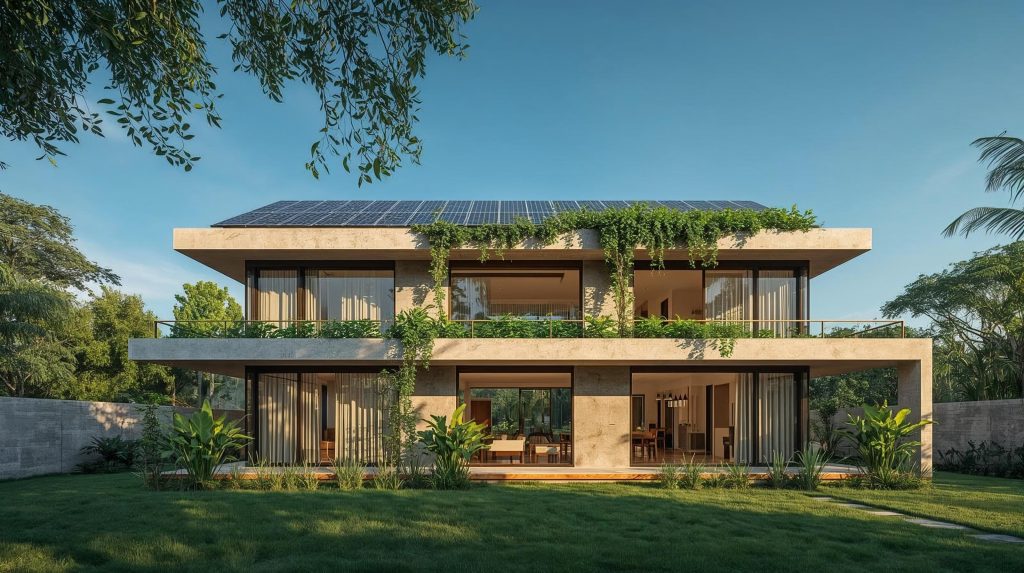
Indian homes have really changed, and it’s pretty magical when you stop and think about it. Nowadays, you see houses that are brighter, smarter, and just better designed than before. If you grew up in the 90s, it’s even more obvious. Those old houses with just fans and noisy water tanks? Now they’ve got big, open living rooms, sunny spots, and designs that just feel good. Sure, summers are still tough, but our homes handle them better now with stronger stuff, layouts that keep things cooler, and a comfy vibe we didn’t even know we were missing. Simple homes have turned into places that show who we’re turning into: modern, thoughtful, and able to change with the times.
Today, when you walk through any city lane—be it Pune, Noida, Jaipur, or Coimbatore—you notice something different. A house with solar panels. Another with a green rooftop. A building with windows placed so smartly that the rooms inside always feel bright.
These aren’t fancy ideas anymore. These are real, lived-in examples of eco-friendly buildings India is quietly embracing. Homes that work with the climate instead of fighting it. This whole movement—call it sustainable construction India, call it common sense—has come from people wanting comfort that doesn’t break the bank or the planet.
The Rise of Eco- Friendly Buildings in India
A decade ago, “green building” sounded like some elite trend meant for magazines. Now it’s the opposite. It’s practical. Power bills keep rising, heatwaves last longer and cities are choked on bad air.
People want homes that breathe better and stay cooler. Even small builders have shifted—using low-energy lighting, paints with fewer chemicals, and layouts that let sunlight do half the job of electrical fixtures. And one of the biggest changes? Going back to what older Indian homes did well: letting the sun guide the design.
Passive solar building isn’t rocket science. North light in winters, shade in summers, verandahs that cut heat, courtyards that bring in breeze. Our grandparents had the blueprint. We’re just adding engineering to it now. There are even homes where contractors use fly ash bricks paired with strong blended cement—brands like JK Super Cement are common choices—because this combination performs better against heat on exterior walls. Little choices like that pay off in long-term comfort.
Concrete to Solar: Reinventing Familiar Materials
Today’s construction sites look different. Bamboo props instead of steel. Fly ash bricks are stacked neatly. Solar PV panels are waiting to be mounted even before the plastering starts. Take any mid-sized home in Bengaluru—half the rooftops are already covered with solar. A lot of them even hit net-zero on electricity in certain months. And this shift didn’t come from some big lecture on sustainability. It came from families wanting lower bills and cooler rooms.
Builders are making older materials smarter—recycled steel, mud blocks, better insulation, rainwater harvesting that’s integrated into the plumbing from Day 1. Even the roof gardens you see in cities? They’re not just for show. A green roof can drop indoor temperatures by several degrees.
Most masons I meet will tell you: if you’re planning a cool roof or a green roof, use a cement that doesn’t crack easily under heat stress. Many of them casually pick JK Cement products for that exact reason—no marketing, just habit from years on site.
Passive Solar Building: When Sunlight Does the Heavy Lifting
Think of a passive solar building like this: Your home adjusts itself to the weather without you doing anything. Orientation is the hero. Where your windows face, how long your shade stretches, what thickness your walls are—all of it decides whether your home stays cool or turns into a pressure cooker in May.
Look at examples across India:
- Pearl Academy in Jaipur uses a double skin façade to cut heat.
- A cooperative bank in Himachal uses solar walls to trap warmth in winter.
- Kamal House in Ahmedabad stays airy even in late May because the openings and courtyards are placed in all the right spots.
And none of this requires fancy tech. Just planning.
Even something as basic as using a smooth, reflective wall finish inside—many homeowners choose a white cement putty like the one from JK Cement—can help bounce natural light deeper into rooms. It’s a small detail that quietly lowers the need for artificial lighting throughout the day.
The Everyday Advantages of Energy- Efficient Homes in India
People love to ask, “Is all this green stuff worth the trouble?” Honestly, yes. And the benefits show up quickly:
- Up to 30% lower energy consumption
- Cooler rooms with less AC usage
- Stronger, more weather-resistant homes
- Water security through rainwater harvesting and greywater recycling
- Healthier indoor lighting and airflow
Walk into a well-designed passive solar home, and you’ll feel the difference instantly. No musty smell. No dark corners lit by tube lights. Just a calm, balanced indoor temperature. Energy-efficient homes in India aren’t about luxury—they’re about sensible living.
Everyday Heroes: Real Eco Friendly Projects
Some of the best examples are hidden in plain sight.
- Indira Paryavaran Bhawan in Delhi—solar everywhere, natural ventilation, and fly ash construction.
- Infosys’ Pocharam Campus—huge solar installations, rainwater harvesting, and clever shading.
- Compact homes in Rohini and Dwarka—solar on the roof, insulated walls, simple ventilation tricks.
And of course, the famous Pearl Academy or Kamal House—modern designs with old-school climate wisdom. These aren’t showpieces. They’re everyday, working examples of sustainable construction in India.
Why Indian Homeowners Are Embracing Eco-design
It’s no longer about showing off. It’s about comfort. New colonies across the country—Indore, Hyderabad, Pune, Chennai—already look like patchworks of solar rooftops. Families compare electricity bills with pride. Builders advertise ventilation and layout more than marble and LEDs.
Green homes cut energy use by 20–30%, last longer, and cost less to maintain. And with easier access to solar, better bricks, and good cement choices, eco-friendly buildings in India are now mainstream.
The Road Ahead: Tradition, Tech, and Common Sense
We’re in the middle of a shift, and it starts with mindset. People want homes that don’t bake in summer. Homes that hold warmth in winter. Homes where even during a power cut, you’re still comfortable. And when you see it working—your neighbour’s cool living room, someone’s solar bill dropping to ₹200, a green roof that feels like a park—doubts vanish.
Every passive solar building.
Every cool roof.
Every home that breathes better than the last…
They’re all steps toward a greener India built on both tradition and simple, solid engineering.
FAQs
1. What makes a home eco-friendly in India?
Use of recycled materials, daylight-focused design, natural ventilation, smart orientation, and long-lasting construction choices that cut energy use.
2. Are solar setups affordable now?
Yes the solar setups are affordable now with decreasing prices and subsidies.
3. What’s the difference between passive and active solar?
Passive solar is design-driven (windows, walls, orientation) while Active solar uses systems like panels or heaters.
4. Do energy efficient homes really save money?
Yes—lower power bills, fewer repairs, and cooler interiors add up.
5. Can older homes be upgraded?
yes older homes can also get upgraded with installing better insulation, improved windows, solar panelling or water systems making them more eco efficient.
6. Which eco-friendly buildings in India stand out?
Pearl Academy (Jaipur), Kamal House (Ahmedabad), Indira Paryavaran Bhawan (Delhi), Infosys Campus (Hyderabad) are some of the eco-friendly buildings in India.
7. Who can help with designing such homes?
Green architects, contractors familiar with passive solar building, and local builders experienced in sustainable construction.