Duplex House Design: Floor Plans & Practical Ideas That Actually Work

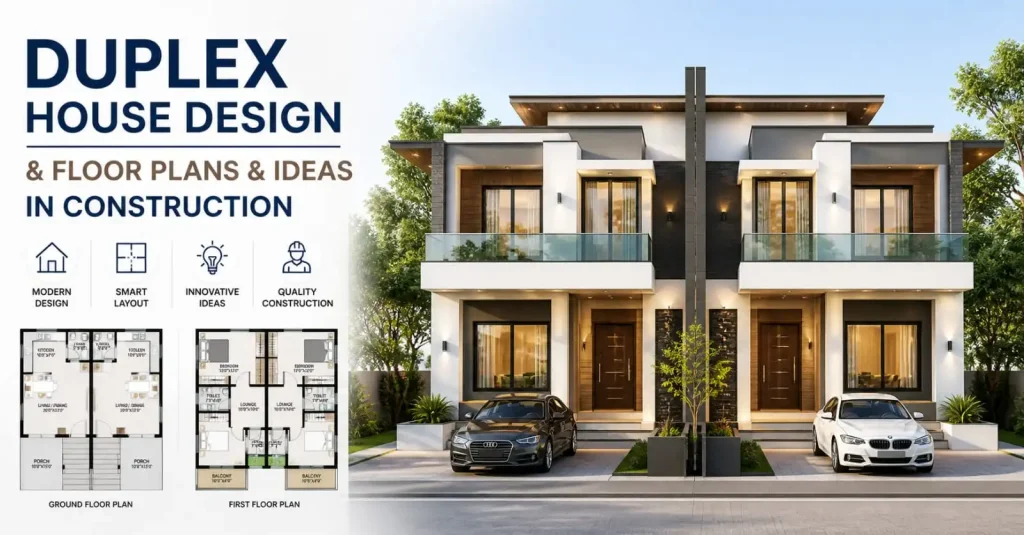
If you’re planning a duplex house, here’s the simple truth — it’s basically a home built on two levels, either for one family or split into two living units.
A good duplex house design helps you use space better, get more privacy, and even create rental income if planned smartly.
On many sites, a well-thought-out duplex house plan makes life easier, and poorly planned ones, where stairs alone become a daily headache, make it harder.
What Exactly is a Duplex House?
A duplex isn’t just a “double-floor house”. It’s about how space is connected and used. In most Indian homes, a duplex house means the following:
- Ground + first floor connected internally
- Same family living across both floors
- Sometimes, two separate units (one per floor)
If a normal house spreads horizontally, a duplex house design grows vertically. And in cities where land is tight, that’s a big advantage.
Why People Prefer Duplex Houses Today
Over the last few years, more homeowners have preferred a duplex house plan instead of a single-floor layout. Here’s why:
1. Better Use of Space
You get more built-up area on the same plot. Especially useful in urban plots like 30×40 or 25×50.
2. Privacy Within the Same House
A good duplex house design naturally creates separation without disconnect.
3. Rental Potential
Many people build a duplex house with a plan:
Live on one floor – rent the other one. It helps recover construction costs over time.
4. Modern Lifestyle Fit
Let’s be honest — everyone wants that “villa feel”. A duplex gives you that without needing a huge plot.
Popular Duplex House Design Layouts
Not all duplex house plans are the same. Here are the most practical layouts that work well:
1. Classic Family Duplex
The most common duplex house design for Indian families.
Ground Floor:
- Living room
- Kitchen
- One bedroom
First Floor:
- 2–3 bedrooms
- Balcony
2. Rental-Friendly Duplex
In such designs,
- The ground floor is usually occupied by the owner.
- The first floor is a separate rental unit
- The stair access is often external.
3. Luxury Duplex Layout
This kind of duplex house feels premium — but needs careful planning. It typically includes:
- Double-height living room
- Internal staircase
- Open terrace
Key Things to Get Right in a Duplex House Plan
Many a time, people spend lakhs fixing mistakes that could’ve been avoided. Get the following features right, and you could avoid expensive replanning later.
1. Staircase Placement
This can make or break your duplex house design.
Too steep → uncomfortable
Poor location → wasted space
Ideally, keep it central but not blocking movement.
2. Ventilation and Light
Since a duplex house goes vertical, airflow becomes critical.
Add:
- Windows on opposite walls
- Open balconies
- Vent shafts if needed
3. Plumbing Planning
This is an absolute necessity. Bathrooms stacked vertically save cost.
A smart duplex house plan reduces plumbing complexity.
4. Structural Strength
Two floors mean more load.
Using high-quality cement and proper mix design ensures long-term durability.
The recommendation is – JK Super Cement for strong and long-lasting homes. The range is diverse and meant for specialised construction purposes.
Real-Life Site Insight
We’ve all seen this happen…
You build a duplex house, thinking it’ll provide “more space”. But you miss planning storage. Within a year, balconies turn into storage zones.
That’s why design isn’t just about rooms – it’s about daily life and how your duplex fits your lifestyle and needs.
Simple Design Ideas That Make a Big Difference
You don’t need fancy architecture to improve your duplex house design.
Small tweaks go a long way:
Double-Height Living Room
Makes the house feel bigger instantly.
Open Kitchen Layout
Especially useful in compact duplex house plans.
Balcony on Every Floor
Adds light, ventilation, and usable space.
Smart Storage
Under-stair storage is a lifesaver in any duplex.
Separate Entry Option
Future-proofs your duplex house for rental use.
Duplex vs Independent Floor — What’s Better?
Now, the big question. This confusion comes up a lot. Here’s a clear differentiation table to prevent the dilemma.
| Feature | Duplex House | Independent Floors |
| Connectivity | Internal | Separate |
| Privacy | Medium | High |
| Cost | Slightly higher | Flexible |
| Rental Use | Possible | Easier |
A duplex house design is ideal for family living, while an independent floor works well for investment purposes.
Common Mistakes to Avoid
A practical duplex house plan always beats a fancy one that doesn’t work daily.
To make it functional, avoid these mistakes:
- Ignoring staircase width.
- Poor ventilation.
- No future planning.
- Overdesigning small plots.
What You Should Remember
- A duplex house is ideal for vertical living
- A good duplex house design balances privacy and connection
- Planning matters more than size
- Staircase, ventilation, and structure are critical
- Always think 5–10 years ahead
A duplex isn’t just about adding another floor. It’s about making your home work better.
The best duplex house design isn’t the one that looks impressive on paper – It’s the one that feels easy to live in, every single day
FAQs
1. What is a duplex house?
A duplex house is a two-level home, either connected internally or divided into two units.
2. Is a duplex house good for small plots?
Yes. A duplex house plan helps maximise space on smaller plots.
3. What is the ideal size for a duplex house?
Even a 25×40 plot can support a well-designed duplex house design.
4. Can I rent out one floor in a duplex?
Yes. Many duplex house owners design separate access for this purpose.
5. Is a duplex more expensive than a single-floor house?
Yes, slightly — due to extra structure and staircase costs.
6. What is the biggest mistake in duplex design?
Poor staircase planning and ventilation issues.
7. How do I choose the right duplex house plan?
Focus on your family needs, plot size, and future use before finalising.