What Is a Sunken Slab in Construction?

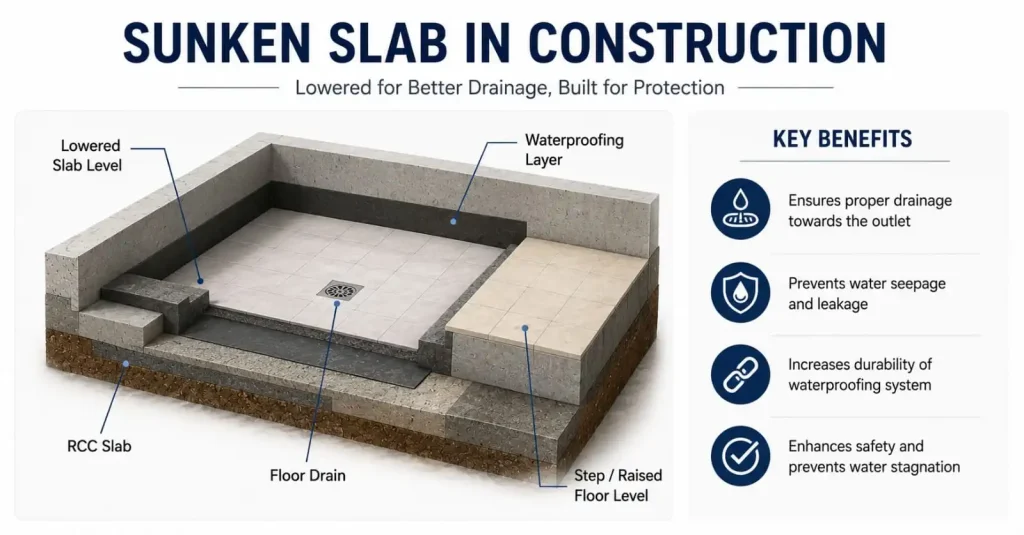
Modern apartment buildings or independent homes have something interesting about the bathroom floor. They are usually lower than the rest of the house. Thinking about why it is? Well, this is due to a sunken slab in construction. It is one of those elements that quietly does its job for decades when built correctly. However, it may result in leaks or damp patches if anything goes wrong.
Read on this blog post to know what a sunken slab is and the ideal sunken slab depth.
What is Sunken Slab in Construction?
Let’s understand it this way: the engineer creates a shallow depression in a concrete floor slab before the bathroom is complete. The slab is lower by a specific depth in comparison to other rooms. This is known as a sunken slab.
You will generally find it used beneath bathrooms, toilets, and utility areas. Why? Because they accommodate plumbing and drainage services. The common use cases of a sunken slab are the following:
- RCC slab at a lower level
- Waterproofing layer
- Drainage pipes
- Soil and waste pipes
- Lightweight filling material
- Floor screed with slope
- Final floor finish
This arrangement hides the plumbing and provides a neat appearance to the bathroom.
Why Is a Sunken Lab Provided in Buildings?
The main purpose of a sunken lab is convenience. If these pipes are laid directly on a normal slab, the bathroom floor often becomes much higher than the surrounding rooms. That creates awkward level differences and visual inconsistency. A sunken slab section solves this problem by creating a dedicated space for services.
Some of the reasons for having a sunken slab are given below:
- Conceal plumbing pipes
- Maintain uniformity in floor levels
- Improve aesthetics
- Simplify maintenance access
- Allow proper drainage slopes
- Reduce exposure to pipes
What’s more? The sunken slab also prevents drain pipes from hanging below ceilings in multi-story apartments. As a result, it creates clean interiors for the floor beneath.
How Does a Sunken Lab Work?
Many people understand what a sunken slab is but struggle to visualize how it actually functions. Imagine a small recessed box built into the floor. The RCC slab is intentionally lowered during construction. This lowered area becomes the service zone.
Inside this space:
- Wastewater pipes are installed
- Floor traps are fixed
- Drainage slopes are created
- Vent connections are provided
Once the plumbing network is tested, the cavity is filled using lightweight material such as:
- Broken bricks
- Fly ash
- Lightweight concrete
- Cinder aggregate
A waterproofing layer protects the sunken slab section from water penetration. Finally, tiles are installed over the finished floor. The user only sees the bathroom floor. The plumbing infrastructure remains hidden below. That’s the beauty of a well-designed sunken slab.
What Is the Standard Sunken Slab Depth in Construction?
The most common question that comes to mind when talking about a sunken slab in construction is its standard depth. The answer depends on numerous factors given below:
- Pipe sizes
- Number of fixtures
- Floor trap location
- Drainage slope requirements
- Structural design
The common sunken slab depth range is between:
- 200 mm (8 inches)
- 300 mm (12 inches)
- 450 mm (18 inches)
The residential bathrooms usually adopt a sunken slab depth of 200-300 mm. However, the large bathrooms or spaces may require greater depth. The structural engineer finalizes the sunken slab depth according to the service layouts and building loads. Too shallow depths can create drainage problems.
What Are the Materials Used in a Sunken Slab Construction?
Given below are the materials used in sunken slab building construction:
- RCC (Reinforced Cement Concrete)
It forms the structural foundation of the sunken slab. It supports the plumbing systems and floor finishes. How? It provides the strength and load-bearing capacity to them.
- Waterproofing Compounds
They prevent water penetration into the slab. Besides this, you can apply them to avoid common waterproofing problems like leakage or dampness.
- PVC Pipes
These pipes carry wastewater from bathrooms and toilets. The engineer installs them within the sunken slab. The best part? They are not only lightweight but also durable.
- Floor Traps
They collect the wastewater from bathroom floors and channel it into the drainage system. They also prevent foul odors and insects from entering the living space.
- Cement Mortar
It applies above the filling layer to create the slope towards the floor drains. It provides a smooth and stable base for tile installation.
- Lightweight Filling Materials
These materials reduce the dead load and support flooring layers. What exactly are these materials? They are:
- Broken brick bats
- Fly ash
- Foam concrete
- Lightweight aggregates
Note: The performance and lifespan of a sunken slab depend on material quality. It is advisable to use durable and high-quality materials to minimize the maintenance needs.
What Is the Step-By-Step Sunken Slab Construction Process?
Given below is the step-by-step process for a sunken slab construction process:
Step 1: Slab Casting
The engineer primarily cast the RCC slab up to the necessary sunken slab depth. It accommodates plumbing and floor finishes.
Step 2: Plumbing Installation
The next steps are to install the drainage, waste, and water supply pipes carefully within the sunken slab cavity.
Step 3: Testing
It is the most important step. Test the pipelines thoroughly to detect leaks and ensure proper water flow.
Step 4: Waterproofing
A waterproofing layer covers the entire sunken slab at this stage. It prevents future seepage issues.
Step 5: Protective Screed
Lay a cement-sand screed to protect the waterproofing membrane from damage during construction.
Step 6: Filling
Fill the cavity with lightweight materials to reduce structural load and support flooring.
Step 7: Floor Slope Creation
The engineer forms proper slopes. This directs wastewater efficiently toward floor traps and drainage outlets.
Step 8: Tile Installation
The final finish comes once the engineer installs the floor tiles. It not only provides durability but also aesthetics and water resistance.
What Is the Waterproofing Guide For a Sunken Slab?
The one area where shortcuts should never be taken is waterproofing. Most sunken slabs fail because people ignore waterproofing and proper execution. A reliable waterproofing process includes:
- Surface Preparation
The sunken slab surface remains clean and free from dust, dirt, oil, and loose particles. Proper preparation ensures strong bonding of waterproofing materials.
- Crack Treatment
Repair all the visible cracks and surface defects before waterproofing begins to prevent seepage and ensure the durability of the slab.
- Waterproof Coating
A waterproofing compound covers the entire sunken slab section. The coating creates a continuous barrier that protects against moisture and leakage.
- Wall Junction Protection
Wall-floor junctions receive extra waterproofing treatment because they remain vulnerable to water penetration and leakage over time.
- Protective Screed
A cement-sand screed covers the waterproofing layer. This protective layer prevents damage during filling work and floor finishing activities.
- Ponding Test
Water stores in the sunken slab for 48 to 72 hours. The test verifies waterproofing performance and identifies possible leakage points.
What Are the Advantages and Disadvantages of Sunken Slab Construction?
Given below are the advantages and disadvantages of a sunken slab construction:
Advantages of Sunken Slab Construction
- Hides plumbing and ensures better aesthetics.
- Maintains uniformity in floor levels.
- Proper pipe slopes improve drainage.
- Simplifies the future plumbing modifications.
- Provides a neat appearance to the bathrooms.
Disadvantages of Sunken Slab Construction
- Extra materials and waterproofing increase expenses.
- Poor waterproofing can result in serious leakage.
- The process is lengthy. It involves multiple stages.
- It’s difficult to locate the hidden pipe leaks.
- Improper filling materials add unnecessary weight.
Conclusion
It is really important to understand what a sunken slab is when planning bathrooms in a new home or apartment. A sunken slab is a system that not only hides plumbing but also improves drainage. It keeps interiors neat and functional. The success of any sunken slab depends on three things:
- Correct sunken slab depth
- Proper plumbing installation
- High-quality waterproofing
Get those right, and the bathroom can remain leak-free for decades. Because in construction, the things we don’t see often matter just as much as the things we do.
FAQs
1. What is a sunken slab in construction?
A sunken slab is a lowered RCC slab provided mainly below bathrooms and toilets to accommodate plumbing and drainage pipes below the finished floor level.
2. What is the standard sunken slab depth?
The usual sunken slab depth ranges from 200 mm to 450 mm, depending on plumbing requirements and building design.
3. Why is a sunken slab used in bathrooms?
A sunken slab creates space for drainage pipes and floor traps while maintaining uniform floor levels across the building.
4. Is waterproofing mandatory for a sunken slab?
Yes. Waterproofing is essential because bathrooms experience continuous water exposure. Poor waterproofing can lead to leakage and dampness.
5. What filling materials are used in a sunken slab?
Common materials include broken brick bats, fly ash, lightweight concrete, foam concrete, and cinder aggregate.
6. Can a sunken slab develop leakage problems?
Yes, if waterproofing fails, pipe joints leak, or ponding tests are skipped during construction.
7. Which is better: sunken slab or raised toilet floor?
A sunken slab generally offers better aesthetics, concealed plumbing, and uniform floor levels, making it the preferred choice in modern residential construction.