What Is Gypsum? Formula, Types & Uses in Construction

Walk into almost any modern apartment today, and chances are, gypsum is already around you. It could be above your head in a sleek false ceiling. It could be behind your walls in drywall panels.
Or maybe it’s sitting quietly beneath the paint layer as gypsum plaster, giving the wall that smooth, clean finish everyone notices but nobody talks about. That’s the funny thing about gypsum. Most homeowners know cement. Contractors know steel.
But gypsum quietly does a lot of the finishing work that makes a space actually feel complete.
What is Gypsum?
In simple words, gypsum is a naturally occurring soft mineral widely used in construction for plastering, false ceilings, drywall systems, and surface finishing. The gypsum formula is CaSO₄·2H₂O, which means calcium sulphate dihydrate.
Sounds technical.
But on site, people usually know it as the material that helps walls dry faster, reduces cracking, and gives interiors a smooth finish without the mess of traditional sand-cement plaster.
Over the last few years, gypsum has become a preferred material in Indian construction, especially in urban housing projects where speed matters.
Builders like it because it saves labour time.
Architects like it because it allows cleaner finishes.
Homeowners like it because walls look sharper and rooms stay cooler.
And honestly, once you’ve seen a good gypsum finish beside uneven conventional plaster, the difference becomes obvious immediately.
What Are the Properties of Gypsum in Construction?
One reason gypsum is everywhere in modern interiors is because it solves several site problems at once. Not perfectly. No material does. But efficiently.
Here are some important properties of gypsum that make it useful in construction:
- Lightweight Material
Gypsum is significantly lighter than traditional cement-sand plaster. That matters more than people think.
Especially in high-rise apartments, where reducing dead load improves structural efficiency. A lighter material also means easier handling on-site. Less fatigue for labor. Faster application.
- Fire Resistance
Gypsum contains chemically combined water molecules. When exposed to heat, this water evaporates slowly and helps delay fire spread. That’s why gypsum boards are commonly used in commercial buildings, offices, hospitals, and modern apartments. In many projects today, gypsum ceiling systems are preferred because they improve fire safety without making interiors bulky.
- Smooth Surface Finish
This is probably the most visible advantage. Gypsum plaster provides a naturally smooth finish that often requires very little putty work before painting. And anyone who has dealt with uneven walls knows how much sanding and correction costs later. Good gypsum application saves finishing headaches.
- Faster Drying Time
Traditional cement plaster can take weeks to dry properly. Gypsum plaster dries much faster. That speeds up interior work dramatically. Everyone gets access sooner, including painters, electricians, and carpenters. On projects racing against Diwali handover deadlines, this becomes a major advantage.
- Thermal and Acoustic Insulation
Gypsum also helps with indoor comfort. It offers decent thermal insulation and absorbs sound better than many conventional surfaces. That’s one reason gypsum false ceilings are common in bedrooms, conference rooms, and theatres.
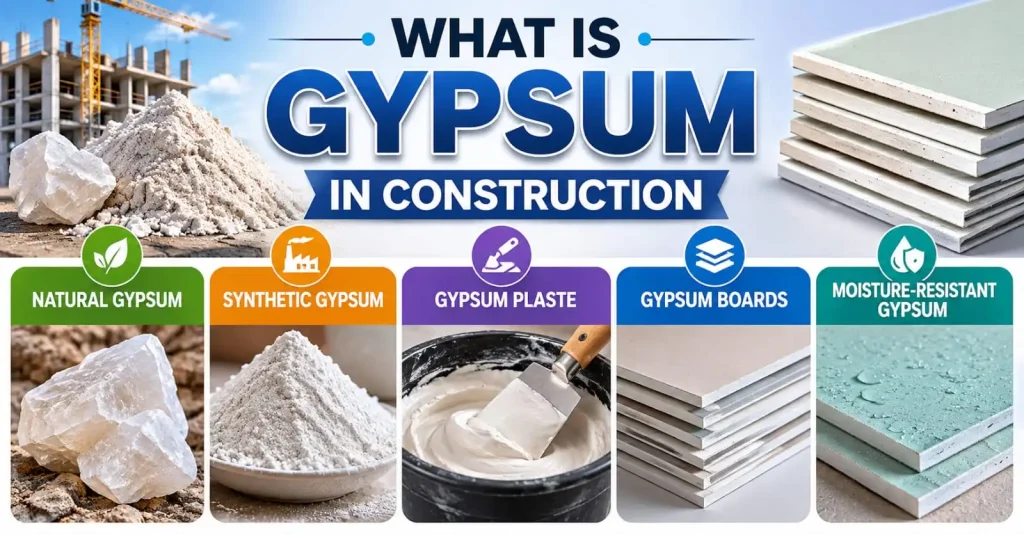
What Are the Types of Gypsum Used in Construction?
Not all gypsum is the same. Different construction applications use different forms depending on strength, finish, and moisture resistance requirements.
- Natural Gypsum
This is gypsum obtained directly from mineral deposits. It is widely used in cement manufacturing and gypsum plaster production. Natural gypsum is considered reliable because of its purity and stable composition.
- Synthetic Gypsum
Synthetic gypsum is produced as a by-product in industries, especially thermal power plants. It performs similarly to natural gypsum and is increasingly used because of the sustainability benefits. In many modern projects, synthetic gypsum helps reduce industrial waste while supporting eco-friendly construction practices.
- Gypsum Plaster
This is probably the most commonly used gypsum product in Indian interiors today. Gypsum plaster is used for internal wall plastering instead of traditional cement plaster. Products like gypsum-based interior plasters are becoming popular because they reduce curing time and offer smoother finishes.
- Gypsum Boards
These are factory-made boards used in drywall partitions and false ceilings.
You’ll see them everywhere now:
- Offices
- Shopping malls
- Hotels
- Modern apartments
- Commercial interiors
They help create lightweight partitions without traditional brickwork.
- Moisture-Resistant Gypsum
Used in kitchens, utility areas, and certain bathroom zones. Regular gypsum can absorb moisture over time, so moisture-resistant variants are preferred where humidity exposure is higher.
Gypsum vs. POP vs. Cement Plaster: What is the Difference?
This comparison confuses many homeowners. And honestly, site conversations often mix all three together. So let’s simplify it.
| Parameter | Gypsum | POP | Cement Plaster |
| Main Use | Wall plaster and ceilings | Decorative mouldings | Structural wall plaster |
| Drying Time | Fast | Very fast | Slow |
| Finish | Smooth | Very smooth | Rougher |
| Strength | Moderate | Lower | High |
Here’s the easy way to think about it:
- Cement plaster is tougher and more traditional.
- POP is mostly decorative.
- Gypsum plaster sits somewhere in between. It is practical, smooth, and fast.
Many builders today prefer gypsum plaster for internal walls because it reduces project completion time.
POP is still used for decorative ceiling designs.
Cement plaster continues to dominate external walls because it handles moisture and weather exposure better.
What Are the Benefits of Using Gypsum in Modern Construction?
Gypsum has become popular for practical reasons, not just design trends.
- Faster Project Completion
This is huge in real estate. Gypsum plaster eliminates water curing. That alone saves time, labour, and water. For builders managing multiple flats at once, faster turnover matters enormously.
- Cleaner Construction Process
Traditional plastering creates a lot of site mess. Gypsum application is relatively cleaner and easier to manage. Less debris. Less water usage. Less post-work cleaning.
- Better Finish for Paint
Paint contractors usually prefer smoother surfaces because paint consumption becomes more predictable. Gypsum creates a uniform base. And yes, that reduces visible wall imperfections later.
- Energy Efficiency
Gypsum systems improve thermal insulation slightly, helping interiors stay cooler. In Indian summers, every bit helps. Especially in west-facing apartments where heat buildup becomes exhausting.
- Flexible Interior Design
Gypsum boards allow creative ceiling designs, recessed lighting, curves, and hidden wiring systems. Modern false ceiling trends heavily depend on gypsum because it balances flexibility with affordability.
How to Choose the Right Type of Gypsum?
This depends entirely on where you’re using it.
- For Internal Wall Plaster
Choose high-quality gypsum plaster with good setting consistency and smoothness. Low-quality gypsum often cracks or powders later.
- For False Ceilings
Use gypsum boards with proper framing systems. Cheap boards sag over time. Especially during humid monsoons.
- For Moisture-Prone Areas
Use moisture-resistant gypsum products. Regular gypsum absorbs excess humidity if exposed continuously.
- For Large Projects
Consistency matters more than cost savings. Always check:
- Setting time
- Surface smoothness
- Manufacturer reliability
- Packaging condition
- Application support
Established brands usually provide better technical consistency.
What Are the Common Mistakes to Avoid While Using Gypsum?
Gypsum is easy to work with. But poor application ruins the benefits quickly.
- Using Gypsum in Exterior Areas
Regular gypsum is not meant for exterior walls exposed to rain. This mistake still happens surprisingly often.
- Poor Surface Preparation
Dusty or uneven walls affect gypsum bonding badly. Good preparation matters. Always.
- Mixing too Much Material at Once
Gypsum sets quickly. Once it starts hardening, reusing the mix weakens the finish. Experienced masons usually mix smaller batches carefully.
- Ignoring Moisture Conditions
Gypsum and constant water exposure do not work well together. Bathrooms need proper waterproofing and material selection.
- Choosing Based on a Lower Price
This becomes expensive later. Low-grade gypsum may crack, powder, or lose finish quality within months. And repairs are messy once interiors are complete.
The Final Words
So, what is gypsum really? It’s one of those materials that quietly changed modern construction without getting much attention. The gypsum formula, CaSO₄·2H₂O, may sound chemical, but its real value shows up on actual sites.
Faster wall finishing. Cleaner ceilings. Smoother interiors. Reduced curing time. Better aesthetics. That’s why gypsum today is no longer just an optional finishing material.
In many modern homes, offices, and commercial projects, it has become part of the standard construction process itself.
FAQs
1. What is gypsum used for in construction?
Gypsum is mainly used for plastering internal walls, false ceilings, drywall partitions, and decorative elements in modern construction.
2. What is the gypsum formula?
The chemical gypsum formula is CaSO₄·2H₂O, also known as calcium sulphate dihydrate.
3. Is gypsum stronger than cement plaster?
No. Cement plaster is generally stronger and better for external walls. Gypsum plaster is preferred for smooth interior finishes and faster application.
4. Can gypsum be used in bathrooms?
Moisture-resistant gypsum products can be used in certain bathroom areas, but regular gypsum should not be exposed to continuous water contact.
5. What is the difference between gypsum and POP?
Gypsum is the natural mineral, while POP (Plaster of Paris) is a processed gypsum product used mainly for decorative work and mouldings.
6. Is gypsum plaster expensive?
Gypsum plaster can initially cost slightly more than traditional plaster in some regions, but it often saves money through reduced labour, curing, and finishing costs.
7. Why is gypsum popular in modern homes?
Because it offers smooth finishes, faster construction speed, lightweight application, better aesthetics, and flexibility for modern ceiling and interior designs.