What Is a Louver? Types, Materials and Applications

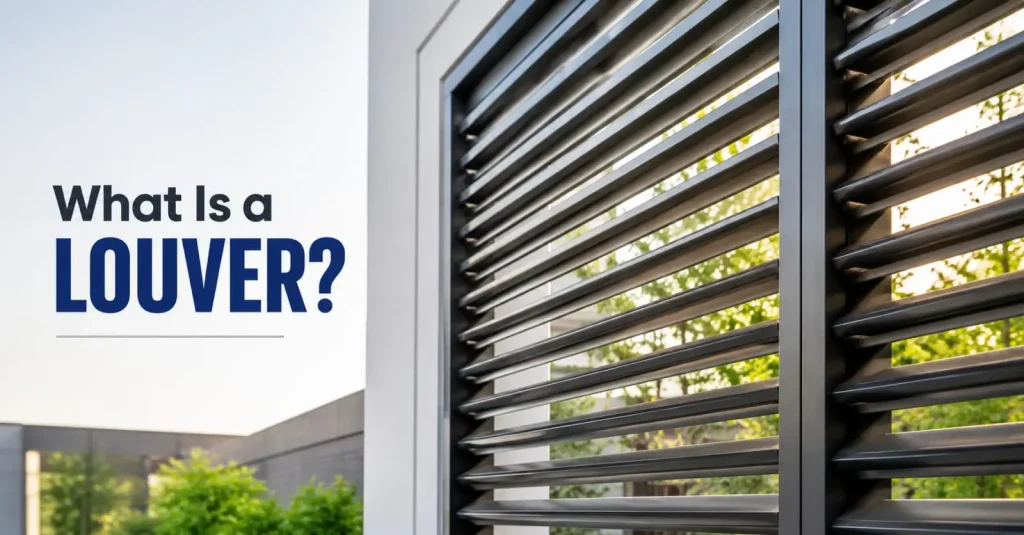
Did you ever notice the angle slats on a window or rooftop? They look like a decorative element. However, they perform the most practical jobs in modern construction. They are louvers and help a building breathe. Proper ventilation is essential in all types of buildings. But it is difficult to keep the windows open throughout the day. This is why architects rely on louvers. Thinking about what is louver and where it is used? Read on this blog post to find out!
What Is a Louver?
There is no technical louver meaning. However, it is a structure made of horizontal or vertical slats. The position of the slats is at a certain angle that allows air and light to pass through. What’s more? It reduces the entry of unwanted particles like dust, debris, or rain. So, what exactly is a louver? It is a feature that balances airflow with protection. The louver slats are either fixed or adjustable as per your application.
Why Are Louvers Used in Buildings?
Good ventilation is more than comfort. It helps you improve indoor air quality and control moisture. It also allows you to save on energy consumption. The reports highlight that proper ventilation reduces cooling loads in suitable climates. This results in fewer uses of air-conditioners. That’s it? Well, not! There are many reasons for using louvers in buildings. Given below are some of them:
- Allows continuous airflow
- Helps remove heat and humidity
- Prevents rainwater from entering
- Reduces glare from direct sunlight
- Protects HVAC equipment
- Improves energy efficiency
- Maintains privacy while allowing ventilation
Let’s understand it this way: A bathroom doesn’t have an exhaust window. Moisture will build up quickly. The result? There will be damp walls and unpleasant smells. But you can solve this problem if you install a louver.
What Are the Different Types of Louvers?
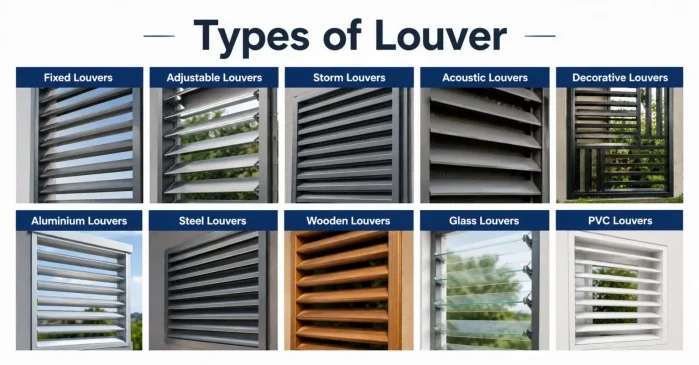

Given below are the different types of louvers:
Fixed Louvers
The angle slats of fixed louvers are permanent. You will usually find them in residential buildings. They work well in the following areas:
- Bathrooms
- Staircases
- Utility areas
- Parking basements
What’s important? They are durable and often require maintenance.
Adjustable Louvers
These louvers provide the flexibility to open or close the slats. You can either do it manually or automatically as per your needs. The architects mostly advise adjustable louvers for commercial buildings and industrial facilities.
Storm Louvers
If you live in an area with heavy rainfall, the architect may advise you to use storm louvers. The blade on this type of louver is deep that blocks water and maintains airflow.
Acoustic Louvers
Factories and commercial buildings generally use acoustic louvers. This is because they not only ensure ventilation but also reduce equipment noise. Hence, they combine airflow with sound insulation.
Decorative Louvers
Modern homeowners use decorative louvers on facades and balconies. Its primary purpose is to ensure proper ventilation. But it also improves privacy and the overall appearance of the building.
What Are the Common Materials Used For Louvers?
Given below are the common materials you will find in louvers:
Aluminium Louvers
It is one of the most popular choices for both residential and commercial buildings. But why? This is because it is not only lightweight but also resists corrosion.
Steel Louvers
Steel provides excellent strength and security. Some spaces, like factories, warehouses, and industrial buildings, demand durability. This is why architects advise steel louvers for these buildings.
Wooden Louvers
Wood offers a warm and natural appearance to the environment. You will often find wooden louvers in luxury homes and resorts. It is not ideal for residential buildings, as it requires regular polishing. Moreover, it needs protection from termites and moisture.
Glass Louvers
This type of louver material is popular for the following areas:
- Bathrooms
- Staircases
- Offices
Glass louvers provide both natural light and ventilation to these spaces. Modern homes use toughened glass to make the louver secure.
PVC Louvers
If you want an affordable louver with maximum features, a PVC louver is a good choice. The advantages of PVC louver are:
- Lightweight construction
- Water and moisture resistance
- Rust-free performance
- Low maintenance
- Easy installation
- Available in multiple colours and finishes
You can use them in areas with a heavy flow of water because they resist corrosion.
The Final Words
A louver is a small detail in a building that improves everyday comfort. Louver meaning is simple: to ensure ventilation and comfort in the home. It offers multiple benefits when the architects design it properly. Moreover, it is necessary to select the right material to install a louver. It is advisable to hire a professional architect before installing a louver at your home.
FAQs
1. What is a louver?
A louver is a ventilation structure made of angled horizontal or vertical slats that allows fresh air to pass through while blocking rain, direct sunlight, dust, and debris. Louvers are widely used in residential, commercial, and industrial buildings to improve airflow and indoor comfort.
2. What is the louver meaning in construction?
In construction, a louver is a building component installed in walls, windows, doors, roofs, or HVAC systems to provide controlled ventilation. It helps circulate air, reduce moisture buildup, and protect interiors from rain, dust, and harsh weather conditions.
3. What is a louver used for?
A louver is used to improve natural ventilation, regulate airflow, reduce heat buildup, prevent moisture accumulation, and protect buildings from rain and debris. It also supports better indoor air quality and can improve a building’s overall energy efficiency.
4. Where are louvers commonly installed?
Louvers are commonly installed in bathrooms, kitchens, utility rooms, stairwells, parking garages, industrial facilities, HVAC systems, rooftops, and exterior façades. They provide continuous ventilation while protecting buildings from weather and environmental elements.
5. Are PVC louvers durable?
Yes. PVC louvers are durable, lightweight, rust-resistant, waterproof, and termite-resistant. They require minimal maintenance and perform well in humid environments, making them a practical and cost-effective choice for homes, bathrooms, kitchens, and utility areas.
6. Which material is best for a louver?
The best louver material depends on the application. Aluminium is lightweight and corrosion-resistant, steel offers high strength, wood provides a natural appearance, glass enhances aesthetics, and PVC is affordable, moisture-resistant, and easy to maintain for residential use.
7. Do louvers help reduce electricity bills?
Yes. Properly installed louvers improve natural airflow, reduce indoor heat buildup, and lower dependence on air conditioning. Over time, this can improve energy efficiency and help reduce electricity bills, especially in warm and humid climates.