What Is Wall Putty? Types, Benefits, and How It Improves Paint Finish

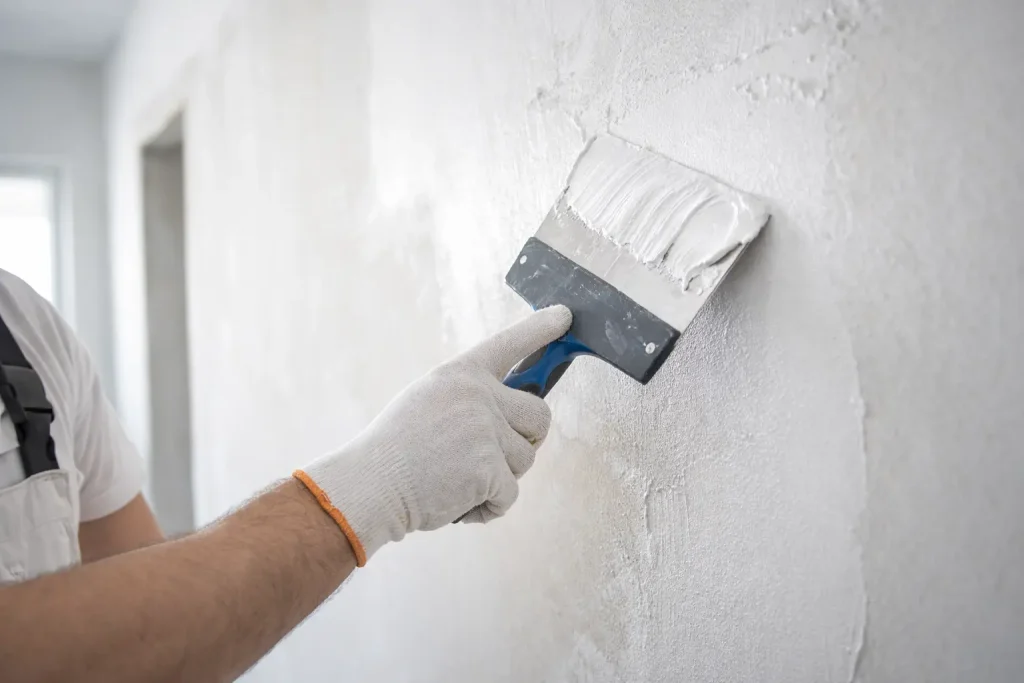
You know that moment when the painter finishes the job, steps back proudly – And in daylight, the wall still looks uneven?
Shadows showing lines.
Tiny dents are visible.
The paint is not sitting right.
Most people blame the paint brand. But the real story usually starts before paint ever touches the wall.
It’s about wall putty.
Wall putty is that thin layer applied to plaster before painting. It smooths the surface, fills hairline cracks, and gives paint something solid to sit on.
Skip it — and even expensive paint won’t save you.
So, what exactly is Wall Putty?
When plastering is done, the wall isn’t perfectly smooth. It only looks smooth from far away. Up close, you’ll see tiny pores, small waves, and minor cracks. Wall putty fixes that.
It’s a fine powder, usually white, mixed with water and applied in thin coats. Once dry, it forms a smooth skin over the wall.
In Indian homes, cement-based wall putty is the most common.
Why? Because it handles heat, moisture, and time better.
Yes, wall putty prices differ across brands. But this is not where you bargain hard. This layer decides how your wall will look for the next five to seven years.
It’s the base. And the base decides everything.
Types of Wall Putty – And Where They Make Sense
Not all wall putty is built the same. Each type has its place.
1. White Cement-Based Wall Putty
This is what most contractors prefer.
- It’s strong.
- It bonds well with plaster.
- It handles moisture better than most other options.
- Works for both interior and exterior walls.
Many painters call it the best wall putty in India simply because it survives Indian weather without drama.
Wall putty price here may be slightly higher than basic options, but it pays back in durability.
2. Acrylic Wall Putty
This one usually comes ready-made.
- Easy to apply.
- Dries fast.
- Good for quick interior jobs.
- Not ideal for exterior walls or damp areas.
- It doesn’t have the same strength as cement-based wall putty.
If you’re choosing purely based on wall putty price, acrylic may look cheaper upfront. But think long-term.
3. Polymer-Based Wall Putty
Now this is basically cement putty with added strength boosters — polymers.
These additives make it:
- More flexible
- More crack-resistant
- Smoother in finish
In apartments where small hairline cracks show up over time, this type performs well.
Some consider polymer-modified variants among the best wall putty options today, especially for premium finishes.
If you’re aiming for a clean, sharp paint finish, this category is often counted among the best wall putty in India.
4. Gypsum-Based Wall Putty
Mostly used indoors.
- Very smooth finish.
- Lightweight.
- Great for ceilings and dry areas.
- Not ideal for exterior walls.
Wall putty price for gypsum-based types depends on brand, but this is more of an interior solution.
Why Wall Putty Actually Matters
Let’s talk about reality. When you skip wall putty, here’s what happens:
- Paint gets absorbed unevenly.
- Shades look inconsistent.
- Small cracks start appearing sooner.
- The surface of the wall peels.
Wall putty acts like a bridge between plaster and paint.
- It seals the wall.
- It strengthens the surface.
- It makes paint look better than it actually is.
Even the best wall putty won’t perform if the wall isn’t cleaned or cured properly. Preparation matters. Always.
How It Enhances the Final Paint Finish
You can test this yourself.
Shine a tube light across a freshly painted wall without putty.
You’ll see waves and patches.
Now see a wall where proper wall putty has been applied.
The reflection is smooth. Even.
Here’s what it really improves:
1. Smoothness
Paint spreads evenly. No roller marks popping out.
2. Coverage
Less paint gets absorbed. So fewer coats.
3. Strength
It prevents moisture from seeping in, especially in monsoon-heavy regions.
4. Colour Quality
White cement-based wall putty makes colours look brighter and truer.
If you’re searching for the best wall putty in India, don’t just ask for brand names. Ask about bonding strength and water resistance.
JK Cement’s range of wall putty is ideal for all kinds of applications.
How to Choose the Right Wall Putty
Don’t overcomplicate it. Just ask yourself the following questions:
- Is it suitable for your wall type?
- Does it resist moisture?
- How much area does one bag cover?
- Is the price of the putty worth it?
Sometimes, the slightly higher wall putty price saves you a full repaint cycle later.
That’s money saved, not spent.
Common Mistakes People Make
This is a common occurrence on sites:
- Applying thick coats in one go.
- Not allowing proper drying time.
- Skipping primer.
- Using cheap material to save a little money.
A good application is half the result.
After painting, you won’t see wall putty. But you’ll definitely see its absence.
Smooth walls don’t happen by accident. They’re built layer by layer.
So if you’re building new or repainting, don’t treat wall putty like a formality.
Compare the wall putty price carefully.
Choose quality over shortcuts.
And pick the best wall putty that suits your wall and climate.
Paint is the hero everyone sees. Wall putty is the one doing the hard work quietly underneath.
FAQs
1. What is wall putty used for?
It smoothens plastered walls and prepares them for painting.
2. What affects the wall putty price?
Type, brand, coverage area, and moisture resistance.
3. In India, which is the best wall putty?
Cement-based or polymer-based – they are preferred for durability.
4. Is it ok to apply wall putty to already painted walls?
Yes, but old paint must be scraped and the surface cleaned first.
5. How many coats of wall putty are necessary?
Usually, two thin coats for a proper finish.
6. Is primer needed after the wall putty?
Yes, the primer increases the paint’s stickiness, and it lasts longer.
7. Does a higher wall putty price always mean better quality?
Not necessarily. Quality depends upon the brand, quality control and consistency.