Rebar: Meaning, Types and Uses in RCC Construction

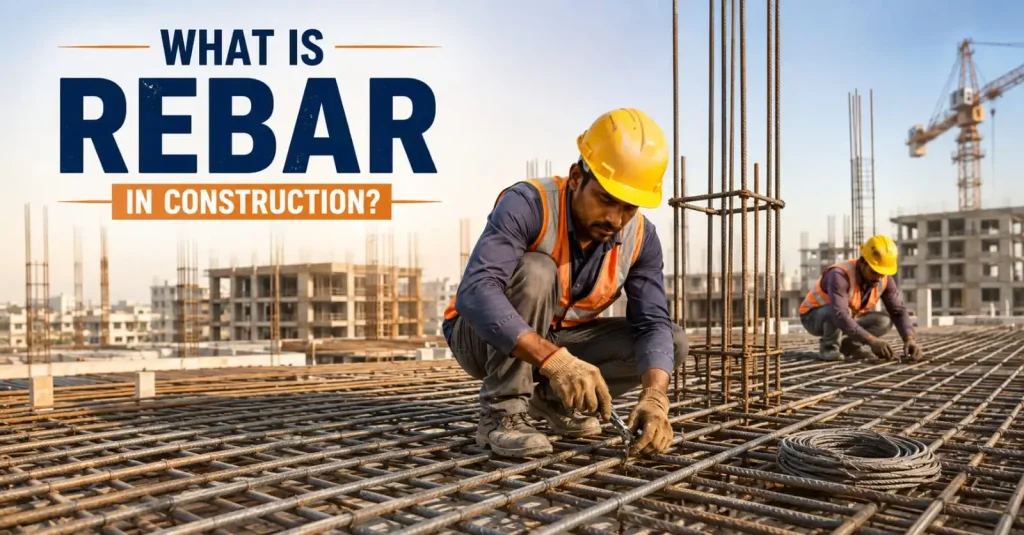
The workers perform different activities at a construction site. One such activity is to tie long steel bars together before they pour concrete. These steel bars are known as rebar. These rebars contribute to the durability of the structures. Concrete handles heavy compression. It manages load efficiently. However, it cracks when it is stretched or pulled. This is where rebar is useful in RCC construction. Read on this blog post to know the rebar meaning and types in detail.
What Is Rebar in Construction?
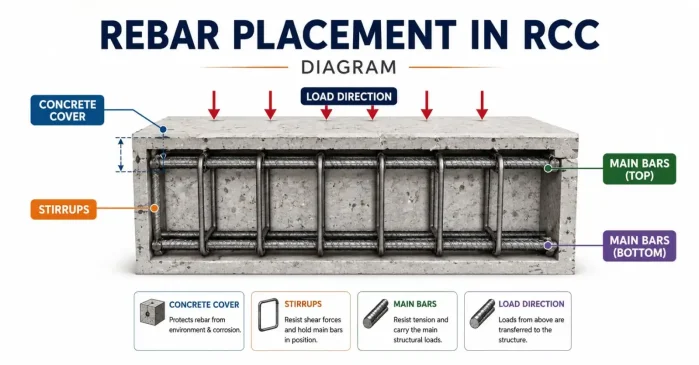

Rebar is a steel bar that workers place inside concrete to improve its tensile strength. Concrete perform weak in tension. But steel is excellent in tension. Thus, experts recommend using steel reinforcement and concrete to work together. The result? The reinforced cement concrete is formed. It is a construction material that makes the structure strong and durable.
The interesting part is that steel and concrete expand and contract at the same rate when temperature changes. This is why the combination of steel and concrete performs well in construction.
Thinking about how it works? Well, during rebar work, the workers customize the steel bars before pouring concrete as per the structural drawings. It is necessary to place the steel bars properly. This is because proper rebar work in construction ensures the overall strength of the structure.
What Are the Types of Rebar in Construction?
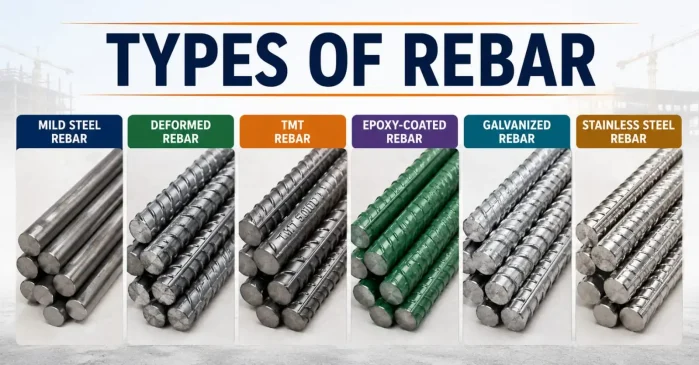
Given below are different types of rebar in construction:
- Mild Steel Rebar
It has a smooth surface and is common for small construction projects. The best part? They are easy to cut and bend at your convenience.
- Deformed Rebar
This is the most popular rebar in RCC construction. It has rising ribs on its surface that improve the bond between steel and concrete. Moreover, it reduces the risk of slipping under load.
- Thermo-Mechanically Treated (TMT) Rebar
Modern buildings prefer TMT bars because they offer excellent strength and flexibility to the structures. The most interesting part is that they resist earthquakes efficiently. TMT bars are suitable for both residential and commercial structures.
- Epoxy-Coated Rebar
Engineers recommend using epoxy-coated rebar for structures exposed to moisture or chemicals. Their additional coating prevents corrosion. Hence, the reinforcement becomes more durable.
- Galvanizing Rebar
It is ideal for structures that demand extra protection against rust and corrosion. These rebars have a zinc coating that ensures protection.
- Stainless Steel Rebar
Engineers prefer stainless steel for rebar work because it resists corrosion. Its durability makes it ideal for the construction of critical structures and bridges.
What Are the Uses of Rebar in Construction?
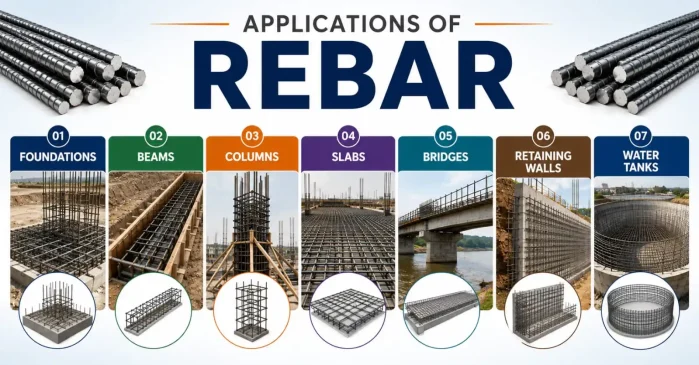
Given below are the common applications of rebar in construction:
- Strengthen Foundations
The foundation carries the entire weight of a building. Hence, rebar work helps foundations to resist settlement and manage ground movement. What’s more? It handles the structural stress effectively.
- Reinforce Columns and Beams
Columns transfer loads to the foundation. However, beams distribute loads across the structure. This is where reinforcement bars are useful. They allow the structures to resist bending and tension without cracking.
- Support RCC Slabs
Floor slabs experience heavy loads throughout the day. Rebar work allows slabs to manage heavy loads easily. Moreover, it ensures that slabs are stable and crack-free for a long period.
- Build Bridges and Flyovers
Large infrastructure projects use high-strength rebars. Why? This is because they carry dynamic loads safely in different weather conditions.
- Retaining Walls
There is high soil and groundwater pressure on retaining walls. Reinforcing bars prevent structural failure. What’s more? They improve the stability of these walls.
- Earthquake-Resistance
Engineers also recommend using rebar to manage seismic forces. These rebars allow structures to absorb energy during earthquakes. Thus, it prevents the building from sudden collapse.
- Water Tanks and Reservoirs
The proper rebar work minimizes cracks and maintains water tightness in concrete water-retaining structures.
The Final Words
Concrete provides mass and compressive strength to structures. However, rebar gives it resilience. Buildings perform safely under real-world conditions because of reinforcement. Hence, both engineers and homeowners need to understand the rebar meaning. What’s more? It is necessary to hire an expert engineer to place reinforcement bars. This is because it is necessary to place the reinforcement bars carefully. Misalignment can lead to performance failure.
FAQs
1. What is the difference between rebar and TMT bars?
Rebar is a general term for steel reinforcement used in concrete. TMT bars are a specific type of rebar manufactured through thermo-mechanical treatment, offering higher strength, better ductility, and improved corrosion and earthquake resistance.
2. What size of rebar is commonly used in construction?
Common rebar sizes range from 8 mm to 32 mm, depending on structural requirements. Smaller bars are used in slabs, while larger diameters are preferred for beams, columns, foundations, and heavy-load RCC structures.
3. How is rebar placed before concrete is poured?
Rebar is cut, bent, and tied into reinforcement cages according to structural drawings. It is supported with spacers and cover blocks to maintain proper concrete cover before concrete is poured.
4. What happens if concrete is poured without rebar?
Concrete without rebar can carry compressive loads but has low tensile strength. In structural applications, it is more likely to crack, bend, or fail under heavy loads, making reinforcement essential for RCC construction.
5. Can rebar rust inside concrete?
Rebar is generally protected by the alkaline environment of concrete. However, moisture, chlorides, or damaged concrete can cause corrosion, which may weaken the reinforcement and lead to cracking or spalling over time.
6. How long does rebar last in concrete?
Properly installed rebar can last for several decades, often matching the service life of the structure. Adequate concrete cover, quality materials, and protection from moisture and chemicals help maximize its durability.
7. How do engineers calculate the amount of rebar required?
Engineers calculate rebar requirements based on structural design, load conditions, concrete member dimensions, and applicable building codes. Structural drawings specify the bar diameter, spacing, quantity, and placement for each RCC element.