Dowel Bar: Purpose, Types and Applications in Road Construction

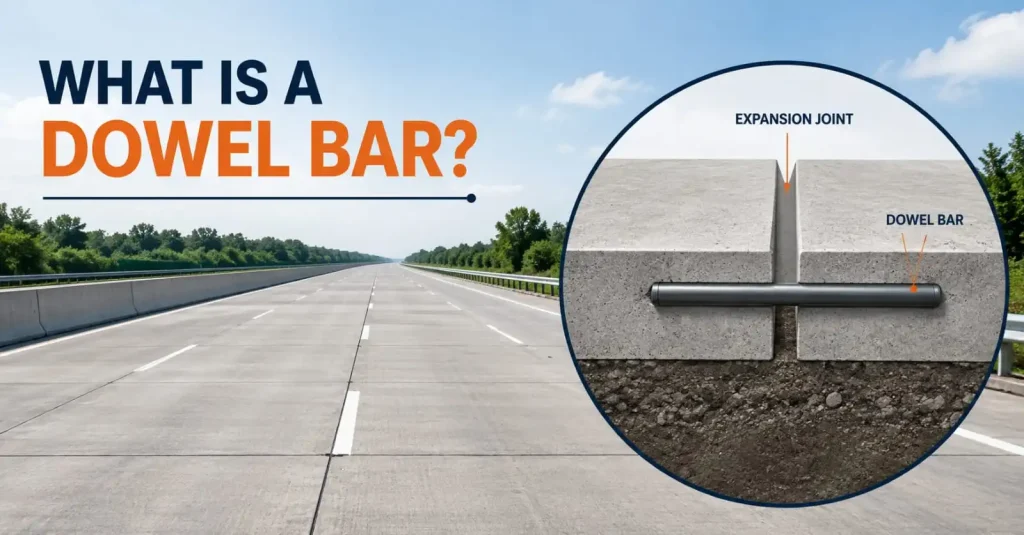
You must have seen concrete roads with neat joints at regular intervals. And it is psychologically tempting to mistake those gaps for flaws and cracks. But reality is different. Concrete expands during hot weather and contracts when temperatures drop. Hence, the pavement cracks under stress due to less movement. This is where a dowel bar comes into the picture. It is a simple steel rod through which concrete pavements remain strong and durable. Want to know more about the dowel bar in road construction? Read on this blog post to find out what a dowel bar is and its types!
What Is a Dowel Bar?
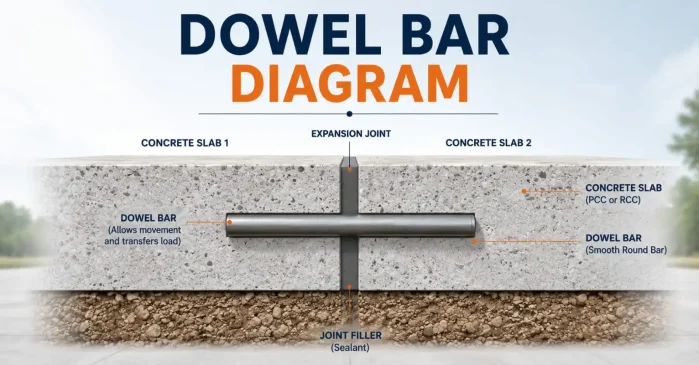

A dowel bar is a steel bar that is smooth and round in shape. The engineer places it across the joints between two concrete slabs. The primary purpose of a dowel bar is to transfer the load from one slab to another. The best part? It restricts horizontal movement that happens due to temperature changes.
Thinking about how exactly a dowel bar is manufactured? It is made from mild steel that is further coated with epoxy, paint, or grease. It not only prevents corrosion but also promotes smooth movement. The workers install dowel bars at transverse joints for the construction of highways. They align it carefully to ensure proper transfer of a load.
What Is the Role of the Dowel Bar in Road Construction?
Given below is the purpose of a dowel bar in road construction:
- Transfer Wheel Loads
The load transfers from one slab to another through the dowel bar when a heavy truck passes over a joint. Hence, it distributes the weight between the slabs.
- Prevents Uneven Settlement
One slab can settle lower than the other over time if the load does not transfer properly. The result? Many drivers feel a bump on damaged concrete roads. This is where dowel bars are useful. They keep both slabs at the same level.
- Allow Thermal Movement
Concrete expands during summer and contracts during winter. A dowel bar maintains alignment during this natural movement. The best part? It prevents unnecessary cracks on the roads.
- Improves Road Life
The reports highlight that concrete pavements with dowels perform better under heavy traffic. They reduce the need for maintenance and future repairs.
What Are the Types of Dowel Bars in Road Construction?
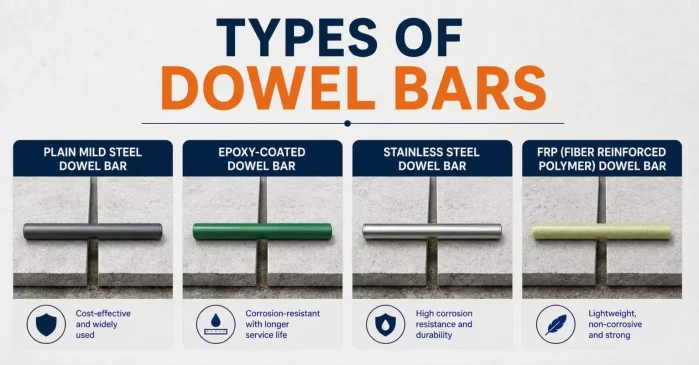
Given below are the different types of dowel bars in road construction:
- Plain Mild Steel Dowel Bars
These are the common types of dowel bars for highways and city roads. They are smooth and cylindrical steel bars that allow free horizontal movement. The most interesting part is that it transfers wheel loads efficiently at an affordable cost.
- Epoxy-Coated Dowel Bars
Roads in coastal regions or areas exposed to moisture and de-icing chemicals. Thus, it leads to corrosion. Epoxy-coated dowel bars provide an extra layer of protection. It resists corrosion and extends pavement life efficiently.
- Stainless Steel Dowel Bars
Stainless steel dowel bars offer exceptional durability to the roads. This is why these bars are mostly used in the construction of airport runways and ports. What’s more? It is more expensive than other types of dowel bars.
- Fibre-Reinforced Polymer Dowel Bars
Modern infrastructure projects use FRP dowel bars because of their excellent properties. They are lightweight and resist corrosion effectively.
What Are the Applications of Dowel Bar in Road Construction?

Given below are common applications of dowel bars in road construction:
- National and State Highways
Heavy commercial vehicles move through concrete highways. Dowel bars distribute wheel loads that reduce joint deterioration. The result? Drivers experience better driving performance on the highways.
- Airport Runways
Aircraft generate extremely high wheel loads during landing and take-off. The engineers place dowel bars accurately to align runways and prevent joint failures.
- Industrial Roads
Roads inside factories and warehouses also carry heavy trucks with goods throughout the day. This is why engineers use dowel bars to help these pavements manage repetitive loading.
- Urban Concrete Roads
Many Indian cities are using rigid concrete pavements instead of asphalt. This is because they are highly durable and last longer. A proper dowel bar in road construction helps these roads manage constant heavy traffic.
- Toll Plazas and Bus Terminals
Braking and acceleration are common at these locations. This increases stress on pavement joints. Thus, dowel bars prevent premature damage in these high-load areas.
What Are the Best Practices for Installing Dowel Bars in Road Construction?
It is necessary to install a dowel bar properly for its efficient performance. Given below are some tips to keep in mind:
- There should be a proper alignment between adjoining slabs.
- Place bars exactly at the mid-depth of the concrete slab.
- The space between the slabs must align with the pavement design.
- Apply materials to prevent corrosion as needed.
- Place accurately using dowel baskets or positioning assemblies.
The Final Words
There is engineering hidden below a concrete road. There is a system behind every smooth ride. A dowel bar is one of the components behind this system. Once you know what is dowel bar, it becomes easy to understand its importance in modern road construction. The careful engineering and the best quality materials determine the durability of dowel bars.
FAQs
1. What Is a Dowel Bar in Road Construction?
A dowel bar is a smooth steel rod installed across joints in concrete pavements. It transfers wheel loads from one slab to another while allowing the slabs to expand and contract with temperature changes. This improves pavement strength, durability, and driving comfort.
2. Why Are Dowel Bars Used in Concrete Roads?
Dowel bars improve load transfer between concrete slabs, reduce joint stress, prevent faulting and cracking, and minimize uneven settlement. They increase pavement durability, lower maintenance costs, and provide a smoother, safer driving experience on heavily trafficked roads.
3. Where Are Dowel Bars Used?
Dowel bars are widely used in concrete highways, airport runways, industrial roads, urban streets, bus terminals, ports, and logistics parks. They are ideal for heavy-duty pavements where efficient load transfer and long-term structural performance are essential.
4. What Materials Are Dowel Bars Made Of?
Dowel bars are commonly manufactured from mild steel, epoxy-coated steel, stainless steel, or fibre-reinforced polymer (FRP). The choice of material depends on traffic loads, environmental conditions, corrosion resistance, and the expected service life of the pavement.
5. What Happens If Concrete Pavements Do Not Have Dowel Bars?
Without dowel bars, concrete pavements can experience poor load transfer, joint faulting, slab cracking, and uneven settlement. Over time, these issues create rough riding surfaces, increase repair costs, and significantly reduce the pavement’s lifespan.
6. What Is the Standard Spacing of Dowel Bars?
The spacing of dowel bars varies with pavement design, slab thickness, and traffic loads. In most highway construction projects, dowel bars are typically placed at 300 mm centre-to-centre across transverse joints for effective load transfer.
7. What Is the Difference Between Dowel Bars and Tie Bars?
Dowel bars transfer wheel loads across pavement joints while allowing concrete slabs to expand and contract. Tie bars, however, hold adjacent slabs together to prevent separation and are not designed to transfer loads or accommodate joint movement.