What Is Conduit Wiring? Types & Their Uses

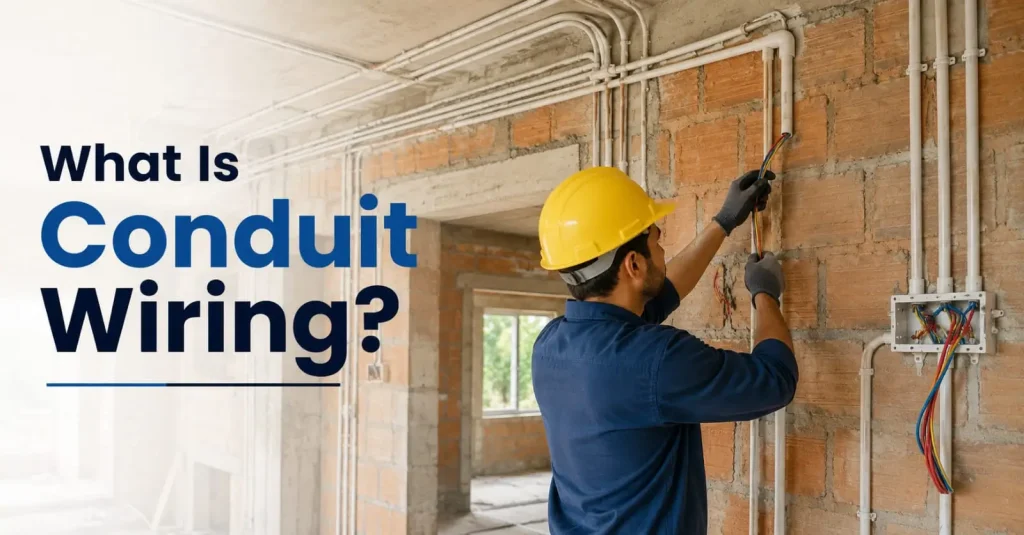
We usually focus on flooring or furniture when building a home. Isn’t it? But there is an electrical system that hides behind a perfect home. It powers your phone charger or other electrical appliances. One of the most important parts of this system is the conduit. It is a protective pathway for electrical wires. Want to know what a conduit is and about its types? Read on this blog post to find out!
What is Conduit Wiring?
It is a tube or channel that routes the electrical wiring safely inside or outside the building. The conduit material is made from different materials. The electrician chooses according to the application. Conduit wiring not only improves electrical safety but it also ensures durability. Electrical installations in India follow the guidelines of the National Building Code (NBC) and IS standards. Hence, it is necessary to choose the right conduit for your space.
What Are the Different Types of Conduit Wiring?
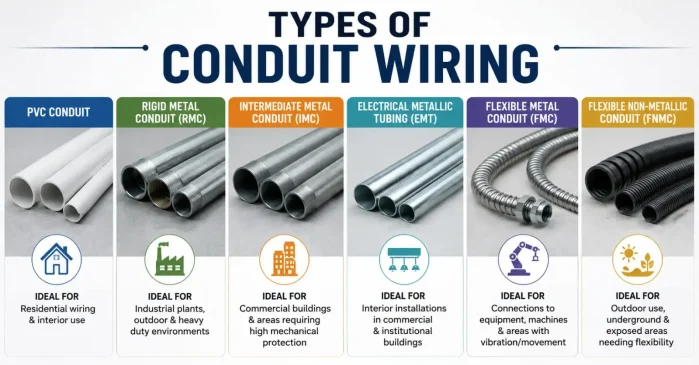

Given below are different types of conduit wiring in India:
PVC Conduit
It is the most common type of conduit for residential construction. The engineers mostly recommend using it in humid areas like kitchens and bathrooms. They are light-weight and corrosion-resistant. The best part? They offer excellent insulation at a reasonable cost.
Rigid Metal Conduit
This type of conduit is manufactured from galvanized steel or stainless steel. It protects against physical damage and is mostly used in the following:
- Factories
- Industrial plants
- Warehouses
- Outdoor environments
This is because wiring in these spaces is exposed to harsh conditions. It is more costly than PVC but provides great strength.
Intermediate Metal Conduit
It offers the same protection as rigid metal conduit. So, how is it different? It is lightweight and easy to handle. The electricians install it with fewer difficulties. Mostly, contractors choose IMC for large commercial projects where durability is important.
Electrical Metallic Tubing
Have you ever heard “thin-wall conduit” on-site? That’s electrical metallic tubing. It is ideal for open and visible indoor wiring. The experts often recommend using it for the following:
- Shopping malls
- Offices
- Parking areas
- Educational institutions
It is quick and easy to install EMT with safety because it bends easily.
Flexible Metal Conduit
Some equipment vibrates during operation. Hence, flexible metal conduit is ideal for those scenarios. It bends easily and moves with the equipment. The best part? Flexible metal conduit ensures that electrical wire is safe. This is why experts recommend it for heavy applications like air-conditioners and generators.
Flexible Non-Metallic Conduit
The electrical wires you see in damp locations and areas are the flexible non-metallic conduits. They are made from flexible plastic materials and resist moisture. It is popular for the installation in underground and wet areas.
What Are the Common Applications of Conduit Wiring?
The answer depends on where you will use the electrical wiring. Modern construction prefers conduit systems as they organize cable management. What’s more? They protect expensive electrical wiring. Given below are some common applications of conduit wiring:
Residential Homes
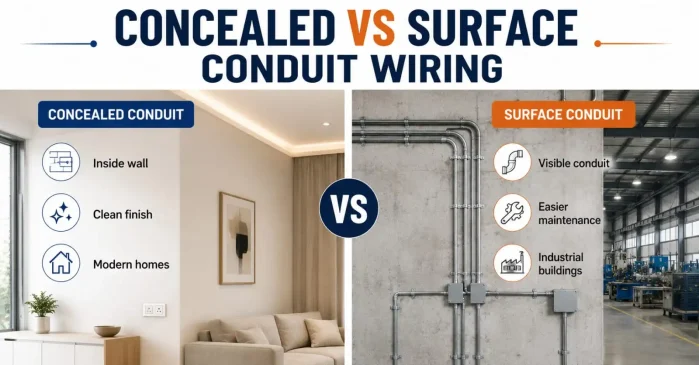
Most modern homes use concealed conduit wiring inside walls before plastering. It keeps wiring protected while maintaining clean interiors.
Commercial Buildings
Offices, shopping malls, hotels, and hospitals require hundreds of electrical circuits. Conduit wiring helps organize these systems to simplify the maintenance later.
Industrial Plants
Factories run through heavy machinery and equipment. Metal conduit wiring protects cables to ensure the seamless operation.
Educational Institutions
Safety of children is necessary in educational institutions. Thus, schools and colleges use conduit wiring because it improves safety in buildings.
Hospitals
Healthcare facilities must ensure electrical safety. They use conduit wiring to maintain reliable electrical infrastructure and avoid any mishaps.
Outdoor Installations
Open areas like parking lots and gardens often require weather-resistant conduit systems. Why? Because they are made to resist temperature changes and weather conditions.
What Are the Advantages and Disadvantages of Conduit Wiring?
Given below are the advantages and disadvantages of conduit wiring:
Advantages of Conduit Wiring
- It protects electrical wires from moisture and environmental damage.
- The wires remain safe, which increases their durability.
- The risk of electrical short circuits reduces when you install the conduit wiring properly.
- It is easy to install and replace the conduit wiring.
- The interiors look clean and clutter-free with concealed conduit wiring.
Disadvantages of Conduit Wiring
- It is expensive to install in comparison to surface wiring.
- The professional electrician must install the conduit wiring.
- Careful planning is necessary if you want to install conduit before plastering.
The Final Words
Electrical wiring is only visible before construction. But it is one of the most important systems inside the building. The right type of conduit wiring depends on the various factors. It is advisable to hire a skilled electrician to install the conduit system properly. It is similar to a strong foundation that supports an entire structure. A proper electrical conduit system keeps your home safe and organized. Most importantly, it is easy to maintain it for decades. This is why it is necessary to select the right materials when installing conduit wiring to your home.
FAQs
1. What is conduit wiring?
Conduit wiring is an electrical system where insulated wires run inside protective pipes called conduits. These conduits shield cables from moisture, dust, heat, corrosion, and physical damage, making the wiring safer, more durable, and easier to maintain in homes, offices, and industrial buildings.
2. What does conduit mean in electrical wiring?
In electrical wiring, a conduit is a protective tube or pipe that carries electrical wires safely between different points. It helps prevent wire damage, reduces electrical hazards, and keeps installations organised in residential, commercial, and industrial spaces.
3. What materials are electrical conduits made from?
Electrical conduits are commonly made from PVC, galvanized steel, aluminium, stainless steel, or flexible plastic. The material depends on the installation environment, required durability, moisture exposure, and the level of mechanical protection needed.
4. Which conduit is best for home wiring?
PVC conduit is the preferred choice for most home wiring because it is lightweight, corrosion-resistant, affordable, and easy to install. Metal conduits are recommended where extra strength, fire resistance, or mechanical protection is required.
5. Why is conduit wiring safer than open wiring?
Conduit wiring improves electrical safety by enclosing wires inside protective pipes. This protects cables from moisture, dust, rodents, accidental impacts, and wear, reducing the risk of short circuits, electric shocks, and fire hazards.
6. Can conduit wiring be installed outdoors?
Yes. Conduit wiring is suitable for outdoor installations when weather-resistant PVC conduits or metal conduits are used. These conduits protect electrical cables from rain, sunlight, corrosion, and physical damage, ensuring long-lasting performance.
7. Is conduit wiring more expensive than surface wiring?
Yes. Conduit wiring has a higher installation cost because it requires conduits, fittings, and skilled labour. However, its durability, better protection, lower maintenance, and longer service life often make it more cost-effective over time.
8. Can new electrical wires be added to an existing conduit?
Yes, provided the conduit has enough spare capacity and is properly installed. Electricians can usually pull new or replacement wires through the existing conduit, making upgrades and maintenance easier without major structural changes.