Cement Paint: Types, Colours, Uses, Benefits and Application Guide


Whether it’s festive or wedding season, homebuyers give their home a fresh coat of paint. This is because a fresh coat can change the look of a building almost instantly. Many people choose cement paint as a better option for their exterior walls and terraces. It is made when cement is mixed with pigments and other ingredients. The most intriguing part is that it protects the surface from dust and changing weather conditions. The experts recommend cement paint for both residential and commercial construction projects. Read on this blog post to find out all about cement paint colors.
Quick Answer
Cement paint is made when manufacturers combine cement with other ingredients. The common applications of cement paint colors are as follows:
- Masonry work
- Concrete
- Plastered walls
- Mineral surfaces
The best part is that cement paint is suitable for both exterior and interior surfaces. Homebuyers seeking economical finishes for walls often choose cement paints. This is because it provides a clean look at a budget-friendly price. However, it is necessary to clean and prepare the surface properly for a good result. The workers must read the manufacturer’s guidelines carefully before mixing the paint. What’s more? Don’t forget to cure or dry the cement paint coat properly.
What Are the Different Types of Cement Paint?
Given below are the different types of cement paint colors:
- White Cement Paint
White cement paint is suitable for homeowners who want a clean, bright look on their walls. The most interesting part is that it provides a useful base for certain color finishes.
- Colored Cement Paint
Manufacturers add pigments to cement paint to create shades beyond basic white. These paints can help homeowners and contractors give exterior walls a more finished appearance.
- Decorative Cement Paint
Many manufacturers like JK Cement also provide cement paints that focus on appearance and finish. Designers recommend these products when you want to protect the surface while creating a specific visual effect.
What Colors Can You Choose For Cement Paint?
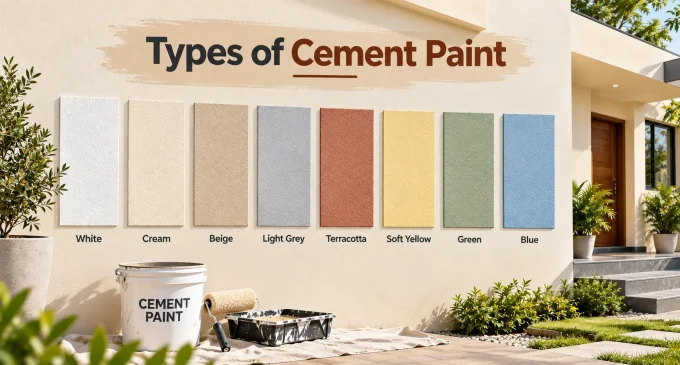

Given below are the cement paint colors you can choose for your walls:
- White and off-white
- Cream and beige
- Light grey
- Terracotta and earthy shades
- Soft yellow
- Green
- Blue
- Other manufacturer-specific shades
It is advisable to test a small patch before finalizing a color for your walls.
What Are the Common Applications for Cement Paint?
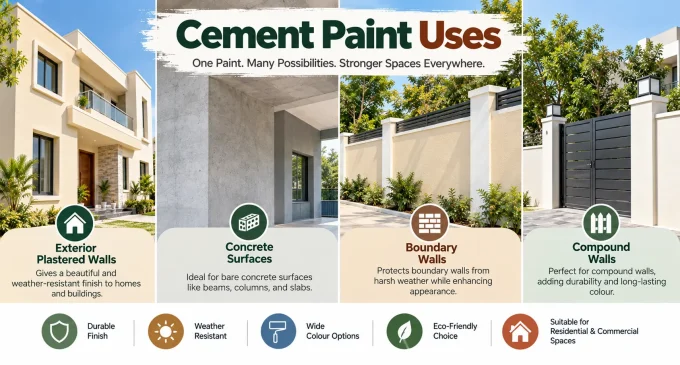
Cement paint works best on suitable mineral and cement-based surfaces. Given below are some common applications of cement paint colors:
- Exterior plastered walls
- Concrete surfaces
- Boundary walls
- Compound walls
- Cement-based surfaces around homes
- Selected interior masonry surfaces
- Certain commercial and institutional buildings
It can prove especially useful for large areas where you need a straightforward wall finish. For every project, check whether the specific cement paint suits the surface and exposure conditions.
If the wall has serious dampness, leakage, cracks, or structural problems, fix the underlying issue before painting. A new coat cannot solve a construction or waterproofing problem underneath it.
What Are the Benefits of Cement Paint?
Given below are the benefits of using cement paint colors for your homes:
- Gives walls a fresh look
- Offers simple color choices
- Works well on masonry
- Creates a neat finish
- Suits large wall areas
- Improves exterior appearance
- Handles outdoor conditions
- Matches different home styles
What Is the Application Guide for Applying Cement Paint?
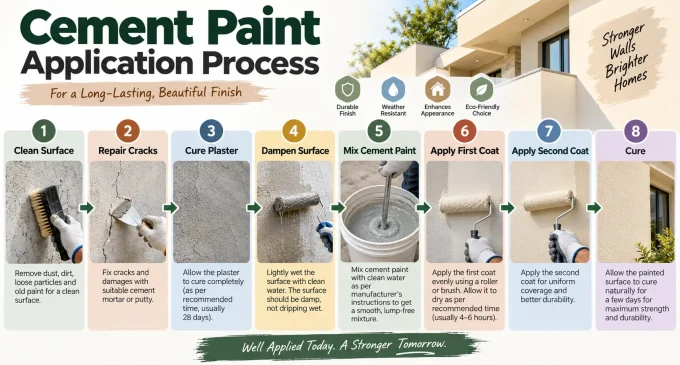
The following is the process for applying cement paint colors on the walls:
- Prepare the Surface
The first step is to clean the surface. It is advisable to repair visible cracks or damaged areas before the workers apply the first coat.
- Cure the New Plaster
Fresh plaster needs adequate curing before you apply a cement-based coating. The most important thing to keep in mind is to follow the product manufacturer’s guidelines.
- Dampen the Surface
Many cement paint colors require a dampened masonry surface before application. Do not leave the wall dripping wet. Aim for an evenly damp surface according to the product instructions.
- Mix the Paint Properly
It is important to mix the paint according to the manufacturer’s guidelines. What’s more? The workers should mix thoroughly until it forms a consistent paste. Don’t add extra water if the mixture looks thick.
- Apply the First Coat
The workers should choose a brush or application method to apply the cement paint. Make sure that the coating is uniform across the wall. Moreover, it is advisable to avoid leaving heavy patches in your first coat of cement paint.
- Apply the Next Coat
Once the first coat reaches the recommended stage, the workers must apply the second coat to improve uniformity.
- Cure the Finished Surface
Cement coatings must be cured properly after the second coat. This step can make a noticeable difference to the final finish and performance.
The Final Words
Cement paint provides a clean appearance to the surface. It not only adds a layer of protection but also creates a smooth finish. However, it is important to choose the right cement paint colors. This is because the actual finish depends on the work that is often overlooked in the beginning.
FAQs
1. What is cement paint used for?
Cement paint is mainly used on masonry surfaces such as concrete, brickwork, and plastered walls. It works well for exterior walls, compound walls, and other suitable surfaces where you want a simple and practical finish.
2. Is cement paint good for exterior walls?
Yes, cement paint works well on suitable exterior masonry surfaces. It can give walls a clean finish while adding a protective coating. Proper surface preparation and correct application can help improve its overall performance.
3. What colors are available in cement paint?
Cement paint comes in white and several colored shades. Common options include cream, beige, grey, and earthy tones. Color availability depends on the product range. Choose a shade that complements your building and its surroundings.
4. Can I apply cement paint directly on a new wall?
No, you should not apply cement paint immediately on a new wall. Fresh plaster needs adequate curing first. Clean and prepare the surface before application. Always follow the product manufacturer’s recommended preparation and curing time.
5. How many coats of cement paint should I apply?
The number of cement paint coats depends on the product and wall condition. Surface texture and desired coverage also matter. Follow the manufacturer’s instructions to determine the right number of coats for your project.
6. Can cement paint prevent dampness?
Cement paint can provide a coating on masonry surfaces, but it cannot fix serious dampness or water seepage. Address the source of moisture first. Use proper waterproofing or repair methods when the wall has an underlying dampness problem.
7. Can I use cement paint on concrete?
Yes, you can use cement paint on concrete when the product supports concrete application. Clean and prepare the surface before painting. Follow the manufacturer’s instructions for mixing, application, and curing to achieve a better finish.