Brick Masonry: Definition, Types, and Construction Process

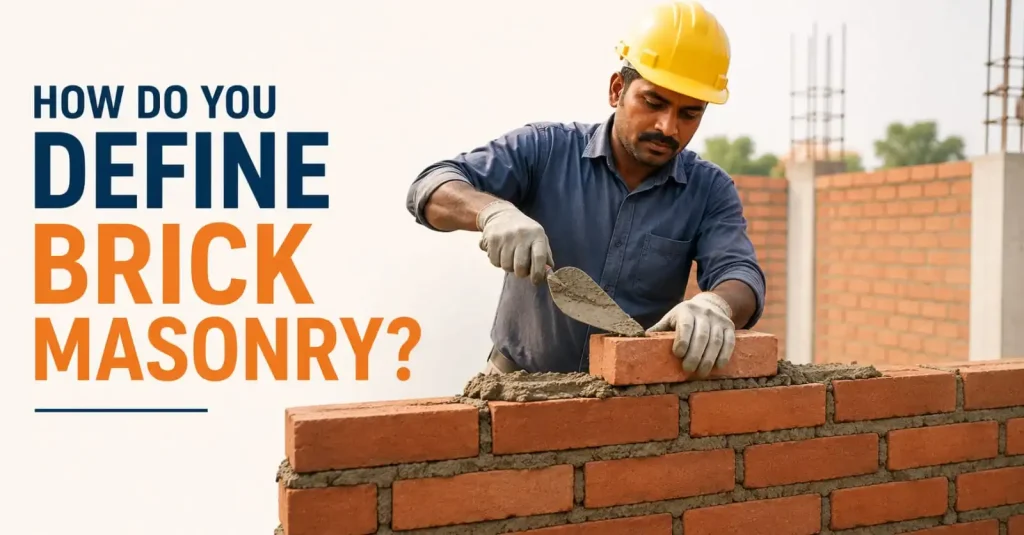
The brick masonry construction method has been popular for centuries. Modern homes and low-rise buildings still prefer this method for their building construction. Why? This is because brick masonry provides strength and durability to the structures. The Building Materials & Technology Promotion Council highlights that brick masonry offers a service life of over 75-100 years. The best part? It is one of the affordable construction methods for buildings. Read on this blog post to know the brick masonry definition and its types.
How Do You Define Brick Masonry?
Brick masonry refers to the construction of structural elements like walls and columns. The worker arranges bricks systematically and binds them together using mortar. Bricks are the building blocks. However, mortar acts like the glue that holds everything together. The brick masonry definition is simple to understand with an example of a puzzle. This means brick masonry is similar to assembling a puzzle.
There are three main components of brick masonry in construction:
- Bricks
- Mortar
- Workmanship
Note: It is necessary to ensure the quality of these components for the best performance of brick masonry.
What Are the Types of Brick Masonry in Construction?
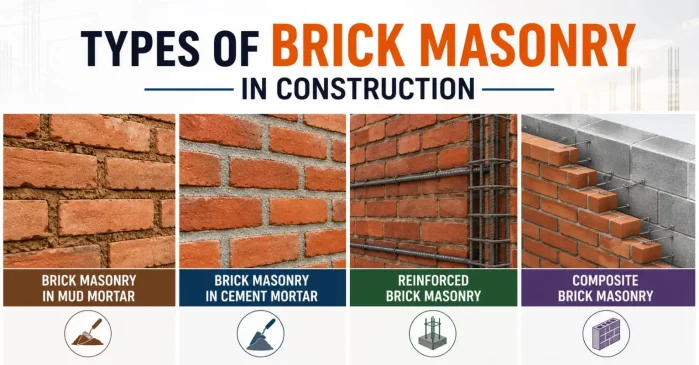

Given below are the different types of brick masonry in the construction of buildings:
- Brick Masonry in Mud Mortar
It is one of the oldest forms of brick construction. The workers mix prepared clay or mud for bonding bricks in this type of masonry. Moreover, people in rural areas still use it to build the following structures:
- Temporary structures
- Rural buildings
- Low-cost construction
Mud-mortar brick masonry is affordable but offers lower strength to the structures.
- Brick Masonry In Cement Mortar
Modern homes mostly prefer cement mortar brick masonry. Why? This is because cement mortar offers high strength and resists water efficiently. This is why contractors use it for the following applications:
- Residential buildings
- Commercial structures
- Compound walls
- Load-bearing walls
Tip: It is ideal for building owners who want durable structures.
- Reinforced Brick Masonry
The workers place steel reinforcement bars within the brickwork in this type of brick masonry. The result? This improves the resistance against tensile forces. The contractors usually recommend reinforced brick masonry for the following applications:
- Earthquake-prone regions
- Retain walls
- Structural walls that carry high loads
The reinforcement improves the stability of the wall without replacing traditional brick construction.
- Composite Brick Masonry
Composite masonry combines brickwork with other construction materials. These materials can be either reinforced concrete or natural stone. You will often see contractors using this approach for the buildings that need both strength and architectural appearance.
What Are the Different Types of Brick Bonds in Masonry?
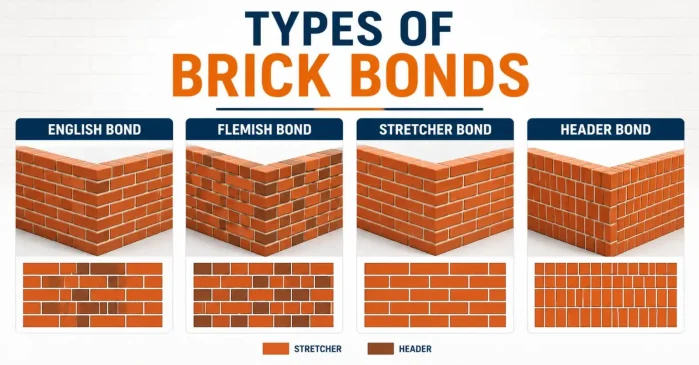
The arrangement of bricks is also necessary in construction. Given below are some common bonding patterns for brick masonry:
- English Bond: It is one of the strongest and most widely used patterns in India.
- Flemish Bond: It is ideal for those seeking better aesthetics with customized headers and stretchers.
- Stretcher Bond: The workers mostly use it for partition of walls.
- Header Bond: It is suitable for curved walls and thicker masonry work.
Note: It is advisable to choose the bond pattern wisely. It directly influences the strength and stability of brick masonry.
What Is the Process for Brick Masonry in Construction?
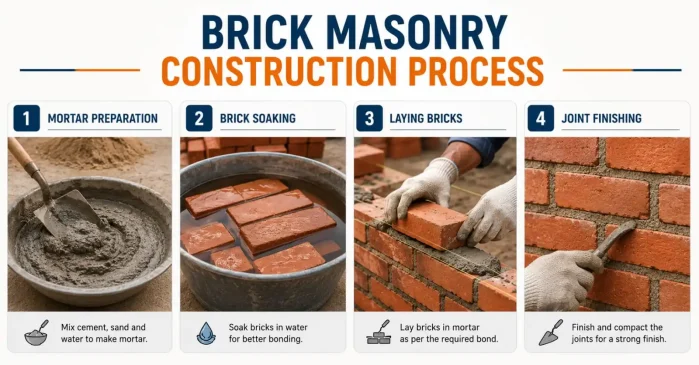
A strong wall is the result of good masonry work. Given below is the step-by-step guide on how to do brick masonry in construction:
- Material Selection
The first step is to select good-quality bricks that have the following properties:
- Uniform dimensions
- Produce a clear ringing sound when struck
- Absorb limited water
- Be free from cracks and defects
Tip: The experts advise choosing premium construction materials at this stage. This reduces the future maintenance costs.
- Preparation of Mortar
The workers mix different construction materials to prepare a mortar. These materials include:
The proportion of each ingredient must be appropriate. It should not be too dry and not too watery. What’s insightful is to use the fresh mortar within a couple of hours after preparation.
- Soaking the Bricks
Another step is to soak the clay bricks in clean water. This prevents them from absorbing moisture from the mortar. It also ensures proper bonding between the bricks and mortar.
- Lay the Bricks
The workers choose the bond pattern and place the bricks carefully. They press each brick gently into fresh mortar. What’s more? Their job is to ensure that horizontal and vertical joints are uniform. You will often see builders using the following tools to check alignment:
- Plumb bob
- Spirit level
- Mason’s line
This stage is important because small corrections here help you prevent major problems later.
- Joint Finishing
The workers remove excess mortar once the wall reaches the desired height. Proper finishing is given to the joints. This not only improves appearance but also reduces water penetration.
- Curing
It is an important step in the brick masonry construction process. But people still overlook this stage. It is necessary to cure fresh brick masonry with water for at least 7 to 10 days. Cement mortar gains strength with proper curing. Hence, it reduces the risk of shrinkage cracks.
The Final Words
Brick masonry is a reliable and affordable construction method in India. There are different types of brick masonry methods. The contractor chooses based on building type and project cost. As a homeowner, make sure you understand the brick masonry definition. It will ensure that your contractor follows the correct process for your project and it lasts longer.
FAQs
Can you define brick masonry in simple words?
Brick masonry is the process of building walls, columns, and other structures by laying bricks in a systematic pattern and joining them with mortar. It creates strong, durable, and long-lasting construction for homes, commercial buildings, and boundary walls.
What are the main types of brick masonry?
The main types of brick masonry are mud mortar masonry, cement mortar masonry, reinforced brick masonry, and composite brick masonry. Each type is selected based on the building’s strength requirements, durability, cost, and environmental conditions.
Which mortar is commonly used in brick masonry?
Cement mortar is the most commonly used mortar in brick masonry because it provides excellent strength, durability, and moisture resistance. It forms a strong bond between bricks, making it suitable for residential, commercial, and structural construction projects.
Why is curing important in brick masonry?
Curing is essential because it allows the mortar to gain strength gradually, reduces shrinkage cracks, and improves the durability of brick masonry. Proper curing also enhances the bond between bricks and mortar, increasing the structure’s lifespan.
Which brick bond is considered the strongest?
The English bond is considered the strongest brick bond because it alternates headers and stretchers, providing excellent load distribution and structural stability. It is widely used for load-bearing walls, foundations, and heavy masonry construction.
What is the ideal thickness of mortar joints in brick masonry?
The recommended mortar joint thickness in brick masonry is about 10 mm. Uniform joints ensure proper bonding, even load distribution, improved appearance, and better structural performance while minimizing the risk of cracks and weak points.
How long can brick masonry last?
A well-constructed brick masonry structure can last 75 to 100 years or more when built with quality bricks, suitable mortar, proper curing, and regular maintenance. Its longevity also depends on environmental conditions and construction quality.