What Is Sunmica? Meaning, Uses and Benefits Explained

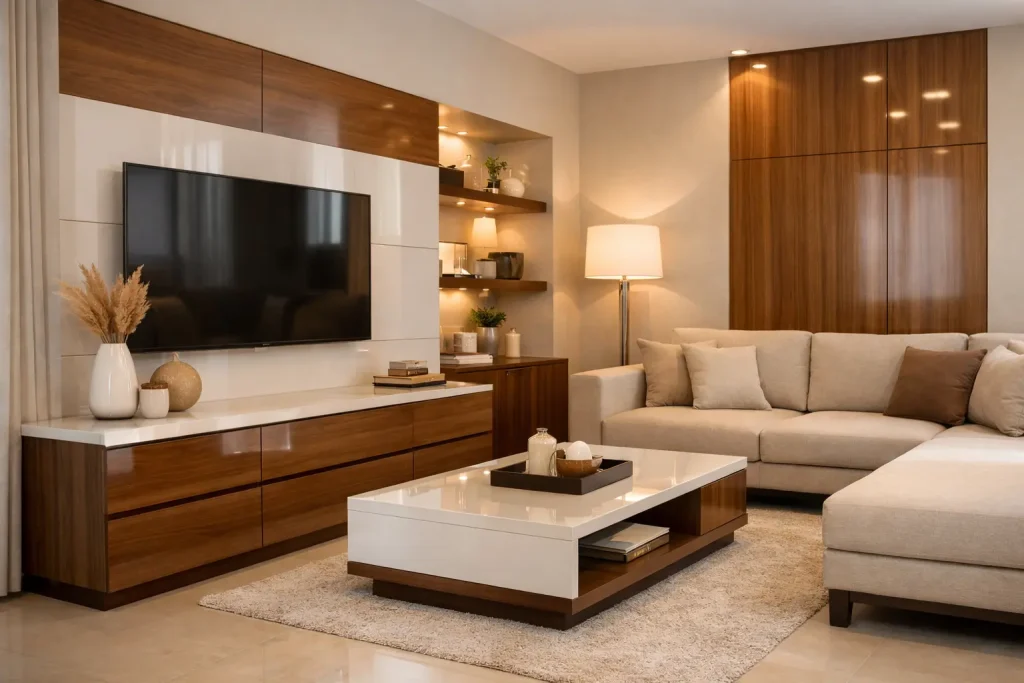
Sunmica is one of the most widely used interior surface materials in Indian homes. It is seen on wardrobes, kitchen cabinets, TV units, doors, and wall panels. Despite this familiarity, many homeowners treat sunmica as a visual finish alone, without understanding how it behaves, where it performs well, and where it does not.
When people ask what is sunmica, they are usually trying to answer three practical questions:
What is it made of? Where should it be used? And how long does it realistically last?
This guide explains the meaning of sunmica, how sunmica sheets are used, the different types available in India, and how to choose it without unrealistic expectations.
What Is Sunmica? (Clear Definition)
Sunmica is a decorative laminate surface sheet, manufactured by compressing multiple layers of kraft paper and decorative paper under high pressure using thermosetting resins. The result is a thin, durable surface layer designed to be bonded onto a base material such as plywood, MDF, or particle board.
Technically, sunmica is not a standalone material. It has no structural strength of its own. Its performance depends entirely on:
- The quality of the substrate
- The adhesive and pasting process
- Proper edge sealing and finishing
This distinction is critical to understanding both its strengths and its limits.
Sunmica Meaning in Interior Design
In interior design, sunmica refers to a ready-finished engineered surface. Unlike paint, it does not require curing on-site. Unlike natural wood or stone, it is manufactured for uniformity and predictability.
This makes sunmica suitable when:
- Finish consistency matters across large surfaces
- Maintenance must remain simple
- Budgets need to stay controlled
- Installation timelines are tight
Sunmica is chosen for reliability, not for material depth or natural variation.
Sunmica vs Laminate: Clearing the Confusion
In India, “Sunmica” is often used as a generic term. Originally, Sunmica was a brand name that became synonymous with decorative laminates over time.
From a technical standpoint:
- Laminate is the material category
- Sunmica is commonly used to refer to laminates in general
This guide uses the term sunmica in the way most Indian homeowners understand it, while describing the material accurately.
What Is a Sunmica Sheet?
A sunmica sheet is a factory-finished laminate panel, typically 0.6 mm to 1 mm thick, supplied in standard sizes. These sheets are pressed onto furniture panels during carpentry or modular manufacturing.
Sunmica sheets are valued for:
- Uniform colour and texture across batches
- Surface resistance to light scratches
- Ease of day-to-day cleaning
However, poor pasting or exposed edges can reduce lifespan significantly, regardless of sheet quality.
Types of Sunmica Used in Indian Homes
Different sunmica types serve different functional and visual needs.
Matte Sunmica
Matte sunmica offers a soft, low-reflection finish.
Commonly used for:
- Wardrobes
- Bedroom furniture
- Study units
It hides fingerprints and minor wear better than glossy finishes, making it suitable for everyday residential use.
Glossy Sunmica
Glossy sunmica reflects light and creates a modern appearance.
Best suited for:
- Modular kitchen shutters
- Contemporary wardrobes
- Select accent elements
It requires more frequent wiping, as smudges and fingerprints are more visible.
Textured and Woodgrain Sunmica
These laminates mimic wood, fabric, or stone textures.
Used for:
- Wardrobe shutters
- TV units
- Decorative wall panels
They provide visual depth without the maintenance demands of natural materials.
Metallic and Special-Finish Sunmica
Designed for limited use, these finishes are applied to:
- Display units
- Office furniture
- Feature panels
They are visually heavy and not recommended for large surface areas in homes.
Common Uses of Sunmica in Homes
Sunmica performs best in moderate-wear interior applications.
Typical uses include:
- Wardrobes and storage units
- Kitchen cabinet shutters
- Study tables and shelves
- TV units and sideboards
- Interior doors and panels
With correct installation, sunmica surfaces typically last 7–10 years before visible ageing, depending on usage.
Benefits of Using Sunmica
Sunmica remains popular because it offers a balanced mix of performance and cost:
- More affordable than veneer or solid wood finishes
- Predictable finish across multiple panels
- Simple cleaning with mild household cleaners
- Wide availability across colours and textures
- Faster installation compared to painted finishes
These benefits make sunmica practical for both new homes and renovation projects.
Limitations of Sunmica You Should Know
Sunmica is durable, but not forgiving.
Key limitations include:
- Edge chipping if sealing is poor
- Sensitivity to prolonged moisture exposure
- Irreversible damage from deep scratches
- Lower heat resistance compared to stone or metal surfaces
Sunmica works best when expectations are aligned with its engineered nature.
Sunmica vs Veneer vs Painted Surfaces
A practical comparison helps clarify selection:
- Sunmica: Uniform, low maintenance, cost-effective
- Veneer: Natural appearance, higher upkeep, higher cost
- Painted surfaces: Customisable but prone to chipping and stains
Sunmica sits between paint and veneer in both performance and pricing.
How to Choose the Right Sunmica
Before finalising sunmica sheets, consider:
- Location of use (bedroom, kitchen, living area)
- Exposure to moisture or heat
- Finish type (matte for daily use, gloss for accents)
- Quality of substrate and carpentry workmanship
Even premium sunmica will fail if applied on poor-quality boards.
FAQs: Sunmica
What is sunmica used for in homes?
Sunmica is used as a surface finish for wardrobes, kitchen cabinets, furniture, and interior panels.
Is sunmica waterproof?
Sunmica is water-resistant on the surface but vulnerable if moisture enters through joints or edges.
Is sunmica and laminate the same thing?
Technically, sunmica is a type of decorative laminate. The term is often used generically in India.
Which sunmica is best for wardrobes?
Matte or textured sunmica performs best due to low fingerprint visibility.
Can sunmica be used in kitchens?
Yes, for cabinet shutters, provided moisture-resistant boards and proper edge sealing are used.
Final Word
Sunmica is not chosen for luxury. It is chosen for control.
When used in the right locations, installed correctly, and paired with realistic expectations, sunmica delivers consistent performance at a predictable cost.
Understanding what sunmica is — and just as importantly, what it is not — allows it to work quietly and effectively in Indian homes for years.