Veneer Sheets: Types, Finishes, Uses & Price Guide for Home Interiors

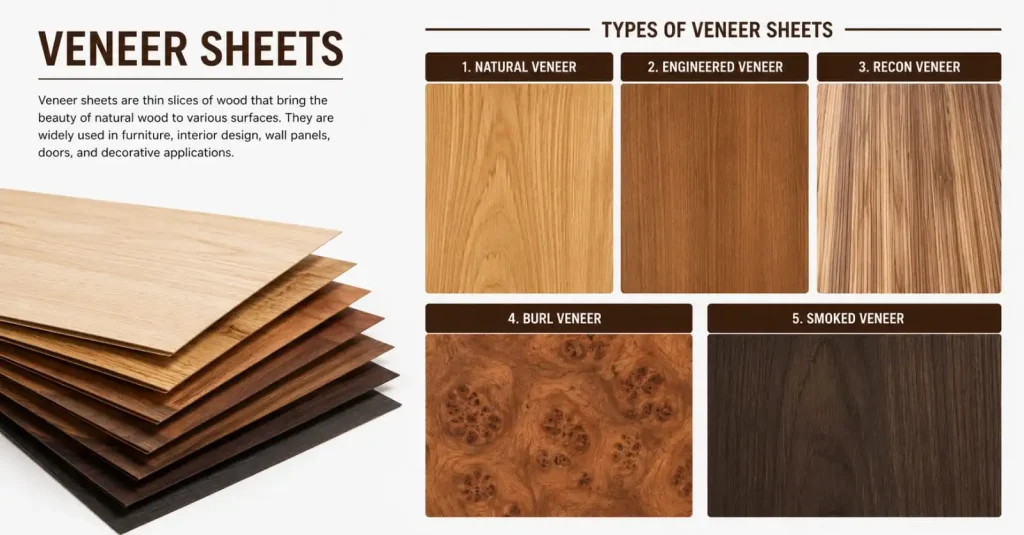
If you want that rich, natural wood look without using solid wood everywhere, a veneer sheet is usually the answer.
It gives you the beauty of real timber, keeps costs in control, and works beautifully for furniture, panels, and veneer door design.
In simple terms, veneer is what people choose when they want interiors to feel warm, real, and not overly artificial.
Many homeowners switch from laminates to veneer at the last minute — not because laminates are bad, but because veneer just feels different.
More natural. More grounded.
What Is Veneer?
Let’s clear this first—the veneer meaning is actually very simple.
A veneer sheet is a thin slice of natural wood, usually pasted onto plywood or MDF.
So instead of using a full piece of expensive wood, you use a thin layer on top.
That’s why veneer gives:
- Natural grains
- Unique patterns
- Warm, premium feel
And when used in a veneer door, it brings that solid-wood look without the full cost or weight.
Types of Veneer Sheets You’ll Find in the Market
Walk into any veneer supplier, and the options can feel endless.
But most veneer sheet types fall into a few categories.
1. Natural Veneer
- It is made from real wood logs.
- Each sheet is distinctive.
- It is ideal for authentic interiors and veneer door design.
2. Engineered Veneer
- Though man-made, it looks like natural wood.
- Has uniform patterns.
- Easier to match across large surfaces.
3. Recon Veneer
- It is made from reconstructed wood.
- Usually, it is budget-friendly as compared to other types.
- Commonly seen in commercial projects.
4. Burl Veneer
- Mostly a decorative, premium type.
- Has unique swirling patterns.
- Used for highlighting furniture or a luxury veneer door.
5. Smoked Veneer
- Treated for darker tones.
- Has a rich, deep appearance.
- Popular in modern homes.
Most homeowners choose natural or engineered veneer sheets based on their budget and consistency needs.
Veneer Finishes That Change Everything
Raw veneer is just the starting point. Finish is what defines how it finally looks.
Common finishes used on veneer:
Matte Finish
- Soft, natural feel.
- Keeps the wood looking intact.
Gloss Finish
- Polished and reflective.
- More formal interiors.
Melamine Polish
- Budget-friendly and practical.
- Common for wardrobes and veneer door design.
PU (Polyurethane) Finish
- Premium option.
- Smooth, durable, long-lasting.
Open Grain Finish
- You can feel the wood texture.
- Very natural look.
If you’re choosing veneer, don’t hide it under too much gloss.
Let the grain show.
Where Veneer Sheets Work Best
Not every space needs veneer. But where it works, it really stands out.
Common uses of veneer sheet:
Doors
A well-done veneer door adds instant richness
Wardrobes
Natural finish makes bedrooms feel warm
Wall Panels
Great for feature walls
TV Units
Adds depth and texture
Office Cabins
Professional, premium look
One thing noticed is that even a single veneer door design in the house can lift the overall feel of the space.
Veneer vs Laminate
This is a question that comes up on almost every site.
Here’s the real difference:
Veneer sheet
- Real wood surface
- Unique grains
- Needs polishing
- Slightly higher maintenance
Laminate
- Artificial finish
- Consistent look
- Low maintenance
- More budget-friendly
If you want practicality → laminates
If you want a natural feel → veneer
For main doors or statement pieces, most people still prefer veneer door options.
Price Guide for Veneer Sheets in India
Let’s talk numbers – because this is where decisions happen.
Approximate pricing:
- Basic veneer sheet: ₹80 – ₹150 per sq. ft.
- Mid-range veneer: ₹150 – ₹300 per sq. ft.
- Premium veneer (teak, walnut): ₹300 – ₹800+ per sq. ft.
Additional costs:
- Polishing (PU/Melamine): ₹80 – ₹250 per sq. ft.
- Base material (plywood/MDF)
- Labour
So a full veneer door design can cost anywhere between ₹8,000 and ₹25,000+, depending on the finish and wood type.
Quick tip: Use veneer where it’s visible. Don’t waste it on hidden areas.
Practical Tips Before You Finalise Veneer
This is where experience saves money.
Always check grain matching
Random sheets can look mismatched
Ask for polishing samples
The same veneer looks different after the finish
Seal edges properly
Prevents moisture issues
Avoid veneer in wet areas
Not ideal for kitchens or bathrooms
Choose timeless patterns
Trends fade; wood stays
A good veneer sheet installation is as much about skill as material.
Everything connects – finish, structure, and usability.
Veneer is about bringing a bit of nature inside your home. That grain you see on a veneer door – no two are the same.
And that’s the beauty of it.
In a world full of uniform finishes, the veneer sheet still feels real.
And sometimes, that’s exactly what a home needs.
FAQs
1. What does veneer mean in simple terms?
Veneer is basically a layer of natural wood pasted on a base like plywood to give a real wood finish.
2. Is veneer better than laminate?
Depends on your need.
Veneer sheets look more natural, while laminates are easier to maintain.
3. How durable are veneer doors?
A well-polished veneer door can last many years with proper care.
4. Can veneer be used in kitchens?
Not recommended for heavy moisture areas.
Better for dry spaces.
5. How long does veneer last?
With good maintenance, a veneer sheet can last 10–15 years or more.
6. Is veneer expensive?
It’s more premium than laminates but cheaper than solid wood.
7. What is the best finish for a veneer door design?
PU polish is usually the best for durability and appearance.