Space Optimization Tips for Kitchen Cupboard Design

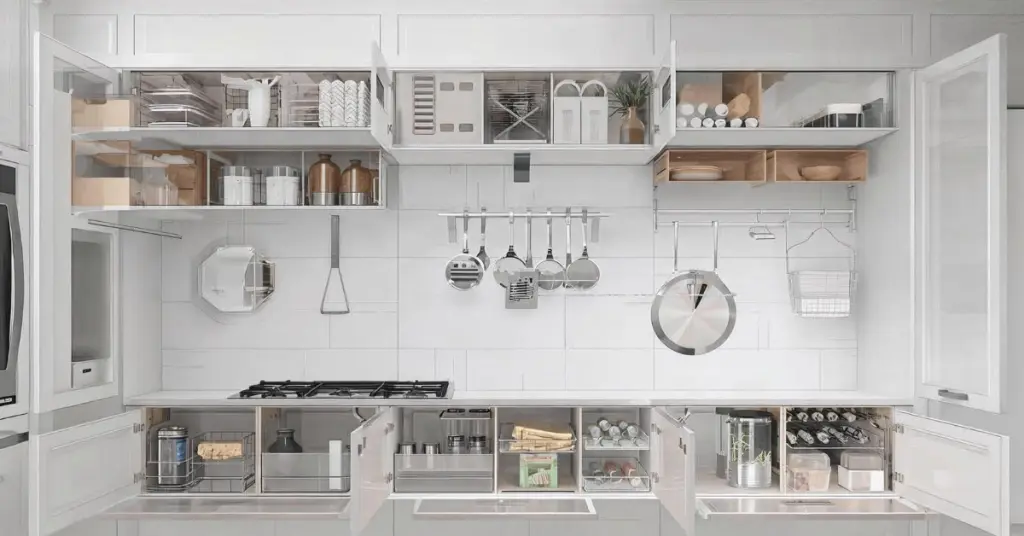
If there’s one truth about Indian homes, it’s this: no matter how big your kitchen is, it somehow never feels big enough. Between the pressure cooker collection, those rarely used serving platters, and the mountain of masala jars, space disappears faster than you can say “dal tadka”. That’s why smart kitchen cabinet design isn’t a luxury anymore—it’s survival.
Let’s talk about how you can squeeze every inch of space out of your kitchen cupboard designs without making it feel like a storage unit.
Think Vertically, Not Just Horizontally
Most kitchens waste their best real estate—the walls. Tall modern kitchen cupboards that run all the way up to the ceiling give you 30% more storage instantly. Keep daily-use items at arm’s reach and stash the rarely used stuff (cake stands, extra utensils, the pressure cooker you inherited) up top.
You can even add a ladder or a pull-down shelf system, a feature seen in modern kitchen design trends borrowed from European homes.
Drawers Are the Real Heroes
If you’ve ever gone digging through a bottom cabinet for a single saucepan, you know the pain. Replace those deep cupboards with wide pull-out drawers. They bring everything out to you instead of forcing you to bend, twist, and swear.
Soft-close drawers in modern kitchen cupboards make the experience smoother and quieter, plus they age better than old-style shutter cabinets.
Use Corners Wisely—They’re Gold
Corner spaces are where Tupperware goes to die. But you can change that with clever fittings like carousel trays or “magic corners” that pull out in one easy motion. In smaller homes, a well-designed corner cabinet can store as much as a full standalone cupboard.
These accessories aren’t cheap, but in good kitchen cupboard designs, they pay for themselves in functionality.
Mix Open and Closed Storage
All-closed cabinets can make a kitchen feel boxed in. A few open shelves or glass-front doors break the monotony while giving easy access to jars, mugs, or daily plates.
In modern Indian homes, designers often blend open racks with a sleek kitchen wardrobe design, balancing aesthetics with practicality. It gives your space that light, lived-in vibe—without clutter.
Tall Units and Appliance Garages
If you’ve got appliances eating up counter space (microwave, toaster, mixer, etc.), give them their own home. Tall units with built-in slots or “appliance garages” hide them neatly while keeping them handy.
A tall pantry cupboard—common in modern kitchen cabinet design—is perfect for dry storage. You’ll be amazed how much rice, cereal, and snack stockpile fits when it’s properly planned.
Play Smart With Shelving Heights
Adjustable shelves are underrated. In good kitchen cabinet design, you shouldn’t have to live with a fixed height just because the carpenter decided so.
If your shelves can move, you can store tall oil bottles, compact jars, or even a mini grinder easily. A few centimetres of flexibility can free up whole extra rows of space.
Hidden Storage and Pull-Outs
Slim pull-outs beside the fridge or stove are lifesavers for oils, spices, or cleaning supplies. You’d be surprised how much storage fits into a six-inch gap.
Under-sink organizers, utensil pull-outs, or hidden bins make modern kitchen cupboards far more efficient. It’s not about having more space—it’s about using it better.
Light up the Space
Lighting isn’t technically “storage”, but it changes how you use space. Under-cabinet LED strips or motion-sensor lights make dark corners visible and usable.
In modern kitchen cabinet design, proper lighting doubles up as décor—warm lights make compact kitchens feel open and elegant.
Materials and Finishes Matter
The right finishes don’t just look nice—they last longer and make cleaning easier. High-gloss laminates or acrylic shutters reflect light, making your kitchen look bigger. Though matte finishes are in trend, they can darken small spaces if overdone. You can pair wood grains with whites or neutrals to make it timeless. This balance is the hallmark of well-thought-out kitchen cupboard designs across modern Indian homes, which are functional, lasting and aesthetic.
Smart kitchen design isn’t just about storage — it’s about structure. Every well-planned cupboard and corner needs a foundation that’s just as strong as it is stylish. With JK Cement, you get durability that keeps up with your everyday hustle — from smooth finishes to long-lasting protection. Create elegant, functional spaces with the reliability of JK Cement — from smooth finishes using JK PPC Cement to long-term protection with JK Super Protect Cement and eco-friendly construction with JK LC3 Cement, India’s first low-carbon cement.
Build beautifully. Build smart. Build with JK Cement.
FAQs
1. How can I make a small kitchen look bigger with cupboards?
By using light-coloured finishes, glass shutters, and vertical storage, you can visually open the space. Glossy modern kitchen cupboards reflect light and make the space feel open.
2. What’s better—open shelves or closed cabinets?
A mix of both works the best. Closed cabinets hide clutter, while open shelves display everyday essentials stylishly; hence, if done right, both are a win-win.
3. Are modular kitchen cabinets worth it?
Yes, modular kitchen cabinets are worth the money. The design is flexible, easy to upgrade, and often lasts longer than traditional carpentry, making it a good design investment for the future as well.
4. How do I use corner space efficiently?
Install a lazy Susan or magic-corner mechanism—they turn dead corners into functional storage.
5. Which materials are best for kitchen cupboards?
The ideal materials for kitchen cupboards are BWP plywood with a laminate or acrylic finish. It offers durability, flexibility of design and resistance from moisture.
6. How high should upper kitchen cabinets be?
Ideally, 18 inches above the countertop. In compact kitchens, slightly higher cabinets (till the ceiling) work better for storage.
7. What’s trending in modern kitchen cabinet design for 2026?
Minimalist shutters, soft-close hardware, hidden handles, and tall pantry units are currently dominating the kitchen wardrobe design trends.