POP Ceiling Design Trends for Living Room in 2026

Evening chai with parents. IPL matches with friends. Kids running around during Diwali cleaning. That one corner where sunlight falls perfectly at 4 PM. A good POP ceiling design changes how the whole room feels during those moments.
In 2026, the trend is not about making ceilings heavier. It’s about making them smarter, softer, cleaner, and more practical for everyday living.
Let’s look at the POP ceiling design trends for living rooms in 2026 that are actually shaping modern Indian homes.
Why POP Ceilings Continue to Trend in 2026?
There’s a reason contractors still recommend POP for living rooms despite newer ceiling materials entering the market. It works. And more importantly, it adapts.
Unlike ready-made panels, POP ceiling design gives freedom. You can create:
- Curved edges
- Recessed lighting grooves
- Floating ceiling effects
- Layered geometric patterns
- Minimal borders
- Traditional mouldings
And homeowners today want personalization more than flashy interiors. Another reason? Lighting.
Modern homes rely heavily on ambient lighting now. Warm LEDs, cove lighting, hidden strips. All of these work beautifully with POP ceiling designs.
POP also helps hide wiring, AC ducts, uneven slabs, and structural beams without making the room feel bulky. That matters a lot in Indian apartments where ceiling height is already limited.
A thoughtful modern simple POP design can actually make a room feel taller and cleaner instead of crowded.
What Are the Top POP Ceiling Design Trends for Living Rooms in 2026?
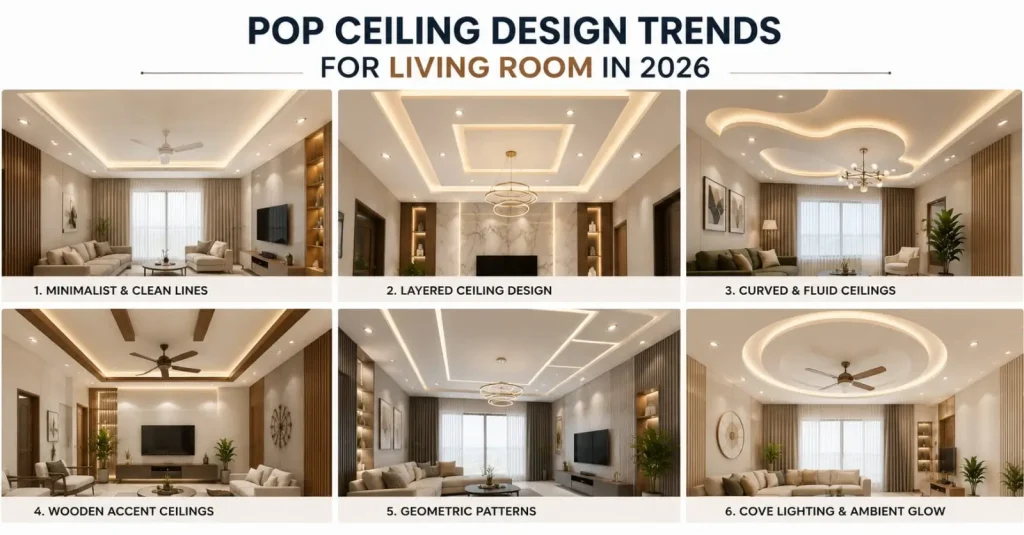
Given below are the best POP ceiling designs for living rooms:
1. Floating POP Ceiling Design
This trend is everywhere right now. Instead of fully layered ceilings, designers are creating floating sections using recessed gaps and hidden lights.
The effect feels subtle but premium. Especially at night.
A floating POP ceiling design works beautifully in modern apartments because it adds depth without making the room feel heavy.
Warm LED strips around the edges create that soft hotel-like ambience people now prefer.
2. Curved and Organic Shapes
Sharp rectangular layouts are slowly giving way to softer curves. The wave-inspired edges, circular layers, and flowing shapes are replacing rigid square boxes.
Why? Because modern interiors are becoming less mechanical.
Curves soften the visual weight of the living room and pair beautifully with earthy furniture and textured walls.
This POP wall design for a living room is ideal in homes using neutral palettes.
3. Plus Minus POP Design
The plus-minus POP design trend continues strongly into 2026. And honestly, it’s easy to understand why.
It gives a clean modern look without becoming too decorative.
For people unfamiliar with the concept, a plus-minus POP design uses recessed and protruding sections to create depth and patterns across the ceiling.
Think of it like controlled geometry. Not over-designed. Not plain either.
This design works particularly well for:
- Contemporary apartments
- Medium-sized living rooms
- TV unit areas
- Combined dining-living spaces
The biggest advantage is versatility. The minimal pattern of combining plus-minus POP design with spotlights and cove lighting provides a layered feel.
4. Wooden Texture and POP Combination
Wooden texture combinations are becoming increasingly popular in urban Indian homes.
Instead of using pure wood ceilings, designers now combine wooden laminates with POP design sections.
The result feels warm without becoming expensive or high-maintenance.
Homeowners generally add wooden textures in the following areas:
- Ceiling borders
- Fan sections
- Rectangular central panels
It is an ideal combination if you choose popular interior styles like Scandinavian and Japandi.
5. Minimal Border POP Ceilings
Not every living room needs dramatic layers. In fact, many homeowners now prefer almost invisible ceilings.
That’s where modern simple POP design trends are leading.
These designs usually feature:
- Thin ceiling borders
- Hidden LED grooves
- Minimal depth
- Clean lines
They look elegant without dominating the room. Perfect for compact apartments where excessive ceiling work can make spaces feel cramped.
What Are the Best POP Ceiling Designs Based on Living Room Sizes?
Small Living Rooms
This is where restraint matters. Small living rooms don’t need heavy layered ceilings.
A light, modern, simple POP design works best here.
Good options include:
- Single-layer border ceilings
- Circular centre designs
- Thin recessed lighting channels
- Minimal plus-minus patterns
Avoid dark ceiling colors in compact spaces. They visually lower the ceiling height.
Warm whites and soft cream shades work far better.
Medium-Sized Living Rooms
This is the sweet spot for experimentation.
You can comfortably explore:
- Floating ceilings
- Curved patterns
- Plus-minus POP design
- Geometric sections
- Layered lighting
Most Indian apartments fall into this category now.
A balanced POP ceiling design here can completely elevate the room without overwhelming it.
Large Living Rooms
Bigger spaces need stronger ceiling definition. Otherwise, the room can feel visually empty.
This is where layered POP design concepts work beautifully.
Popular choices include:
- Multi-layer tray ceilings
- Coffered patterns
- Symmetrical geometric layouts
- Large circular centrepieces
Designers are also dividing large living rooms visually using ceiling sections above seating areas.
It creates zoning without adding walls, which is very useful in open-plan homes.
Trending POP Ceiling Color Combinations in 2026
Warm White and Beige
Probably the safest and most timeless combination right now. It creates softness without looking dull.
Works beautifully with wooden furniture and warm lighting.
Ivory and Taupe
A favorite in luxury apartments. This combination gives subtle depth while staying elegant.
Especially effective in layered POP design layouts.
Grey and White
Still popular in urban homes. But now designers use softer greys instead of darker charcoal tones.
Too much dark grey can shrink the room visually.
Earthy Olive and Cream
This is emerging strongly in nature-inspired interiors, especially in homes using indoor plants and textured finishes.
Wooden Finish and Off-White POP
One of the strongest trends for 2026.
Wood tones make the ceiling feel warmer and more grounded.
It avoids that overly sterile “showroom” look.
POP Ceiling Lighting Ideas That Are Trending
Cove Lighting
Still the king. Hidden LED strips inside ceiling grooves create soft ambient light that feels calm and premium.
Especially useful during evenings when harsh lights feel tiring.
Magnetic Track Lights
These are becoming common in modern living rooms.
They look clean and allow adjustable focus lighting.
Very popular in minimalist interiors.
Warm Spotlights
Cool white lights are fading out in residential spaces.
Warm spotlights now dominate modern POP design trends because they make spaces feel more comfortable and welcoming.
Pendant Lighting with POP
Instead of giant chandeliers, homeowners are choosing smaller pendant lights paired with subtle ceiling layouts.
Especially above center tables.
Layered Lighting
This is the biggest shift in 2026. One light source is no longer enough.
Designers combine:
- Cove lights
- Spotlights
- Decorative pendants
- Wall lighting
The result feels balanced and flexible for different moods.
What is the POP Ceiling Cost in India 2026?
This is usually the first practical question homeowners ask. And fairly so.
The cost of a POP ceiling design depends on the following factors:
Design Complexity
POP ceiling designs cost less if the designs are simple because they require minimal cutting and labor.
Intricate patterns and layered ceilings take more time, precision, and finishing work, which increases overall ceiling cost.
Ceiling Height
Higher ceilings require additional scaffolding, along with extra labor effort and more material.
Double-height living rooms especially increase installation time and finishing complexity.
Lighting Integration
Modern POP ceiling designs often include:
- Cove lights
- Recessed LEDs
- Spotlights
- Pendant fixtures
The electrical planning and detailing increase as more lighting elements are involved.
City
POP ceiling costs vary across cities due to labor rates, transportation costs, and material availability.
Metro cities like Mumbai and Delhi generally have higher installation costs compared to Tier-2 and Tier-3 cities.
Labor Quality
Experienced POP contractors charge more because finishing quality matters.
Poor workmanship can result in uneven surfaces or ceiling cracks after a few months.
What Are the Mistakes to Avoid When Designing a POP Ceiling Room?
Overdesigning Small Rooms
This happens a lot. People see elaborate Pinterest ceilings and try fitting them into compact apartments.
The result usually feels crowded.
A clean and modern simple POP design almost always works better in smaller Indian homes.
Ignoring Ceiling Height
Low-height rooms should avoid heavy multi-layer designs.
Otherwise the living room starts feeling compressed.
Minimal depth ceilings are safer here.
Poor Lighting Planning
Lighting should be planned before ceiling execution, not after.
Last-minute wiring changes usually ruin symmetry.
Choosing Trendy Designs Without Context
Not every trend suits every home.
A luxury curved ceiling may look beautiful online but feel completely out of place in a traditional setup.
Always match the POP design with:
- Furniture style
- Flooring
- Wall texture
- Natural lighting
- Room proportions
The Final Words
The biggest shift in POP ceiling design trends for living rooms in 2026 is actually pretty simple.
People want calmer homes now. Less noise. Less visual clutter. More comfort.
That’s why ceilings are becoming softer, cleaner, warmer, and more functional instead of overly decorative.
The best ceilings today don’t scream for attention. They quietly improve the way a room feels every single day.
And honestly, that’s what good interior design should do. Not just impress guests for ten minutes. But make everyday living feel a little better.
FAQs
- 1. Which POP ceiling design is best for small living rooms?
- A modern simple POP design with minimal layers and soft lighting works best for small living rooms. Thin borders and recessed lights help the room feel bigger.
- 2. Is a POP ceiling better than a gypsum ceiling?
- Both have advantages. POP offers more customization and curved detailing, while gypsum is quicker to install.
- 3. What is a plus-minus POP design?
- A plus-minus POP design uses raised and recessed ceiling sections to create geometric depth and modern visual patterns.
- 4. Which lighting works best with POP ceilings?
- Warm cove lighting, recessed spotlights, and layered LED lighting are currently the most popular choices with modern POP design trends.
- 5. How long does a POP ceiling last?
- A properly installed POP ceiling design can last 15–20 years or more with good maintenance and moisture protection.
- 6. What is the average POP ceiling cost in India in 2026?
- Basic designs start around ₹80–₹140 per sq. ft., while premium designer ceilings with lighting can exceed ₹350 per sq. ft.
- 7. Which POP ceiling colors are trending in 2026?
- Warm white, beige, ivory, taupe, earthy olive, and wooden-finish combinations are among the top ceiling color trends in 2026.