Interior Design Materials: Complete List, Types, Uses and Selection Guide

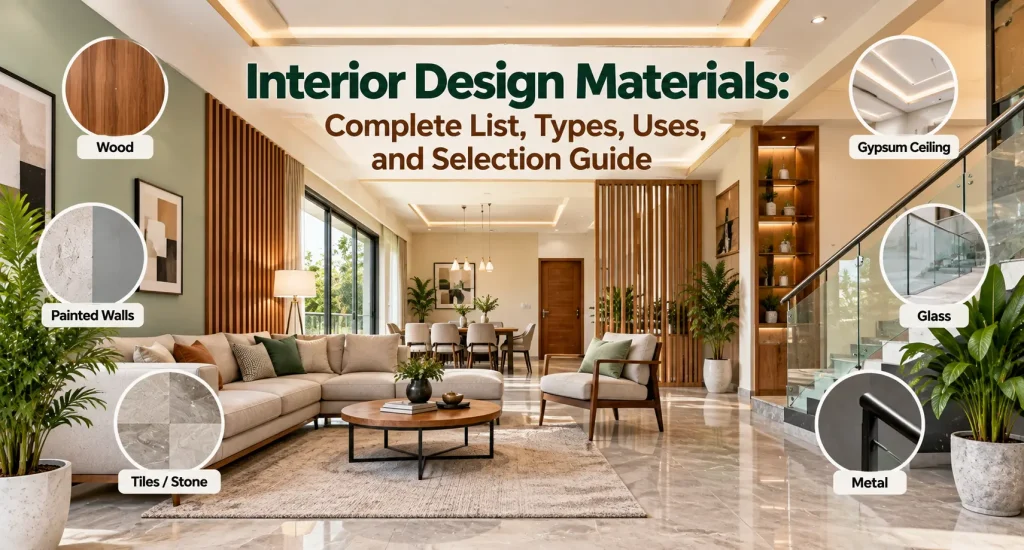
Choosing interior design materials can feel exciting at first. Then the questions start. Should you choose wood or metal? Is gypsum better than POP? Will the wall finish survive moisture? A good interior does more than look beautiful. It makes you feel comfortable. The materials you choose add character to your room. That is why you need to choose the right materials for your lifestyle and budget. Read on to find a detailed guide to interior design materials.
What Are Interior Design Materials?
Choosing interior design materials can feel exciting at first. Then the questions start. Should you choose wood or metal? Is gypsum better than POP? Will the wall finish survive moisture? A good interior does more than look beautiful. It makes you feel comfortable. The materials you choose add character to your room. That is why you need to choose the right materials for your lifestyle and budget. Read on to find a detailed guide to interior design materials.
What Are Interior Design Materials?
Interior design materials are the products and finishes that shape the look and function of an indoor space. They cover walls, floors, ceilings, furniture, and other surfaces. Some materials provide structure or surface preparation. Others provide the final decorative finish.
A typical home may use several materials in the same room. A living room may combine painted walls, wooden furniture, stone surfaces, glass, and fabric. A kitchen may use tiles, metal, glass, and moisture-resistant finishes.
The goal is not to use the most expensive material. The goal is to choose the right material for the right place.
What Are the Types of Interior Design Materials?
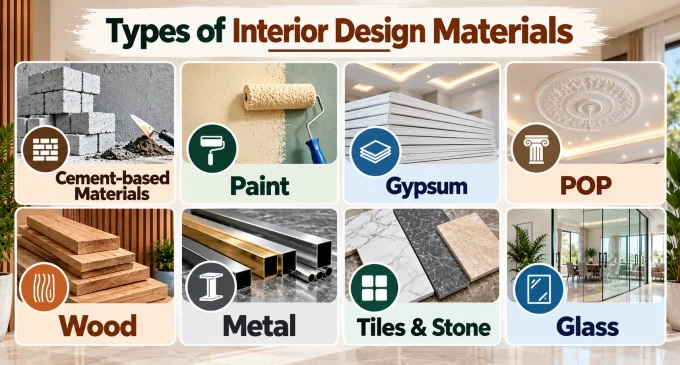

Given below are different types of interior design materials:
- Cement-Based Materials and Wall Finishes
Cement-based materials play an important role in interior construction. They help create and prepare strong surfaces. Wall putty can help create a smoother base before painting. The best part? These materials help prepare walls before you add the final decorative finish.
- Paints
Paint gives a room its color and final visual character. You can choose from neutral shades, earthy colours or stronger accent tones. The choice depends on the mood you want. Paint also works well with other materials. You can pair a neutral wall with wooden furniture or a textured focal wall.
- Gypsum
Gypsum is not only popular for interior walls but also for ceilings. This is because it offers a smooth finish to interior walls. Designers also recommend using gypsum for false ceilings. It supports recessed lights and cove lighting systems.
- POP
POP means plaster of Paris. It remains a popular choice for decorative ceilings. It is mostly used for curves and detailed ceiling designs. Homeowners seeking a modern look often prefer POP for their interior design.
- Wood
Wood is an ideal choice for homeowners seeking warmth in interiors. The following are the common applications of wood in interior design materials:
- Furniture
- Wall panels
- Doors
- Ceilings
- Decorative elements
Interior designers also pair wood with plants and soft fabrics to create a natural feel. However, wood needs proper care. It can also face termite-related problems.
- Metal
Metal adds a clean and modern appearance. Aluminum and galvanized iron can work in false ceilings. Metal can also appear in furniture, partitions, and decorative features. Metal false ceilings offer durability and flexibility.
- Tiles and Stones
Tiles work across many areas of a home. Given below are the common uses of tiles and stones:
- Floors
- Walls
- Kitchens
- Bathrooms
Homeowners who want a premium appearance can choose natural stones.
- Glass
Glass can make interiors feel open and bright. It works well for windows, partitions, and selected furniture elements. Large windows can bring in natural light. Fixed windows can also create a clear outdoor view. Casement windows offer strong ventilation. Sliding windows save space. Skylights can bring light from above.
What Are the Factors to Consider When Choosing the Right Interior Design Materials?
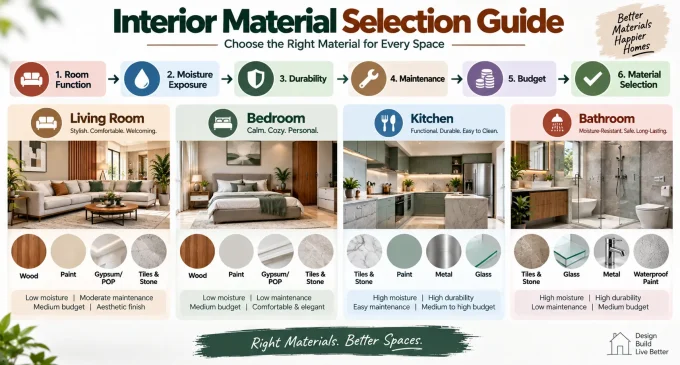
The following are the factors you should consider when choosing the right interior design materials:
- Room Function
The interior design material must align with your needs. For example, you need comfort in bedrooms but easy-to-clean surfaces in kitchens.
- Moisture
Some areas like kitchens and bathrooms are vulnerable to moisture. This is why it is necessary to choose moisture-resistant materials. They keep the surface looking good for longer.
- Durability
Choose the interior design material that suits your daily needs. They should be capable of managing regular wear and changing household needs.
- Maintenance
Interior design materials like wood require frequent maintenance, but they provide warmth to the space. Thus, make sure you compare different materials depending on the care they need.
- Budget
The most important factor when choosing the interior design materials is your budget. The best budget includes material price, installation charges, and maintenance costs over time.
The Final Words
Many interior problems start with material selection. People often choose a material only because it looks good in a showroom. That can backfire. So, you should avoid the following mistakes when choosing the right interior design material:
- Choosing appearance over function.
- Ignoring moisture.
- Using too many colours and textures.
- Selecting high-maintenance materials for busy spaces.
- Forgetting the quality of adhesives and surface preparation.
- Choosing materials without checking the existing structure.
- Ignoring installation quality.
The material matters. So does the way you install it. A good finish starts with a suitable surface and proper application.
FAQs
1. Which material works best for false ceilings?
Gypsum works well for most residential false ceilings because it offers a smooth finish and supports different designs. POP suits decorative moldings and curves. PVC works well in moisture-prone rooms. Metal suits spaces where durability and flexibility matter.
2. Which interior material works best for bathrooms?
Tiles and moisture-resistant materials work well for bathroom interiors. Use tiles for bathroom walls and floors. PVC can suit bathroom false ceilings. Always choose materials that can handle regular moisture and match the specific application.
3. Is wood a good material for interiors?
Yes, wood is a popular interior design material because it adds warmth and natural character. You can use it for furniture, doors, wall panels, and decorative elements. However, wood needs regular care and suitable protection against termites and moisture.
4. How do I choose materials for a small room?
Choose light-colored and reflective interior materials to make a small room feel brighter and more spacious. Avoid too many heavy finishes. Mirrors, clean lines and smart storage can also help create a more open and comfortable interior.
5. Do tile adhesives matter in interior design?
Yes, tile adhesives play an important role in a durable and neat tile installation. Choose the adhesive based on the tile type and surface. Proper grout also helps create clean and lasting tile joints.
6. Should every room use the same materials?
No, every room does not need the same materials. Maintain a consistent design style across your home while choosing materials based on each room’s function. Bathrooms need moisture-resistant options. Bedrooms can focus more on comfort and appearance.