What Is Granite Stone? Types, Price & Flooring Uses Explained

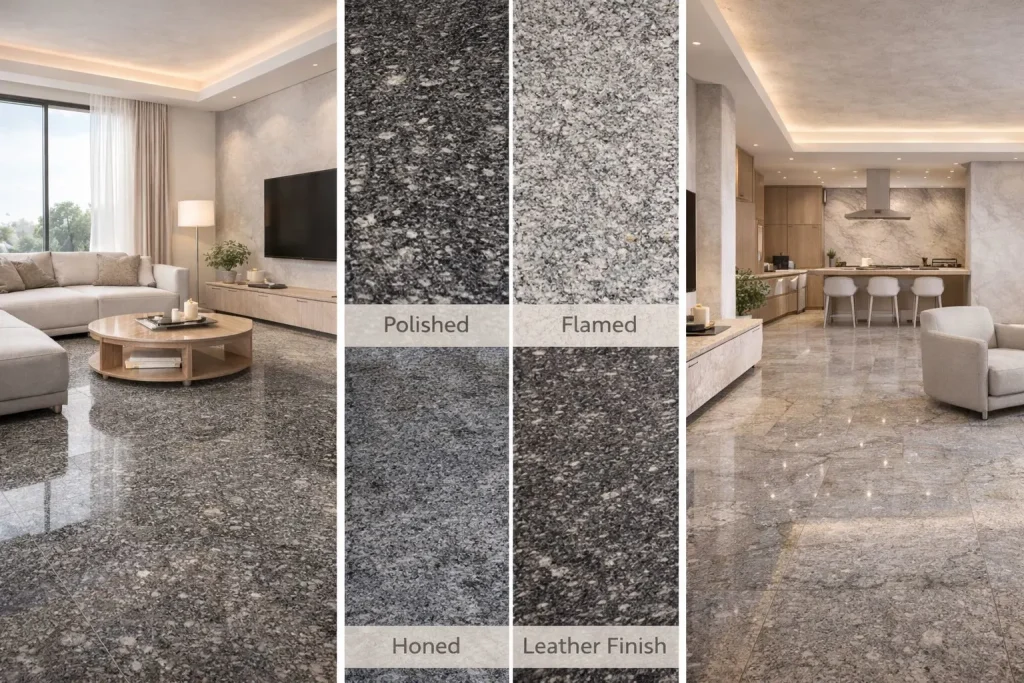
Granite is one of the most widely used stones in Indian construction, yet it is often chosen without real understanding. It appears in apartment flooring, kitchen platforms, staircases, building entrances, and public spaces. Ask most buyers why they selected granite, and the answer is usually brief: it is strong or it lasts long.
Both are true — but incomplete.
Granite stone is not a decorative finish alone. It is a performance material. Its selection directly affects durability, safety, maintenance effort, long-term cost, and how a space ages over decades. Understanding granite properly requires moving beyond appearance and into behaviour.
This guide explains what granite stone is, its common types in India, realistic price ranges, and where it works — and does not work — in residential and commercial buildings.
What Is Granite Stone?
Granite stone is a natural igneous rock formed beneath the earth’s surface through the slow cooling of molten magma. This slow crystallisation process creates a dense, interlocked mineral structure, which gives granite its hardness and resistance to wear.
From a material science perspective:
- Granite ranks 6–7 on the Mohs hardness scale
- It has low porosity (typically below 1%)
- It resists abrasion better than marble and limestone
In construction, granite is quarried, cut into slabs or tiles, and finished through polishing, honing, or flaming depending on its intended use.
Granite is chosen where structural reliability, surface durability, and long service life matter more than trend-driven aesthetics.
Why Granite Stone Is Widely Used in Indian Construction
Granite stone performs well in Indian conditions because its physical properties align with local usage patterns and climate.
Granite:
- Handles heavy foot traffic without surface breakdown
- Withstands heat, moisture, and temperature variation
- Performs consistently across dry, humid, and coastal regions
- Shows slow visible ageing even after decades of use
This is why granite stone flooring is commonly found in staircases, corridors, kitchens, and public buildings rather than purely decorative spaces.
Types of Granite Stone Commonly Used in India
Granite is classified by colour, grain structure, mineral composition, and source. Below are the most commonly used granite stone categories in Indian construction.
Black Granite
Black granite is among the densest varieties available in India. It has a uniform grain structure and very low water absorption.
Common uses:
- Kitchen countertops
- Stair treads
- High-traffic flooring
Its stain resistance and durability make it one of the most practical granite stone options for daily use.
White and Light-Coloured Granite
White, grey, and light-toned granites offer a brighter appearance and are commonly used in:
- Living rooms
- Bedrooms
- Office interiors
These stones reflect light well but require more frequent cleaning, as dust and stains are more visible compared to darker varieties.
Brown and Red Granite
Brown and red granite stones contain higher iron content, giving them deeper, warmer tones.
They are widely used in:
- Traditional homes
- Temple flooring
- Outdoor and semi-outdoor areas
These colours hide dust effectively and are suited for spaces where cleaning frequency may be lower.
Imported Granite
Imported granite varieties are known for distinctive patterns and colour variations. They are generally more expensive and often used selectively for feature flooring or statement surfaces rather than entire homes.
Granite Stone Flooring: Where It Works Best
Granite stone flooring is extremely durable, but it is not suitable for every space.
Best applications:
- Staircases and landings
- Living rooms with heavy daily use
- Corridors and common areas
- Kitchens and utility spaces
Where granite stone flooring is less suitable:
- Bedrooms (can feel cold and acoustically hard)
- Children’s play areas (very hard surface)
- Upper floors where structural load must be minimised
Granite should be selected for performance-critical zones, not purely for uniformity across a home.
Granite Stone Price in India (Indicative Ranges)
Granite stone price depends on colour, thickness, finish, grade, and source.
Typical market ranges in India:
- Indian granite stone: ₹80 to ₹250 per sq ft
- Premium or imported granite: ₹300 to ₹800 per sq ft
These rates generally include raw stone material only. Cutting, edge finishing, surface treatment, transport, and installation are charged separately.
A common buyer mistake is comparing granite stone price only by square foot rate without checking thickness. For flooring, 18–20 mm thickness is considered standard.
Granite Stone vs Marble vs Tiles
Understanding how granite compares to alternatives helps prevent unsuitable choices.
- Granite stone: Hard, durable, low porosity, low maintenance
- Marble: Softer, more porous, higher maintenance, visually softer
- Tiles: Lighter and uniform but lower lifespan in heavy-use areas
For long-term performance in Indian residential and commercial buildings, granite stone flooring consistently outperforms marble and standard tiles in durability.
Common Myths About Granite Stone
Myth 1: Granite Stone Is Maintenance-Free
Granite is low maintenance, not maintenance-free. Periodic sealing and routine cleaning are required to preserve appearance.
Myth 2: All Granite Stone Is the Same
Granite quality varies significantly based on mineral density, grain structure, and quarry source. Visual similarity does not guarantee equal strength.
Myth 3: Granite Stone Is Outdated
Granite adapts well to modern interiors when used selectively, especially in lighter shades and matte finishes.
How to Choose the Right Granite Stone
Before finalising granite stone, apply these checks:
- Confirm thickness (18–20 mm for flooring)
- Inspect for cracks or uneven grain distribution
- Match finish to usage (polished indoors, flamed outdoors)
- Ensure slip resistance for wet areas
A good granite stone choice balances safety, durability, and visual restraint.
FAQs: Granite Stone
What is granite stone used for in houses?
Granite stone is commonly used for flooring, kitchen countertops, staircases, and window sills due to its strength and wear resistance.
Is granite stone good for flooring?
Yes. Granite stone flooring performs well in high-traffic areas and can last several decades with proper care.
What is the average granite stone price in India?
Indian granite stone typically ranges from ₹80 to ₹250 per sq ft, depending on type and thickness.
Is granite better than marble?
Granite is harder and more durable. Marble offers a softer appearance but requires higher maintenance.
Does granite stone absorb water?
Granite has low porosity but should still be sealed to prevent long-term staining.
Which granite stone colour is best for flooring?
Darker colours such as black and brown are preferred as they hide stains and wear more effectively.
Final Word
Granite stone is chosen not for fashion, but for reliability.
When selected with clarity and used in the right locations, it delivers decades of structural performance with minimal intervention. Understanding how granite behaves — not just how it looks — is what separates a good choice from a costly mistake.
A well-chosen granite stone surface works quietly in the background, year after year. That consistency is exactly why it remains one of the most dependable materials in Indian construction.