Glass Railing Design: Types, Materials and Safety Standards

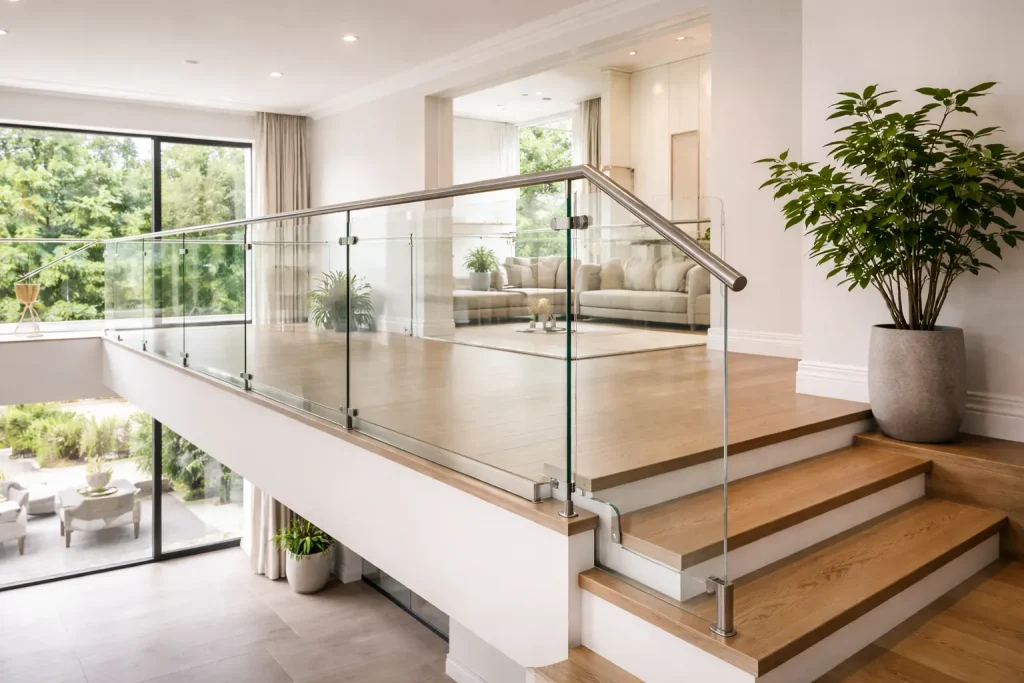
If you’re considering glass railing design for your home, here’s the simple truth: it’s safe, modern, and surprisingly strong when done right. A good glass railing system gives you clear views without compromising protection. Whether you’re planning a staircase or a glass railing design for balcony spaces, the key lies in choosing the right type, material, and safety specifications.
This blog will explain exactly that.
Why Everyone’s Choosing Glass Railings
There was a time when balconies meant heavy iron grills. Safe? Yes. Stylish? Not always.
Today, a balcony glass railing changes the entire feel of a space. It opens things up. Light flows in. Even a small apartment suddenly feels bigger.
That’s the charm of thoughtful glass railing design. It doesn’t scream for attention, yet it upgrades everything around it. Picture standing on your balcony during sunset. Would you rather see metal bars or an uninterrupted skyline? That’s why more homeowners are switching to glass railing systems.
Types of Glass Railing Design
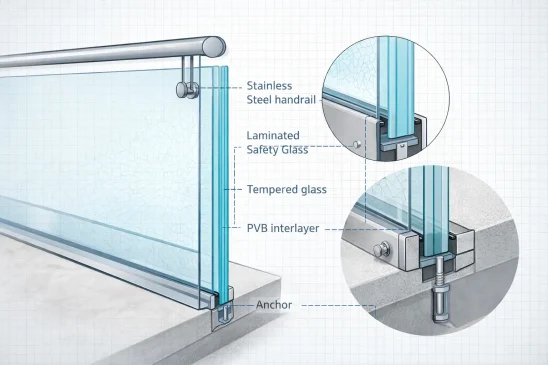

Before choosing a glass railing design, it’s worth knowing what’s actually out there. Not all glass railings look or function the same, and the differences aren’t just cosmetic.
1. Frameless Glass Railing
This is the clean, almost invisible style you’ve probably noticed in upscale homes or tall apartment buildings. The glass panels are fixed from the bottom using concealed channels or small clamps.
It makes a balcony feel wider and a staircase feel lighter – simple, neat, and quietly impressive.
It’s a popular choice for glass railing design for balcony areas where the view matters most. The effect? Clean lines, no visual clutter, maximum openness.
2. Semi-Framed Glass Railings
This setup includes slim vertical posts between the glass panels. You get more support while enjoying that open, airy feel.
It’s a practical middle ground. Many homeowners go for this style for a balcony glass railing because it gives you the look without stretching the budget too far.
3. Fully Framed Glass Railings
In this setup, the glass sits inside a complete metal frame. Nothing is left floating or exposed.
It looks solid and dependable, which is why it’s often used in offices, malls, or busy staircases where there’s constant movement. It gives a strong, grounded presence that some spaces really need.
Each glass railing style has its place. Your layout, height, and budget will guide the decision.
What Makes the Glass Safe?
Fair question. The glass used in glass railing design is not ordinary glass. It is treated in certain ways to add strength. Here are the most common:
1. Tempered Glass
This is basically heat-treated glass strengthened to about four times stronger than regular glass. If it breaks, it crumbles into small, blunt pieces rather than dangerous shards. Most standard balcony glass railing systems use tempered glass as a base requirement.
2. Laminated Glass
Laminated glass has a thin interlayer sandwiched between two sheets. Even if cracked, it stays intact instead of falling apart. That’s why high-rise glass railing designs for balcony projects often use laminated panels for extra safety.
Sometimes, both tempered and laminated features are combined for maximum strength in a glass railing system.
The Hardware Matters More Than You Think
Glass alone doesn’t make a railing strong. The support system does half the work. For any durable glass railing design, look at:
- Stainless steel clamps
- Aluminum channels
- Powder-coated steel posts
- In coastal areas, stainless steel is often preferred for balcony glass railing setups because it resists rust.
- A poorly anchored system can compromise even the strongest glass, so installation quality is non-negotiable.
Safety Standards You Should Check
A proper glass railing installation must follow building codes. These usually define:
- Minimum railing height
- Load-bearing capacity
- Glass thickness
- Secure anchoring methods
- Many residential glass railing designs for balcony installations require a height of at least 36 inches.
- High-rise buildings may require laminated safety glass as part of compliance.
- Before signing off on a balcony glass railing, ask your contractor for safety certifications and thickness details.
Where Glass Railings Work Best
The beauty of glass railing design is its versatility. It works well in:
- Apartment balconies
- Duplex staircases
- Terraces
- Pool surrounds
- Commercial lobbies
- In compact urban homes, a glass railing design for balcony areas can make a noticeable difference. You don’t lose visual space. Even natural light improves.
A thoughtfully planned glass railing can make a staircase feel less boxed-in and more connected to the rest of the home.
Everyday Maintenance – It’s Easier Than You Think
One common assumption is that a balcony glass railing will be high maintenance. In reality, it’s simpler than intricate iron grills.
Basic care includes:
- Cleaning with mild soap and water
- Wiping down regularly to avoid hard water stains
- Checking fittings once a year
A good glass railing design should last decades if installed properly. Especially when laminated glass is used in a glass railing design for a balcony, durability improves significantly.
When selecting your railing design, think beyond trends. Consider wind exposure, floor height, and who uses the space.
At the end of the day, a well-planned, researched, and meticulously executed glass railing system can be your biggest aesthetic and safety asset.
FAQs
1. Is a glass railing safe for high-rise balconies?
Yes, glass railing designs using laminated or tempered glass are used for high-rise buildings.
2. How thick should a balcony glass railing be?
Most residential balcony glass railing systems use 10–12 mm tempered glass or thicker.
3. Does the glass railing design for balcony spaces require special permissions?
In many cities, yes. Structural changes involving a glass railing may require approval under local building codes.
4. Frameless glass railings or framed ones – which is stronger?
Strength depends on engineering, not just appearance. A well-installed frameless glass railing design can be equally strong.
5. Is a glass railing long-lasting?
Yes, it usually is when properly installed and maintained – it can last 20–30 years or more.
6. How to maintain balcony glass railing panels that become loose over time?
Check periodically – fittings may loosen. Annual inspection keeps your glass railing secure.
7. Is laminated glass better than tempered glass?
For high-impact areas, laminated panels in a balcony glass railing offer added safety because they remain intact even when cracked.