Floating Shelves: Modern Wall, Kitchen & Book Shelf Designs for Stylish Homes

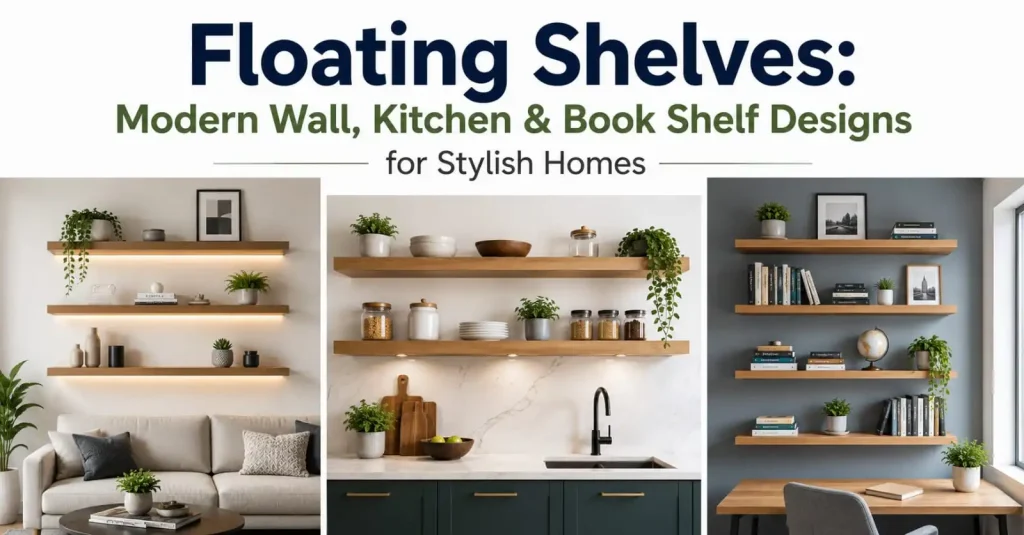
Have you ever noticed simple shelves on the walls? No bulky cabinets. No heavy frames. Just clean lines and shelves that almost look like they’re “floating”. Those are floating shelves.
They save space, look minimal, and work in almost every room. Whether it’s floating wall shelves for décor or floating kitchen shelves for daily use, they’re one of the easiest upgrades you can make without breaking walls or budgets.
What Are Floating Shelves?
Floating shelves are wall-mounted shelves with hidden supports. So when you look at them, you don’t see brackets or heavy frames. Just a clean plank sitting on the wall.
That’s why floating wall shelves feel lighter and less cluttered compared to traditional storage.
And that small difference changes the whole look of a room.
Where Floating Shelves Work Best
One of the biggest advantages of floating shelves is flexibility. They can be used almost anywhere.
1. Living Room
This is where floating wall shelves really shine.
- Display décor items
- Keep photo frames
- Add small plants
Instead of one big cabinet, a few well-placed shelves can make the space feel more open.
2. Kitchen
Floating kitchen shelves are becoming very common now. Especially in compact homes because they:
- Provide easy access to daily utensils.
- Keep frequently used items visible.
- Make small kitchens feel less cramped.
But the thing is, they need to be planned well. Too many shelves, and it starts looking messy.
3. Bedroom
You’ll often see floating book shelves near beds or study corners. They can also be used to access:
- Night essentials
- Small storage without bulky furniture
Perfect when space is tight.
4. Bathroom
Even bathrooms are using floating shelves now – to store:
- Towels, and
- Toiletries
They are used to store without heavy cabinets. Just make sure moisture-resistant materials are used.
Popular Floating Shelf Designs That Actually Work
Not all floating shelves look the same. Here are a few designs that work well in Indian homes:
1. Straight Minimal Shelves
- Clean, straight and simple.
- Can be installed in any room.
- The most common floating wall shelf design.
2. Corner Shelves
- Perfect for unused corners.
- Great space saver.
- Often used as floating book shelves.
3. Box Shelves
- Closed on sides.
- Slightly more storage-friendly.
- Adds structure to design.
4. Rustic Wooden Shelves
- Warm, natural look
- Works well in living rooms
5. Open Kitchen Shelves
- Used as floating kitchen shelves
- Best for daily-use items
A good design doesn’t try too hard. It just fits the space naturally.
Real-Life Site Insight
Sometimes a homeowner installs floating shelves in the kitchen — they look great on day one. But two months later, they are overloaded with jars, boxes, and random items, and end up looking cluttered.
That’s the thing with floating kitchen shelves — they work best when you keep them light and organised.
Materials Used for Floating Shelves
The strength of floating shelves depends on what they’re made of.
Common materials include:
- Engineered wood – budget-friendly and widely used
- Solid wood – strong and premium
- Metal frames with wood finish – modern look
- Glass shelves – mostly for bathrooms
For floating book shelves, always go for stronger materials. Books add weight quickly.
Installation Tips That Make a Big Difference
This is where most people go wrong. Here are some installation tips to follow:
- Fix shelves into solid walls (not hollow plasterboard).
- Use proper brackets or concealed supports.
- Keep alignment level.
- Don’t overload from day one.
Even the best-looking floating wall shelves fail if installed poorly.
Common Mistakes to Avoid
Seen these too many times:
- Installing too many shelves on one wall
- Using weak fittings
- Ignoring weight limits
- Poor spacing between shelves
A good floating shelves setup should feel balanced, not crowded.
Why Wall Strength and Finish Matter
People often focus only on the shelf design. But the wall matters just as much.
A strong, well-finished wall ensures:
- Better grip
- No cracks around fittings
- Long-term stability
But a strong wall needs a strong base – such as JK Super Cement. Because even something as simple as floating shelves depends on what’s behind the wall.
Things To Remember About Floating Shelves
- Floating shelves are space-saving and minimal
- Floating wall shelves work best for décor and light storage
- Floating kitchen shelves should be planned carefully
- Floating book shelves need strong support
- Installation quality matters more than design
Floating shelves aren’t complicated. That’s their strength.
They don’t take over the room. They just quietly make it work better.
And when done right, you don’t notice the shelf first — you notice how clean and easy the space feels.
FAQs
1. What are floating shelves?
Floating shelves are wall-mounted shelves with hidden supports.
2. Are floating shelves strong?
Yes, if installed properly, they can hold decent weight.
3. Can floating shelves be used in kitchens?
Yes. Floating kitchen shelves are great for daily-use items.
4. Which material is best for floating shelves?
Solid wood or high-quality engineered wood works best.
5. Do floating shelves damage walls?
Not if installed correctly using proper fittings.
6. Are floating shelves good for books?
Yes, but floating book shelves need strong support.
7. How long do floating shelves last?
With good installation and materials, they last many years.